Why Pea Pods Are Empty
Updated July 2026
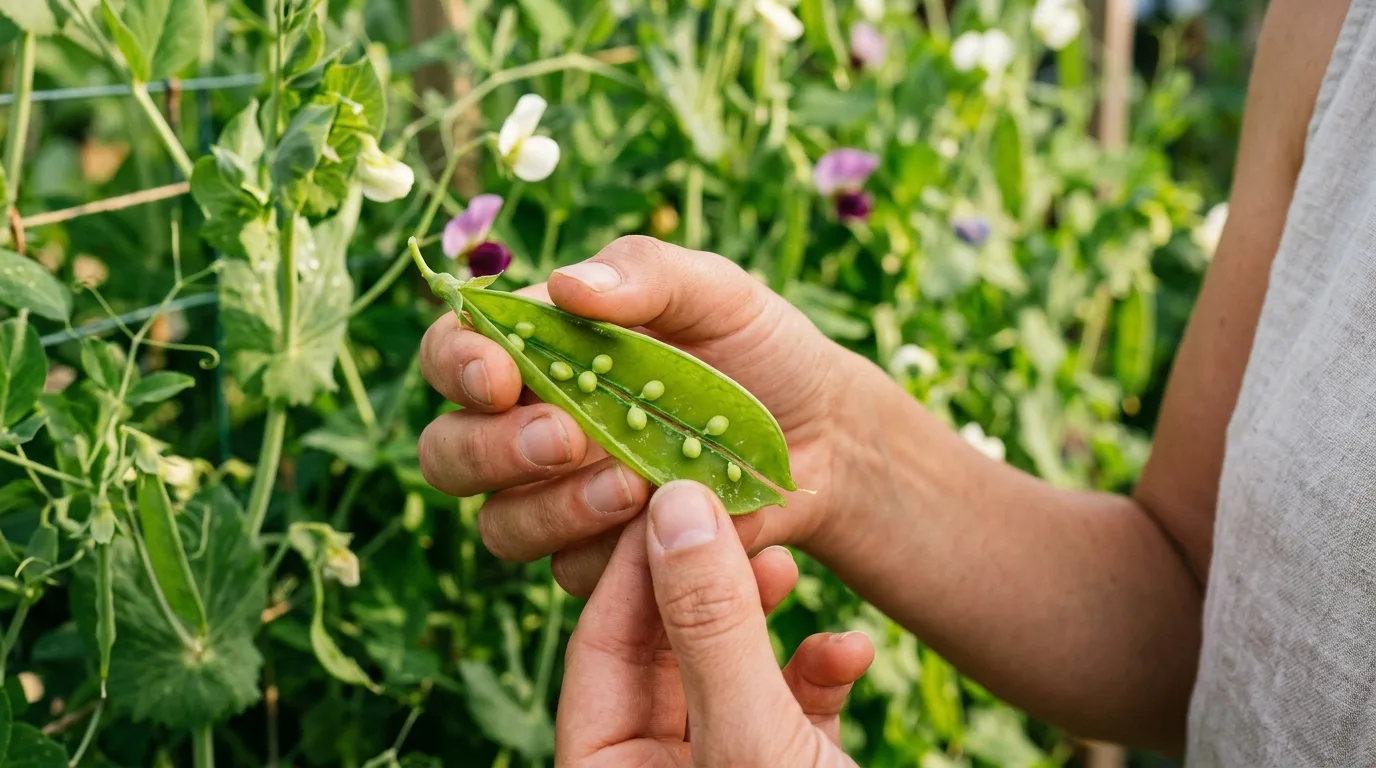
A flat pod is usually an unfinished pod. Patience fixes more empty peas than anything else.
The vines look magnificent, the pods hang everywhere, and when you open one there is nothing inside but a row of dots. Empty and flat pea pods have one very common cause and a few genuine problems, and it pays to rule out the common one first.
The usual answer: they are not finished
Peas build the pod first and fill it last. A pod reaches its full length while the peas inside are still pinhead-sized, then spends the final days plumping them up. Picked at the wrong moment, a perfectly healthy pod looks empty. Squeeze gently before you pick: a filling pod feels lumpy, with individual peas under your fingers. If the pods are big but smooth, give them another few days.
And a note before anything else: if you are growing snow peas, flat is the goal. Snow peas are bred to be eaten as flat pods, and they will never fill like shelling peas.
The real problems
- Heat at flowering. Peas are a cool-season crop, and days much above about 27C during flowering abort the developing seeds. The pod may still form, empty or half-filled, usually at the tail end of the season.
- Dry soil at pod fill. Filling seeds takes serious water. A dry week just as pods are plumping produces flat pods and half-filled rows, with peas only at one end.
- Poor pollination. Peas self-pollinate and mostly manage alone, but a long cold, wet spell during flowering can interfere, leaving gaps in the pod where individual seeds failed.
- Too much nitrogen. Peas fix their own. A bed rich in nitrogen grows spectacular vines that are lazy about pods, and what pods do come fill poorly.
How to get full pods
Time the season right
Sow so flowering happens in the cool. In most regions that means autumn through early spring sowings, letting the crop flower and fill before real heat arrives. A late sowing that flowers into a warm spell will always tail off with empty pods.
Water hardest at flowering and pod fill
From first flower to final pick is when water matters. Deep watering two or three times a week through that window, with mulch to hold it, does more for full pods than anything else you can do.
Skip the nitrogen
No manure top-ups and no high-nitrogen feeds for peas. If you feed at all, a little potash at flowering supports pods rather than foliage.
Keep picking
Harvest ready pods every day or two. A vine carrying mature pods winds down and stops setting new ones, while a regularly picked vine keeps flowering and filling for weeks longer.
Catch problems before they cost you a crop
Track every bed in the Planting Season app, log what is going wrong, and get region-specific reminders so the same problem does not bite twice.
Open the App →Frequently Asked Questions
Why are my pea pods flat with nothing inside?
Most often they are simply unfinished. Peas grow a full-sized pod first and fill it in the final days, so squeeze for lumps before picking. Persistent flat pods point to heat at flowering, dry soil during pod fill, or an over-rich bed.
Do pea pods fill after they reach full size?
Yes, that is exactly the sequence. The pod reaches full length while the seeds are tiny, then the peas swell over the following days. A big smooth pod is a pod on the way, so leave it a little longer.
Does hot weather stop peas filling?
Yes. Days much above about 27C during flowering abort developing seeds, giving empty or partly filled pods. Peas are a cool-season crop, so sow early enough that flowering and filling finish before the heat arrives.
Why are there only peas at one end of the pod?
Individual seeds failed, from a pollination hiccup in cold wet weather or moisture stress during filling. Steady water from flowering onward fills more of each pod.
Should I fertilise peas to get more pods?
Generally no. Peas fix their own nitrogen, and a rich bed grows lush vines with few, poorly filled pods. At most, a light potash feed at flowering supports pod set.
See also: How to Grow Peas and Peas in Pots
Get next month's planting calendar, free
One email a month with exactly what to plant in your region, plus seasonal tips and harvest reminders. No spam, and you can unsubscribe any time.