Why Carrots Grow Forked and Twisted
Updated June 2026
Forking is about the soil, not the seed. Here is how to grow long, straight carrots every time.
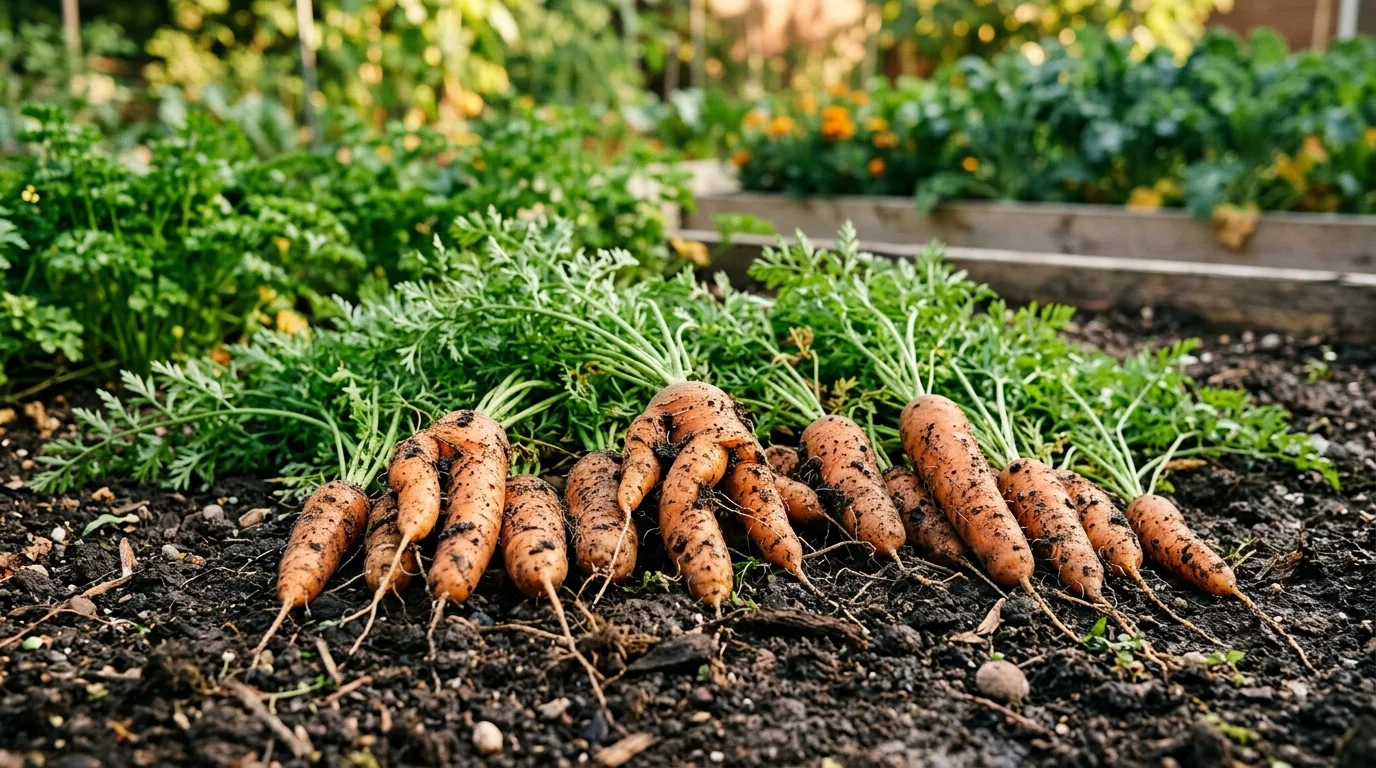
You pull your carrots expecting long tapered roots and get a tangle of forked, split and hairy ones instead. Forking is almost entirely about what is happening in the soil. Carrots are fussy about their bed, and once you give them the right conditions, straight roots follow.
What makes carrots fork
- Stony or lumpy soil. When the growing root tip hits a stone, clod or hard layer, it splits and grows around it. This is the number one cause.
- Fresh manure or compost. Rich, recently manured soil makes carrots fork, branch and grow hairy with side roots. Carrots want soil that was enriched for a previous crop, not freshly fed.
- Transplanting. Carrots resent root disturbance. Moving seedlings damages the taproot and causes forking. Always sow carrots where they are to grow.
- Overcrowding. Roots jostling for space twist around each other. Thinning is essential.
- Compacted or shallow soil forces roots to deform.
How to grow straight carrots
Prepare a deep, fine, stone-free bed
Dig over and loosen the bed deeply, breaking up clods and removing stones. A fine, crumbly, deep bed is what lets the taproot drive straight down. In heavy or stony ground, grow short, stubby varieties, or build a raised bed or deep container of loose mix.
Do not add fresh manure
Sow carrots in soil enriched for an earlier crop. If you must feed, use a low-nitrogen, balanced approach. Skip the fresh compost and manure right before sowing.
Sow direct and thin
Always sow carrot seed straight into the bed, never transplant. Sow thinly, then thin the seedlings in stages to the recommended spacing so each root has room to grow without jostling.
Are forked carrots still good?
Completely. Forked, twisted and split carrots taste exactly the same as straight ones, they are just fiddlier to clean and peel. They are a cosmetic problem, not a quality one, so cook and eat them as normal.
Catch problems before they cost you a crop
Track every bed in the Planting Season app, log what is going wrong, and get region-specific reminders so the same problem does not bite twice.
Open the App →Frequently Asked Questions
Why are my carrots forked and split?
Usually stones, clods or a hard layer in the soil that the growing root has to split around, or fresh manure and compost that make the root branch. Transplanting and overcrowding also cause forking. Carrots need a deep, fine, stone-free bed.
Are forked carrots safe to eat?
Yes, completely. Forking is purely cosmetic. Twisted and split carrots taste the same as straight ones and are just a bit more work to clean and peel.
How do I grow straight carrots?
Prepare a deep, loose, stone-free bed, do not add fresh manure or compost just before sowing, sow the seed direct rather than transplanting, and thin the seedlings so each root has room. In stony ground, grow short varieties or use a deep container.
Can I transplant carrot seedlings?
No, you should not. Carrots resent root disturbance and transplanting damages the taproot, which causes forking and stunted roots. Always sow carrot seed straight into its final position.
Does manure make carrots fork?
Yes, fresh manure and rich recently-added compost cause carrots to fork, branch and grow hairy side roots. Grow carrots in a bed that was enriched for a previous crop rather than freshly fed.
See also: How to Grow Carrots and Carrots in Containers
Get next month's planting calendar, free
One email a month with exactly what to plant in your region, plus seasonal tips and harvest reminders. No spam, and you can unsubscribe any time.