
Why Tomato Flowers Fall Off Without Fruiting
Updated June 2026
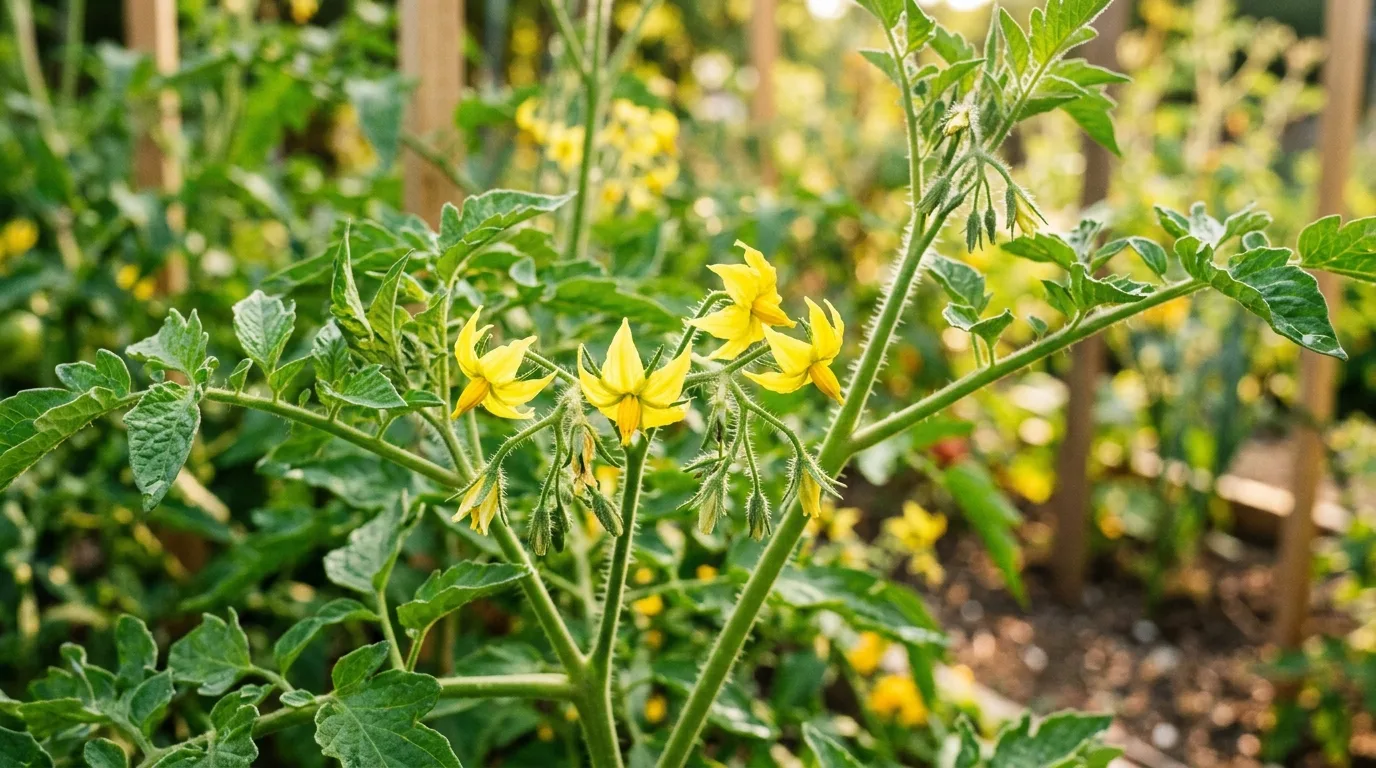
Flowers everywhere and no tomatoes is almost always a temperature or pollination problem. Here is the fix.
A tomato plant smothered in flowers that simply drop off, leaving no fruit, is one of the most disheartening sights in the veg patch. This is called blossom drop, and the plant is not faulty. It is responding to conditions that stop the flowers being pollinated and held. Fix the conditions and the next flush sets fruit.
Why tomato flowers drop
- Heat. When days climb past the mid-30s and nights stay above the low 20s, tomato pollen becomes sterile and flowers abort. This is the leading cause in a hot summer.
- Cold nights. Early in the season, nights below about 13 degrees also stop fruit set. Tomatoes set best between roughly 18 and 30 degrees.
- Poor pollination. Tomatoes are self-pollinating but need vibration to release pollen. Still, humid or very dry air stops it.
- Too much nitrogen. Heavy feeding gives lush leaves and few fruit.
- Water stress and overcrowding both push the plant to shed flowers.
How to get tomatoes to set fruit
Work with the temperature
In heat, shade the plants through the hottest hours, mulch heavily and keep water steady so they ride out the spell. Early in the season, wait for mild nights before planting out, or protect young plants. Once the weather sits in range, set returns on its own.
Help pollination
Give flowering trusses a gentle daily tap or flick, or a light shake, to shed pollen onto the stigma. A morning breeze or visiting bees do this naturally outdoors, but a hand tap guarantees it, especially under cover.
Feed for fruit
Ease off high-nitrogen feeds once flowering starts and switch to a higher-potassium tomato feed. Water evenly and mulch to avoid the stress swings that trigger drop.
When it is just timing
Early flowers on a young plant often drop simply because the plant is too small to carry fruit, and the first trusses in a cool spring may not set until it warms. A healthy plant flowering in the right temperature range will get there. Give it time before assuming a problem.
Catch problems before they cost you a crop
Track every bed in the Planting Season app, log what is going wrong, and get region-specific reminders so the same problem does not bite twice.
Open the App →Frequently Asked Questions
Why do my tomato flowers fall off without making tomatoes?
This is blossom drop, usually caused by heat above the mid-30s, nights that are too cold or too warm, or poor pollination. The plant sheds flowers it cannot set. Fix the conditions and the next flush will hold.
How do I get my tomatoes to set fruit?
Keep the plant in its 18 to 30 degree sweet spot with shade in heat and protection from cold nights, tap the flower trusses daily to spread pollen, feed with higher potassium rather than high nitrogen, and water evenly.
Does hot weather stop tomatoes setting fruit?
Yes. Above roughly 35 degrees by day, or warm nights above the low 20s, tomato pollen becomes sterile and flowers abort. This is the main cause of summer blossom drop and it resolves once the heat eases.
Do I need to hand-pollinate tomatoes?
Not usually outdoors, where wind and bees do the job, but a daily tap of the flowering stems helps a lot in still air or under cover. Tomatoes are self-pollinating, so each flower can set on its own once the pollen is shaken loose.
Why does my tomato plant have lots of leaves but no fruit?
Too much nitrogen drives leafy growth at the expense of flowers and fruit. Switch to a higher-potassium feed, ease off nitrogen, and make sure the plant has enough light and is not overcrowded.
See also: How to Grow Tomatoes and Capsicum Not Setting Fruit
Get next month's planting calendar, free
One email a month with exactly what to plant in your region, plus seasonal tips and harvest reminders. No spam, and you can unsubscribe any time.