
Green Bean Recipes: Garlic Beans, Salad, Slow-Cooked Beans and Pickled Beans
Updated November 2026
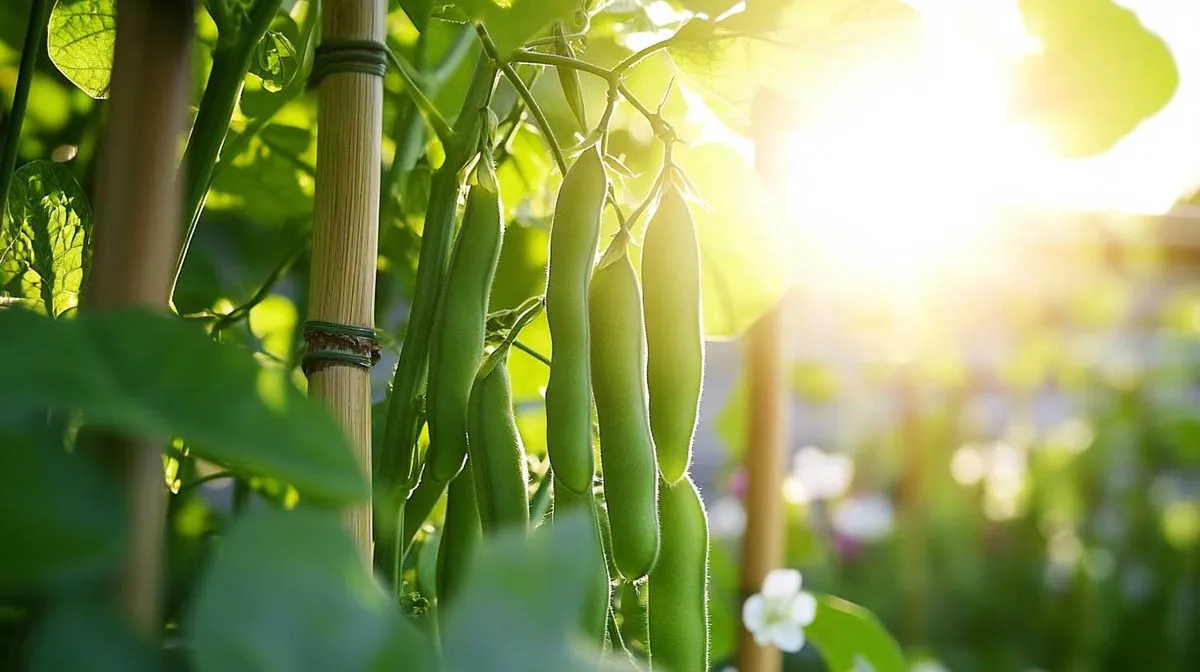
Four recipes for french and runner beans, plus how to blanch and freeze a heavy crop
Beans crop heavily and then all at once, and a bush bean row can go from nothing to a bucket in a week. Picking every two or three days keeps them producing, so the cooking needs to keep pace. This page has four recipes in exact quantities for french beans, runner beans and any other green bean, and a tested blanching time for freezing the surplus.
Oven temperatures on this page are for a standard (non-fan) oven. If you bake with a fan, lower each temperature by 20 degrees and check the food a few minutes early.
The short answer: trim the beans, boil them in well-salted water for 4 to 5 minutes until tender but still bright green, drain and toss with butter, garlic and lemon. To freeze, blanch for 3 minutes, cool in iced water and bag.
When beans are ready in New Zealand
Beans are tender to frost and cannot be planted until the soil is warm. Our data gives about 65 days from sowing to the first pods for bush beans. These are the sowing months for each region.
| Region | Sowing months |
|---|---|
| Northland | Oct to Feb |
| Auckland | Oct to Feb |
| Waikato & Bay of Plenty | Oct to Feb |
| Central North Island | Nov to Dec |
| Wellington & Lower North Island | Nov to Feb |
| Nelson & Marlborough | Nov to Feb |
| Canterbury | Nov to Dec |
| Otago & Southland | Dec |
| Central Otago | Dec |
A bush bean sown in October or November is cropping from about December, and a second sowing in January keeps the pods coming into autumn in the warmer regions. Pick the pods when they are the width of a pencil and snap cleanly, before the seeds bulge. The bean growing guide covers sowing and supports, the runner bean guide covers the climbing type, and the bean plant page has the quick facts.
Preparing beans
Snap or cut the stalk end off each pod. Most modern varieties are stringless, but older runner beans and big pods carry a tough string down one seam, which you can pull off with a vegetable peeler or knife. Slice runner beans on the diagonal into 2 to 3 cm lengths. Leave small french beans whole.
Overgrown pods with visible seeds are tough and bland in the pot. Leave a few on the plant to ripen as dry beans for seed or for soups, or shell the seeds and cook them like fresh beans. Cooking time depends on thickness, so test a bean at 3 minutes and keep going one minute at a time.
Garlic and lemon green beans
The quick side dish for four, ready in ten minutes.
Ingredients
- 500 g green beans, trimmed
- 1 tablespoon salt, for the water
- 30 g butter or 2 tablespoons olive oil
- 2 cloves garlic, thinly sliced
- Zest of 1 lemon and 2 teaspoons of juice
- Black pepper
Method
- Bring a large pot of water to a rolling boil and add the salt.
- Cook the beans for 4 to 5 minutes until tender with a slight snap. Drain and, if you want to keep the colour, run cold water over them for 30 seconds.
- Melt the butter in the same pot or a frying pan over medium heat and cook the garlic for 30 to 45 seconds until just fragrant. Do not let it brown.
- Return the beans, toss for 1 minute to heat through, then add the lemon zest, juice and pepper.
Serve straight away. Leftovers keep in the fridge for two days and are fine cold in a salad.
Green bean and potato salad
A picnic salad for six that holds well for a few hours. The dressing goes on while the potatoes are warm so that they absorb it.
Ingredients
- 600 g small waxy potatoes, halved
- 300 g green beans, trimmed and cut in 4 cm lengths
- 4 spring onions, sliced
- 2 tablespoons capers, drained (optional)
- Dressing: 4 tablespoons olive oil, 2 tablespoons white wine vinegar, 2 teaspoons Dijon mustard, 1/2 teaspoon salt, black pepper
Method
- Boil the potatoes in salted water for 12 to 15 minutes until a knife goes in easily. Add the beans for the final 4 minutes.
- Drain well and tip into a large bowl.
- Whisk the dressing in a jar and pour it over the warm vegetables. Toss gently.
- Add the spring onions and capers and let the salad cool for 20 minutes, then taste and adjust the salt and vinegar.
The salad keeps in the fridge for two days. Bring it to room temperature before serving.
Slow-cooked beans with tomato
This is how to use big, older pods that would be tough if boiled briefly. The long braise makes them soft and rich. It serves four as a side.
Ingredients
- 600 g green or runner beans, trimmed and cut in 5 cm lengths
- 2 tablespoons olive oil
- 1 onion, sliced
- 3 cloves garlic, sliced
- 400 g tin chopped tomatoes (or 500 g fresh tomatoes, chopped)
- 100 ml water
- 1 teaspoon dried oregano
- 1/2 teaspoon salt
- Black pepper
Method
- Heat the oil in a large lidded pan and cook the onion for 6 to 8 minutes until soft. Add the garlic for 1 minute.
- Add the beans, tomatoes, water, oregano and salt and stir.
- Bring to a simmer, cover and cook on low heat for 30 to 40 minutes, stirring now and then, until the beans are completely tender and the sauce is thick. Add a splash of water if it dries out.
- Season with pepper and serve warm or at room temperature.
The dish keeps in the fridge for three days and tastes better the next day.
Refrigerator pickled beans
These crisp pickled beans are for the fridge only, because the recipe has not been lab tested for shelf storage. Use vinegar labelled 5 percent acetic acid. This fills two 500 ml jars.
Ingredients
- 400 g young green beans, trimmed to fit the jars
- 250 ml white vinegar (5 percent acetic acid)
- 250 ml water
- 1 tablespoon salt
- 1 tablespoon sugar
- 4 cloves garlic, peeled
- 2 teaspoons dill seed or a few fresh dill heads
- 1/2 teaspoon chilli flakes (optional)
Method
- Wash two 500 ml jars and their lids in hot soapy water and rinse well.
- Blanch the beans in boiling water for 1 minute, then plunge into iced water and drain.
- Pack the beans upright into the jars with the garlic, dill and chilli.
- Bring the vinegar, water, salt and sugar to the boil until the salt and sugar dissolve, then pour the hot brine over the beans, covering them completely.
- Cool, seal and refrigerate. Wait 3 days before eating.
Keep the jars in the fridge and eat the beans within four weeks. For shelf-stable pickles, use a lab-tested recipe from the National Center for Home Food Preservation, and see our pickling guide.
Freezing green beans
Beans freeze well but must be blanched first, because raw beans go dull and woody in the freezer. This is the National Center for Home Food Preservation method for snap beans.
- Wash and trim the beans and cut or leave them whole.
- Boil a large pot of water and blanch the beans in batches for 3 minutes.
- Plunge them straight into iced water for 3 minutes and drain well.
- Spread on a tray, freeze for an hour, then bag the beans in portions of 300 to 500 g, squeezing out the air.
- Label with the date and use within 12 months. Cook from frozen in boiling water for 3 to 5 minutes.
Our freezing the harvest guide has the general rules, and the what to preserve guide covers the other methods. Home bottling of plain green beans is a low-acid process that needs a pressure canner and a tested method, so freeze them instead.
Quick reference
| Recipe | Beans | Oven or cook | Time | Keeps |
|---|---|---|---|---|
| Garlic and lemon beans (4) | 500 g | Boil | 4 to 5 minutes | 2 days in the fridge |
| Bean and potato salad (6) | 300 g | Boil | 12 to 15 minutes | 2 days in the fridge |
| Slow-cooked beans (4) | 600 g | Simmer | 30 to 40 minutes | 3 days in the fridge |
| Refrigerator pickled beans | 400 g | Brine | Blanch 1 minute | 4 weeks in the fridge |
| Frozen beans | Any amount | Blanch | 3 minutes | 12 months |
Questions
How long do you boil green beans?
Four to five minutes in well-salted boiling water gives tender beans with a slight snap. Thin french beans can take 3 minutes, and thick runner beans longer.
Can you freeze green beans?
Yes. Blanch them in boiling water for 3 minutes, cool them in iced water, drain, and freeze in bags for up to 12 months.
How do you stop green beans going grey?
Cook them briefly in plenty of salted boiling water, then run cold water over them or plunge them into iced water. Long cooking or acid, such as lemon juice added early, dulls the colour.
What do I do with beans that have got too big?
Cook them slowly with tomato or in a soup, where long cooking makes them tender, or let a few ripen and shell them as dry beans.
Can I bottle green beans at home?
Not safely without a pressure canner and a tested method, because green beans are low in acid. Freeze them or make refrigerator pickles.
Sources
- National Center for Home Food Preservation: freezing vegetables, snap beans
- New Zealand Food Safety (MPI): food safety in the home
Plant profile
The beans profile has sowing times for your region, companion plants and common pests.