New Zealand Bee Identification: Which Bee Is in Your Garden?
The bees you will actually see in a New Zealand garden, plus the wasps and flies everyone mistakes for them.
New Zealand has 28 native bee species, all small and solitary, alongside the introduced honey bee and four kinds of bumblebee. A backyard gardener meets the same handful again and again. Here is how to tell them apart in the thirty seconds before they fly off, what each one does for your garden, and what to plant to bring them back.
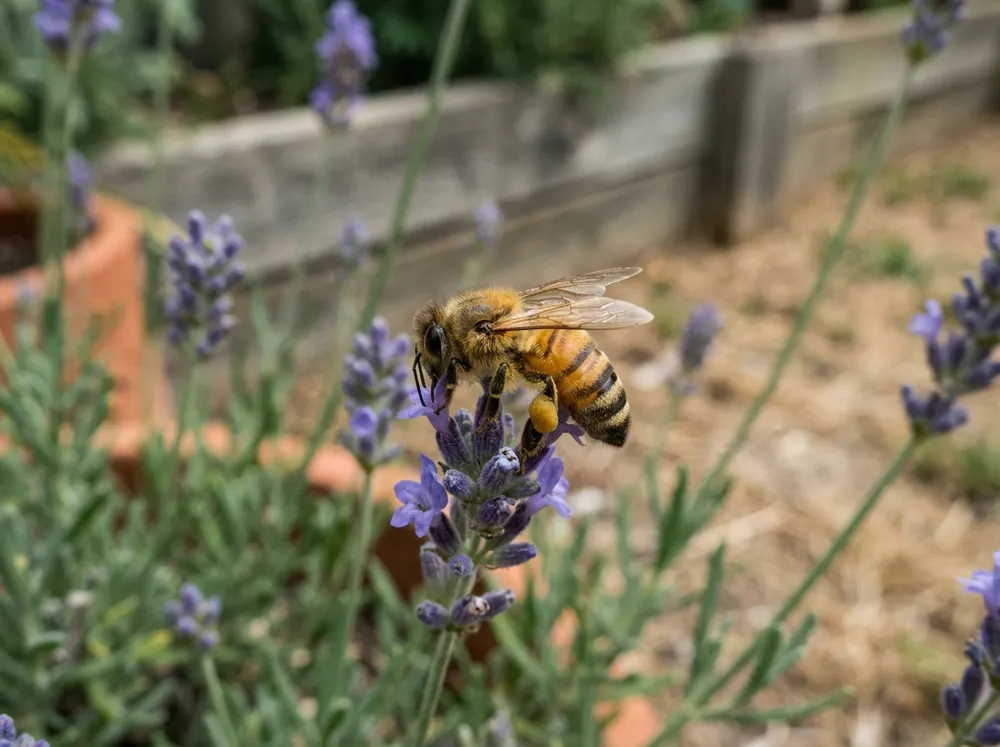 European honey bee Apis mellifera · 12-15mm
How to spot it: Golden-amber and black bands, fuzzy thorax, pollen baskets on the back legs. The bee everyone pictures.
Where: Everywhere in New Zealand.
The honey and commercial pollination workhorse, first brought to New Zealand in 1839. If a swarm lands in your yard, see our swarm guide. Lives in colonies of tens of thousands.
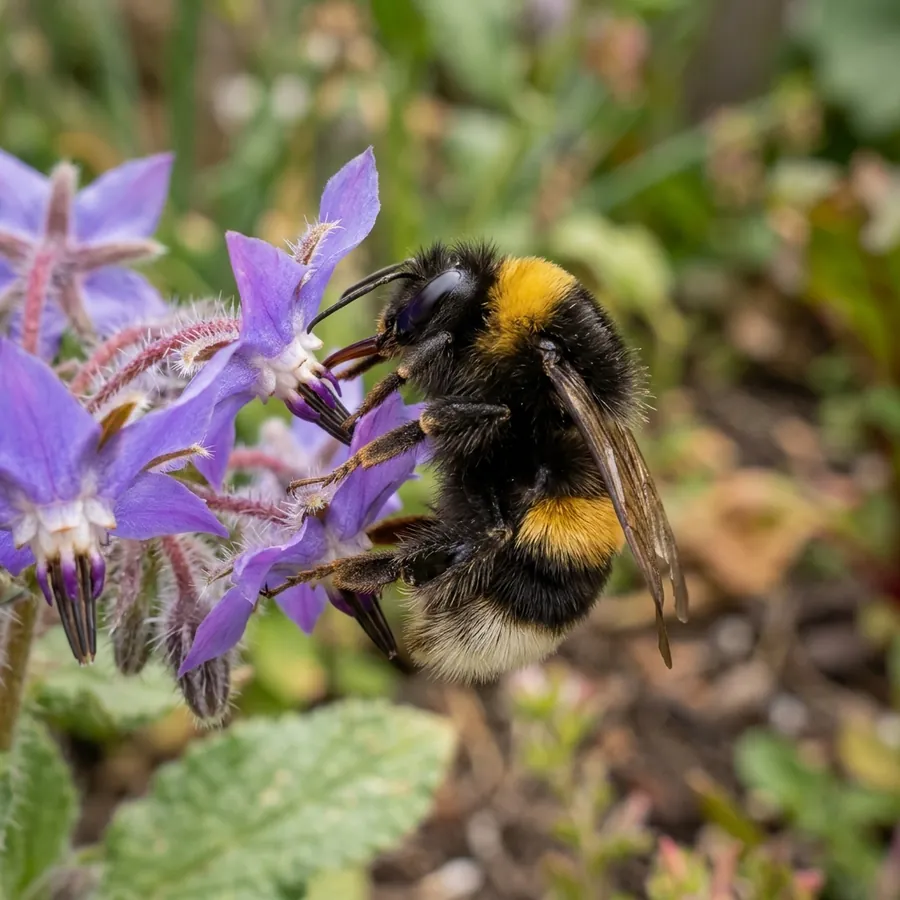 Bumblebee Bombus species · 15-22mm
How to spot it: Big, round and unmistakably furry, with bold black and yellow bands and (on the common one) a buff or white tail. Loud, slow and easy to watch.
Where: Throughout New Zealand. Four species were introduced from 1885; the large garden bumblebee (Bombus terrestris) is the one you see most. The rare short-haired bumblebee survives only inland in Central Otago and Canterbury.
The buzz-pollination champion of the New Zealand garden. A bumblebee grips a flower and vibrates it to shake the pollen loose, which is exactly what tomatoes, capsicums and eggplants need for full fruit set. Gentle and reluctant to sting.
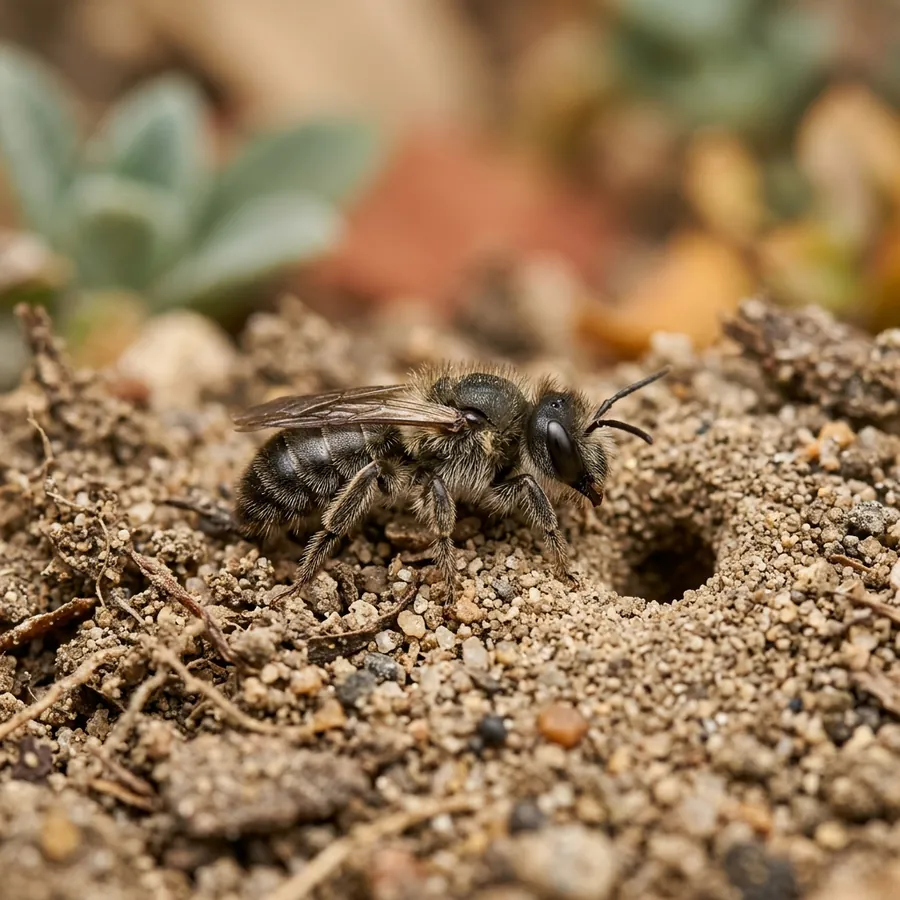 Native bee (ngaro huruhuru) Leioproctus species · 5-12mm
How to spot it: Small, dark and noticeably hairy, quick on the wing. New Zealand's most common and widespread native bee. You will often see them on a sunny bank rather than at the flower border.
Where: Throughout New Zealand, wherever there is bare, well-drained ground to nest in.
A solitary ground-nester: each female digs her own tunnel up to 30cm deep into bare soil and provisions it alone. They are busiest in the warmer months and are important pollinators of native plants. Leave a few sunny, undisturbed patches of bare earth and you will keep them.
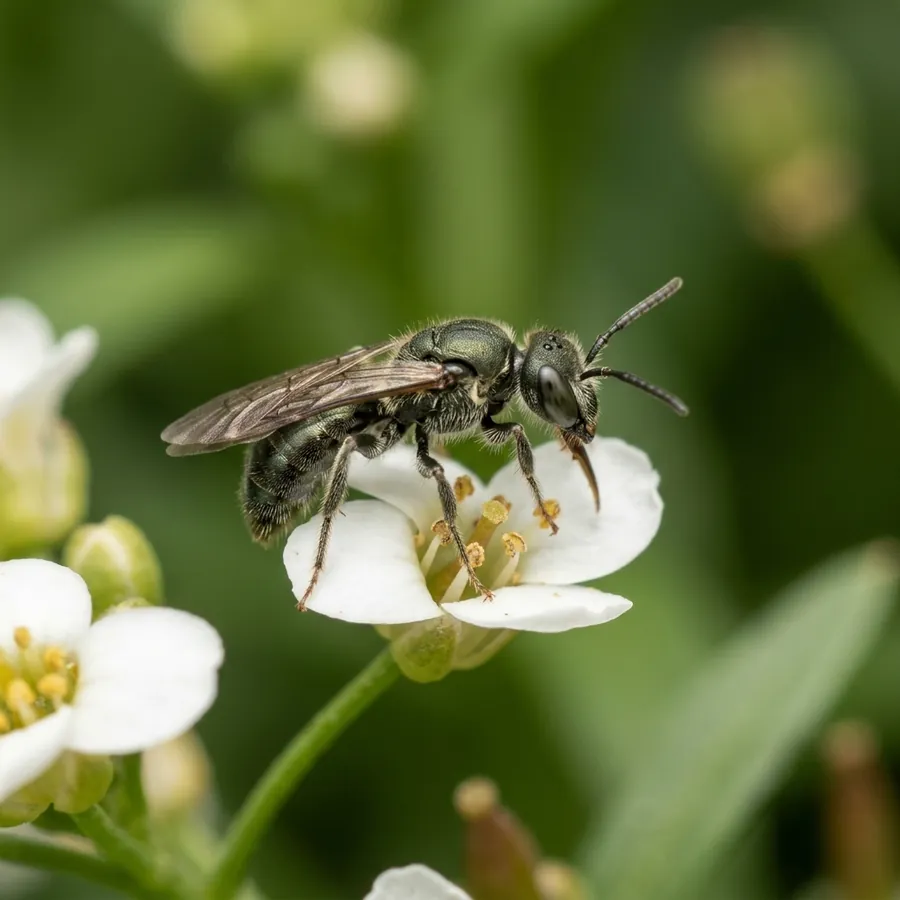 Tiny native bee Lasioglossum species · 4-8mm
How to spot it: The smallest bees you will see, nearly the size of a small ant, with only a few hairs and a black or faintly greenish sheen. Easy to overlook entirely.
Where: Throughout New Zealand, including farmland and disturbed ground, which it tolerates better than other natives.
Another solitary ground-nester, though several females will sometimes share a single entrance. Quiet, harmless and a steady pollinator of small open flowers. The same bare-soil habitat that suits Leioproctus suits these too.
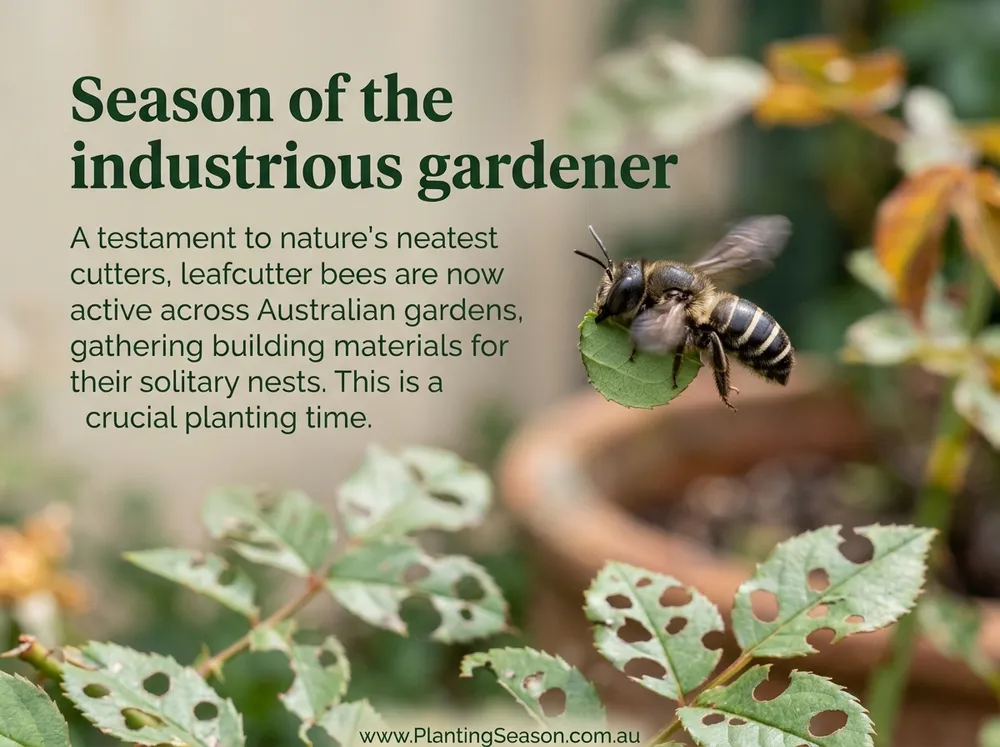 Leafcutter bee Megachile species · 6-15mm
How to spot it: Stout dark bee with pale bands that carries neat circular leaf discs beneath its body. Perfect round holes cut from the edge of your rose leaves are its signature.
Where: New Zealand, mostly in the warmer and drier districts. An introduced bee, brought in to pollinate lucerne and clover.
A solitary bee that wallpapers its nest cells with leaf circles. The leaf damage is cosmetic, never treat for it: you are hosting one of the best pollinators going. Loves bee hotels with 6-8mm holes.
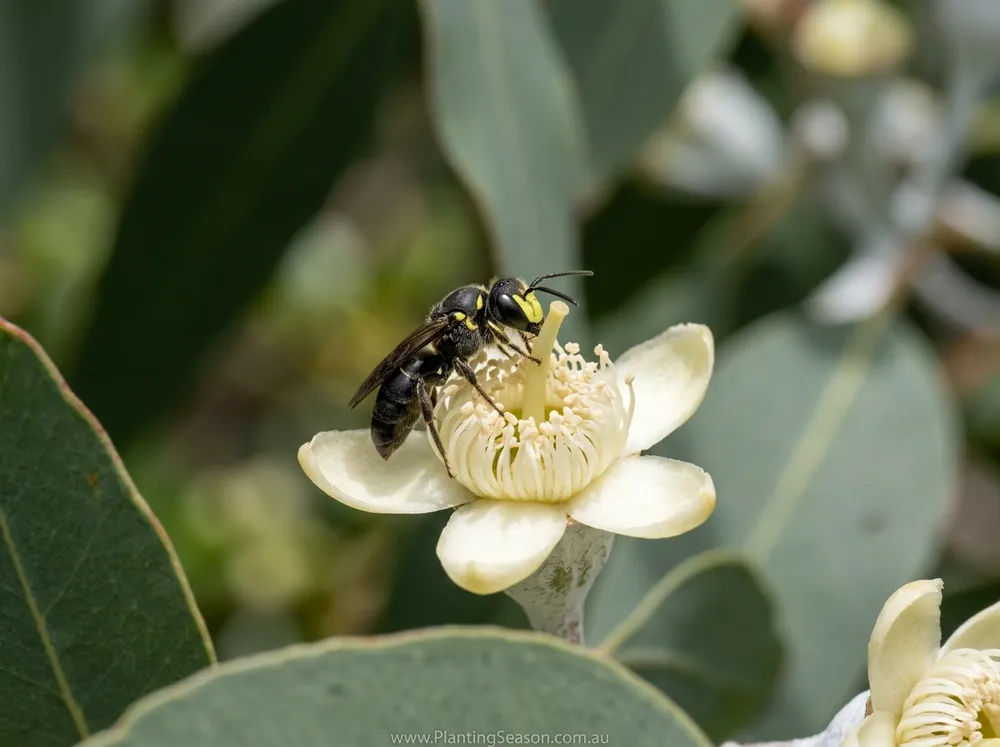 Masked bee Hylaeus species · 5-9mm
How to spot it: Slender, nearly hairless and black with sharp lemon-yellow face and side markings. Looks half-wasp, but visits flowers calmly.
Where: Throughout New Zealand. One of our native genera, and the only one that does not nest in the ground.
Carries pollen internally rather than on its legs, so it looks bare. Nests in pithy and hollow stems and old beetle holes: leave some dead flax stems and hollow canes standing over autumn and they will move in.
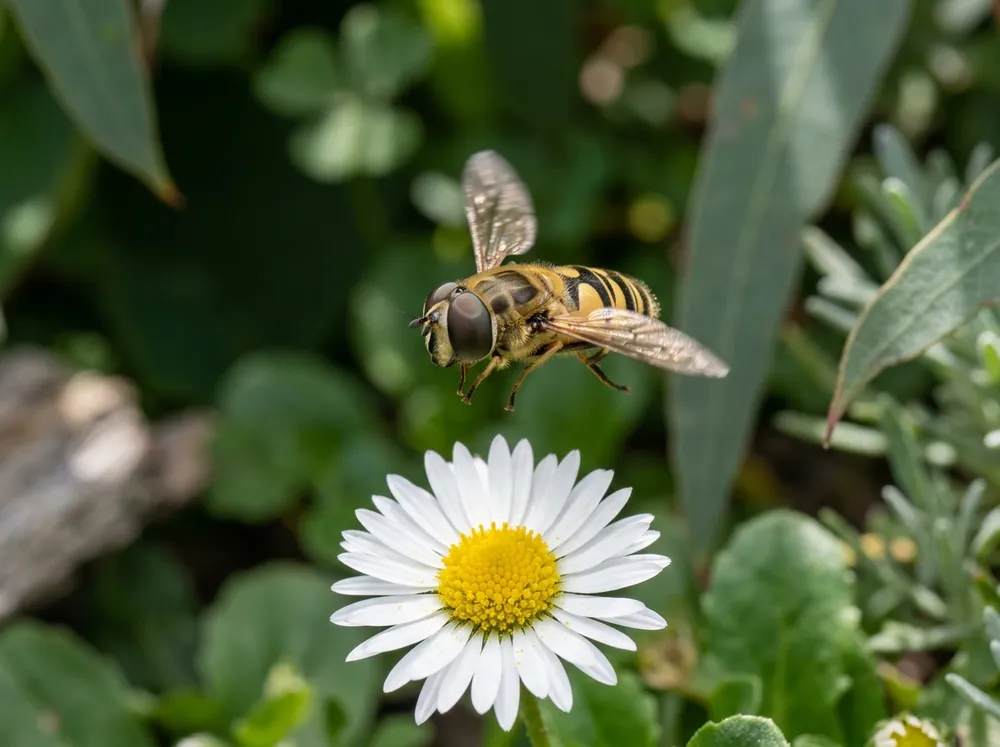 Hoverfly (not a bee) Syrphidae family · 8-12mm
How to spot it: The great imposter: bee-coloured but hovers in place like a tiny drone, has one pair of wings, enormous fly eyes and stubby antennae. Bees have two wing pairs, smaller eyes and long elbowed antennae.
Where: Throughout New Zealand, including our own native hoverflies.
Harmless and wonderful: adults pollinate while their larvae eat aphids by the hundred. If it hovers dead-still and darts, it is a hoverfly. Welcome it.
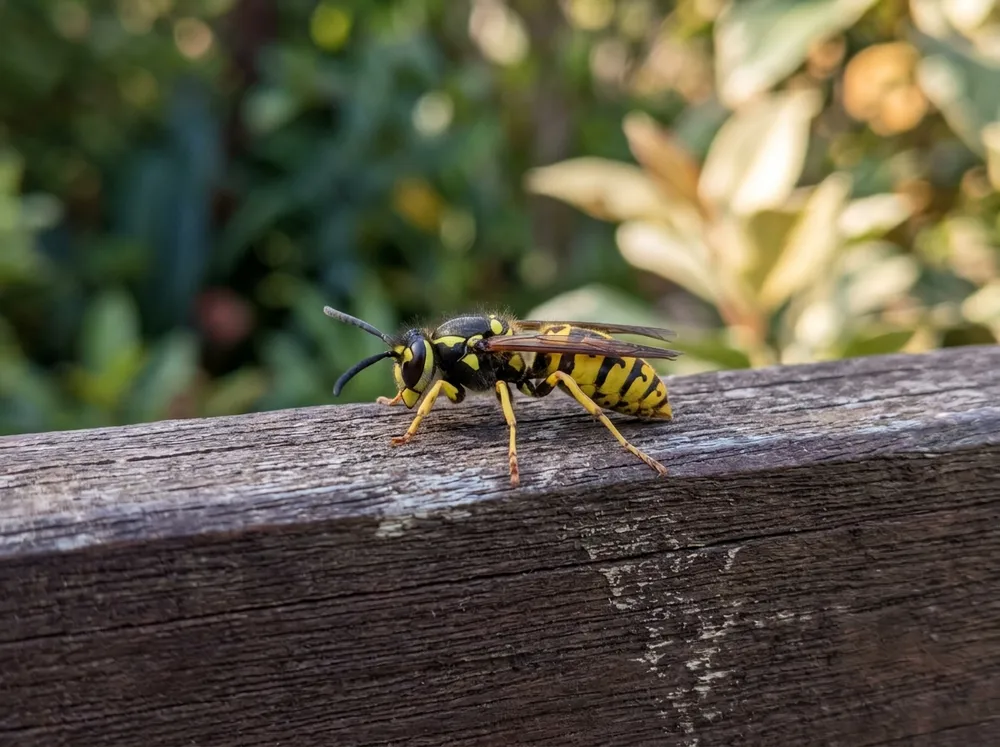 German & common wasp (not a bee) Vespula germanica & V. vulgaris · 12-16mm
How to spot it: Bright lemon-yellow and black, smooth and nearly hairless, narrow waist, folds its wings along its body at rest. Bees are furry; this is not.
Where: Throughout New Zealand, and a serious pest in beech forest and honeydew country in the South Island.
An aggressive introduced scavenger drawn to meat, sweet drinks and pet food rather than flowers. Can sting repeatedly. Never block a nest entrance; report or treat nests carefully, and check your regional council for wasp-control advice.
Make your garden a bee magnet
Three moves beat everything else: flower in every season (borage, alyssum and native shrubs cover the gaps), stop spraying (even organic pyrethrum kills bees on contact, spray at dusk if you must), and leave nesting habitat: sunny, undisturbed patches of bare soil for the ground-nesting natives, and hollow stems and dead flax stalks left standing for the masked bees. Our native bee guide has more on supporting them.
What to plant, flock and hive jobs for the month, in one short email. No spam.
Unsubscribe any time.