
Apple Tree Varieties for NZ: Chill Hours, Pollination Partners and Harvest Months
Updated November 2026
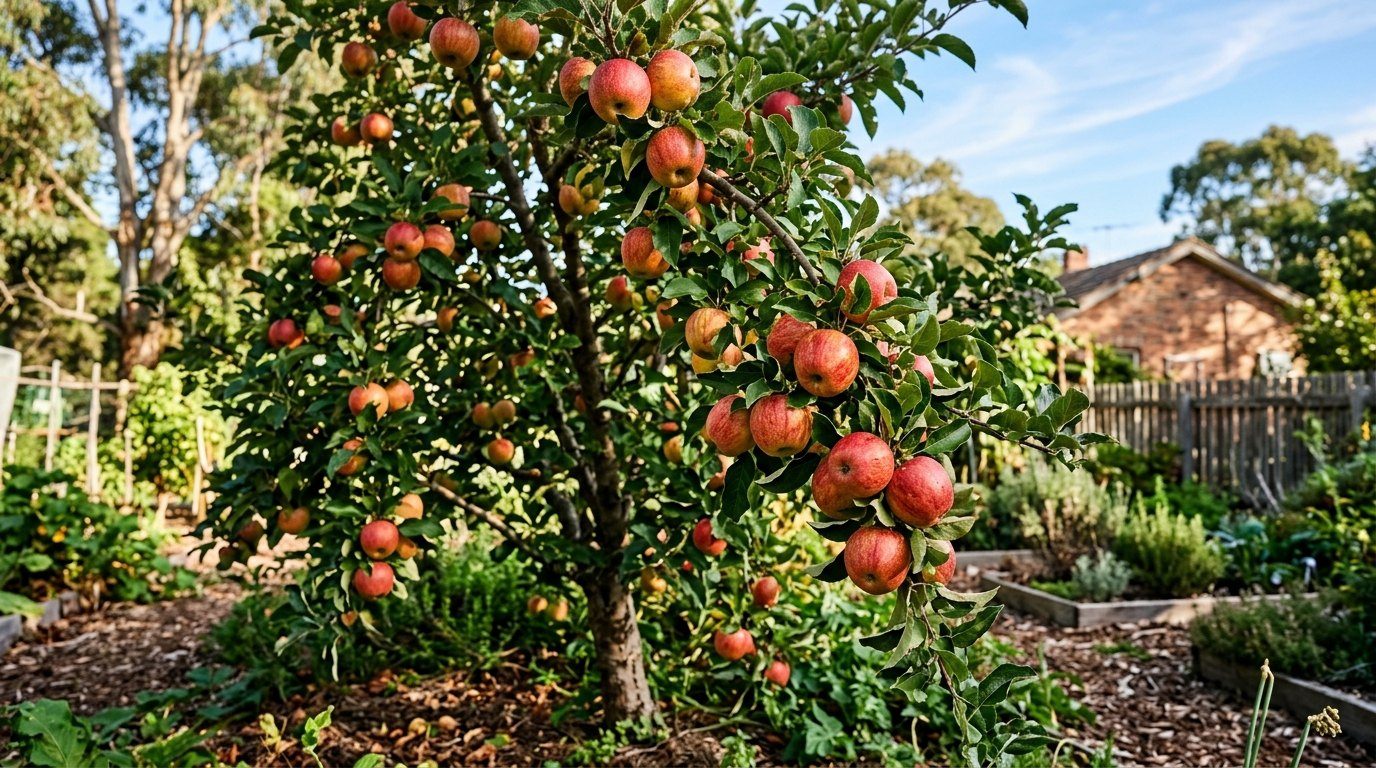
The best apple tree varieties for New Zealand are the ones that get enough winter chill where you live, have a pollination partner flowering at the same time, and ripen when you can use the crop. This page compares five varieties sold by New Zealand nurseries on those three points, then shows how chill hours change by region and how to pick a partner. The harvest months are a guide, since fruit ripens two to three weeks earlier or later by district and season.
Apple Varieties Compared
| Variety | Fruit and use | Winter chill | Pollination | Harvest |
|---|---|---|---|---|
| Royal Gala | Crisp, sweet and juicy eating apple, one of the most popular home and commercial varieties | Moderate, and grown from the warm north to the south | Self-fertile (Waimea Nurseries), and tip bearing | Late January to February |
| Braeburn | Firm, sweet-tart late apple bred in New Zealand, an excellent keeper | About 700 hours | Plant a second variety that flowers at the same time | Late season, about April to May |
| Granny Smith | Tart green eating and cooking apple, reliable and long storing | Suits most climates | Self-fertile, and a good pollinator for other varieties | Late season, about April to May |
| Monty’s Surprise | Large heritage New Zealand apple, rated disease resistant and resistant to woolly apple aphid | Not rated in our sources, so ask the nursery | Plant a second variety that flowers at the same time | Autumn |
| Ballerina columnar | Narrow upright trees that fit in a row or a pot | Not rated in our sources, so ask the nursery | Plant a second variety, or have a crab apple nearby | Autumn |
These varieties are sold by Waimea Nurseries and garden centres, and Monty’s Surprise by specialist heritage nurseries, as listed in our apple growing guide. The chill figures and the self-fertility notes come from the nurseries and our own apple plant page. If a figure is missing, ask for the chill rating before you buy.
Chill Hours: Which Apples Suit Your Region?
Chill hours are the hours below about 7°C that a deciduous tree gets over winter, and it uses them to break dormancy evenly. Too few and the tree leafs out late, flowers weakly and crops badly. Most of New Zealand gets plenty, so the problem is mainly in the warm north, as our low chill fruit guide explains. The chill hours tool matches a variety to your region.
| Climate | Where | Rough chill hours | What it means for apples |
|---|---|---|---|
| Warm north and coast | Auckland, coastal Bay of Plenty, Tasman | About 100 to 300 hours | Low chill varieties only, with the chill rating checked on the label |
| Subtropical pockets | Kerikeri, sheltered coastal Northland | Under about 150 hours | Apples and most stone fruit struggle here |
| Temperate | Wellington, Christchurch, Waikato, Manawatu | About 300 to 800 hours | Most apple varieties crop well, including Royal Gala and Granny Smith |
| Cool south and inland | Otago, Southland, Central Otago, the high country | 800 hours or more | Every variety is open to you, including Braeburn at about 700 hours |
A frost hollow collects more chill than a warm coastal slope a few kilometres away, so use these figures as a guide. Northland and Auckland winters may not give enough chill for many varieties, so choose a low chill apple and check the label. Braeburn needs about 700 hours and is a better choice in the cooler south.
Pollination Partners
Most apples need pollen from a different variety that flowers at the same time, carried by bees. In most towns bees bring pollen from neighbouring apple and crab apple trees, but if you have no neighbours with apples, you have three options:
- Plant two compatible varieties that flower together. Granny Smith is rated a good pollinator for other varieties.
- Choose a self-fertile variety such as Granny Smith, or Royal Gala, which Waimea Nurseries lists as self-fertile. These still crop better with a partner nearby.
- Buy a double grafted tree, which carries two varieties on one trunk.
Ask the nursery for the flowering group of each variety. Varieties in the same or neighbouring groups flower at the same time and pollinate each other.
Harvest Months
| Variety | Jan | Feb | Mar | Apr | May |
|---|---|---|---|---|---|
| Royal Gala | ● | ● | |||
| Granny Smith | ● | ● | |||
| Braeburn | ● | ● | |||
| Monty’s Surprise and Ballerina | ● | ● | ● |
Apples are ready when the fruit lifts and twists off the spur easily, the seeds have turned brown and the fruit tastes sweet. Planting early and late varieties spreads the harvest across several months. Late varieties such as Granny Smith and Braeburn keep longest in a cool, dark place or the fridge.
Tree Size and Rootstock
The rootstock decides how big the tree grows. M27 gives an extra dwarf tree for a pot, M9 a dwarf tree and MM111 a large orchard tree. Dwarf trees need permanent staking. Our dwarf fruit trees guide and apple pruning page cover the next steps.
Frequently Asked Questions
What are the best apple varieties for NZ?
Royal Gala, Braeburn and Granny Smith are the most widely grown, and Monty’s Surprise is a hardy heritage choice. In the warm north, look for low chill varieties and check the label.
How many chill hours do apples need?
It depends on the variety. Braeburn needs about 700 hours, while low chill apples need far fewer. Most of New Zealand gets 300 to 800 hours, and the cooler south gets more.
Do I need two apple trees to get fruit?
Usually yes, unless a neighbour has apple or crab apple trees nearby. Royal Gala and Granny Smith are self-fertile, and a double grafted tree carries two varieties.
When do apples ripen in NZ?
Royal Gala ripens from late January to February and the late varieties, including Granny Smith and Braeburn, from about April to May. Ripening shifts by two to three weeks with district and season.
Sources: Waimea Nurseries variety notes as recorded in our apple growing guide and apple plant page, and our low chill fruit guide for the regional chill figures. Harvest months are general guide figures for New Zealand and vary with district and season.
See also: Apple recipes.