
How to Grow Chillies in Pots: Size, Sun, Water and Feeding
Updated November 2026
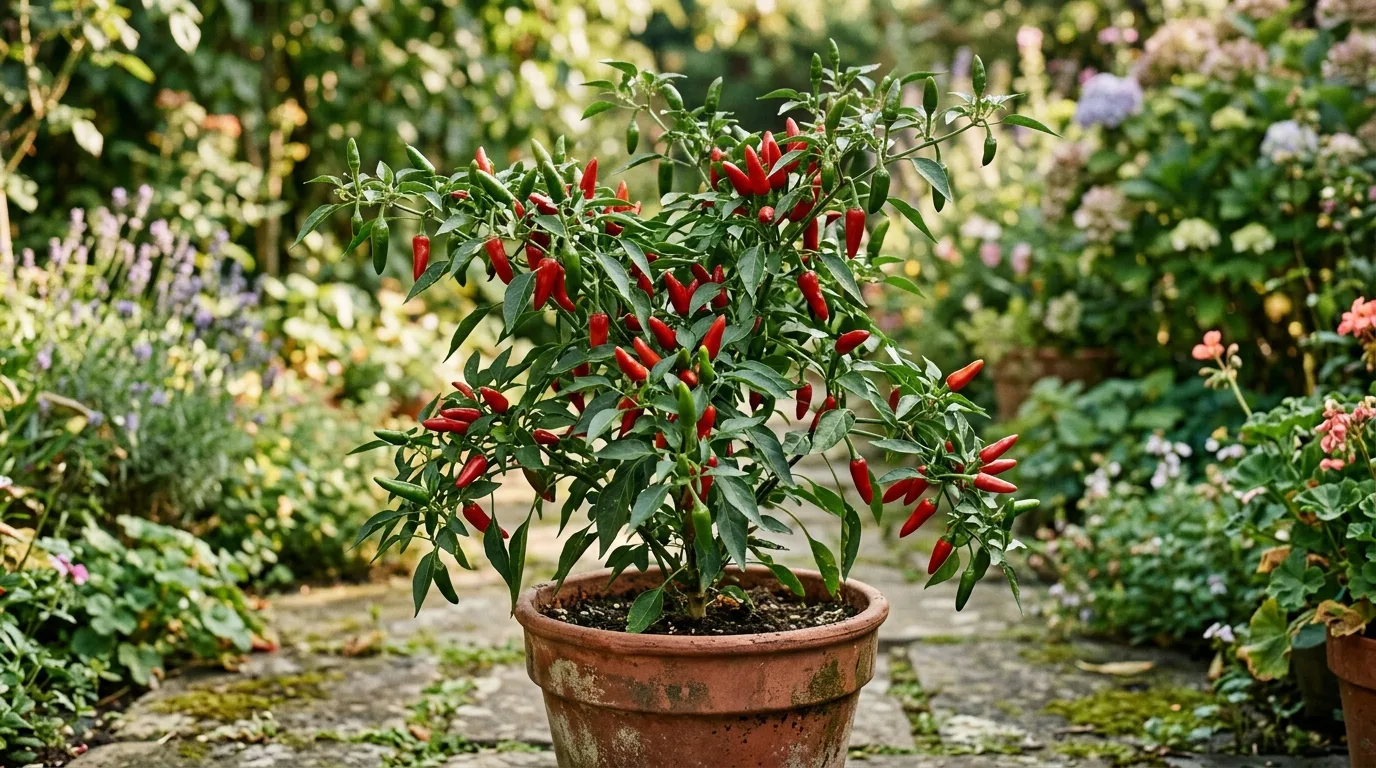
Chillies are compact, heat-loving and generous, which makes them an ideal pot crop. A single plant gives more fruit than most households use, looks ornamental when covered in colour, and in a pot you can move it to chase the sun or shelter it for winter. This guide covers pot size, sowing, light, watering and feeding, flower drop, harvesting and overwintering, with the planting months for every region in New Zealand.
Quick answer
- Use a pot at least 25 cm wide, about 9 litres, and 30 cm wide or larger for bigger varieties. It must drain freely.
- Chillies need warmth: seeds germinate at 22 to 30 °C, and plants want at least 6 hours of direct sun.
- Water when the top of the mix starts to dry, and do not let plants wilt while flowering, or they drop flowers.
- Feed every one to two weeks from flowering with a potassium-rich fertiliser, following the label.
When to sow and plant chillies
These months come from our regional planting data, the same data the Planting Season app uses. Pick your region.
| Region | Sow or plant |
|---|---|
| Northland | September to December |
| Auckland | September to December |
| Waikato & Bay of Plenty | September to December |
| Central North Island | November and December |
| Wellington & Lower North Island | October to December |
| Nelson & Marlborough | October to December |
| Canterbury | November and December |
| Otago & Southland | November and December |
| Central Otago | December |
Chillies need a long warm season, which is a stretch in much of New Zealand. Start seed under cover on a warm windowsill or in a heated propagator, and move pots into a warm, sheltered spot or a glasshouse in cooler regions.
Choose a pot
| Plant type | Pot width | Volume |
|---|---|---|
| Small ornamental or compact types | 20 cm | 5 litres |
| Most varieties (jalapeno, cayenne, bird's eye) | 25 cm to 30 cm | 9 litres to 14 litres |
| Large bushy types (habanero, large sweet peppers) | 30 cm or more | 14 litres or more |
Good drainage is essential. Chillies dislike constantly wet roots, and a wide, heavy pot is steadier in wind. Dark pots heat up in full sun, so a pale pot or a stand helps the roots.
Sowing and light
- Germination. Chilli seed needs warmth, 22 to 30 °C, and takes about 14 days or longer. A warm windowsill or a heat mat works. Cool mix is the usual reason for seed that never comes up.
- Sow 5 mm deep in seed-raising mix, then pot up into pots about 10 cm wide when seedlings have 2 to 3 pairs of true leaves, and into the final pot when the roots fill that.
- Light. Give the warmest, sunniest spot you have, at least 6 hours. A hot, sheltered corner or a spot against a sunny wall suits them.
- Buy a seedling instead. Nurseries sell seedlings in the planting months in the table, which saves weeks of babying seed in cool weather.
Water and feed
- Water. Water when the top 2 to 3 cm of mix has dried. Chillies dislike constantly wet roots, and a little dryness between waterings can concentrate the heat in the fruit, but do not let a flowering plant wilt.
- Feed. Start with a balanced feed while the plant is small, then switch to a registered potassium-rich liquid fertiliser, such as a tomato feed, once flowers appear, following the label. Too much nitrogen gives lots of leaf and few fruit.
- Mulch. A thin layer of straw or bark on the mix slows evaporation. See our mulching guide.
Why is my chilli dropping flowers?
Flower drop is common and has four main causes: heat above the mid-30s °C, cold nights, water stress, and poor pollination. Shade the plant in extreme heat, keep watering steady while it flowers, and on a still balcony give the plant a gentle tap each day to move pollen, because chillies are self-pollinating but need a little movement.
Pests and problems
| What you see | Likely cause | What to do |
|---|---|---|
| Tiny insects clustered on new growth | Aphids | Rinse off with water. See our aphid page. |
| Small white flies rising when you brush the leaves | Whitefly | See our whitefly page. |
| Curled, yellowing leaves with sticky residue | Tomato potato psyllid | See our tomato potato psyllid page. |
| Sunken dark spots on ripe fruit | Anthracnose, in warm humid weather | Remove infected fruit and avoid wetting the fruit when you water. |
| Dark, sunken base on fruit | Blossom end rot, from uneven watering | Water steadily and mulch. |
Harvest and heat
Pick chillies green or leave them to ripen to red, orange or yellow. Ripe fruit is usually hotter and sweeter. Regular picking encourages more flowers and fruit. Wear gloves with hot varieties, wash your hands and the knife afterwards, and keep your hands away from your eyes. Our chilli heat scale explains how hot each type is.
Overwintering chilli in pots
Chillies are perennial, and a pot lets you keep them for years. In most of New Zealand, bring the pot under cover or indoors before the first frosts, cut back watering, and trim long stems by about a third in late winter. The plant reshoots in spring and crops earlier and harder in its second year.
Chilli varieties for pots
- Cayenne Long Slim: a long thin hot red chilli that dries well, sold by Egmont Seeds, Kings Seeds and Mitre 10.
- Jalapeno: thick-walled, medium heat, fresh or pickled, from Kings Seeds and Egmont Seeds.
- Thai Birds Eye: small, very hot upright fruit that is prolific and ornamental, from Kings Seeds and Egmont Seeds.
- Habanero: a very hot lantern-shaped fruit that needs a long warm season, from Kings Seeds and Egmont Seeds.
The chilli plant profile and the full growing guide have more detail on varieties and sowing.
Pinching and pruning for a bushier plant
When a young chilli plant is about 20 cm tall and has several pairs of leaves, pinch out the growing tip just above a pair of leaves. This makes it branch, giving a bushier plant with more flowers. Staking one or two sturdy canes keeps a heavily laden plant upright in a pot, and removing the first flowers on small plants lets them grow bigger before they fruit.
Chilli heat at a glance
| Variety | Typical heat (Scoville units) | Comment |
|---|---|---|
| Hungarian sweet wax | 0 to 500 | Mild banana pepper. |
| Jalapeno | 2,500 to 8,000 | Medium. Thick walled. |
| Cayenne | 30,000 to 50,000 | Hot. Dries well. |
| Thai bird's eye | 50,000 to 100,000 | Very hot, small fruit. |
| Habanero | 100,000 to 350,000 | Extremely hot, fruity. |
Scoville figures are typical published ranges, and the heat of a given fruit varies with variety, growing conditions and ripeness.
Drying and storing chillies
- Fresh. Whole chillies keep in the fridge for one to two weeks in a paper bag.
- Freezing. Freeze whole or chopped chillies on a tray, then bag them. They go soft when thawed, so use them in cooking.
- Drying. Thin-walled chillies such as cayenne dry well on a string in a warm, airy place, or in a dehydrator. Thick-walled types such as jalapeno are better split before drying.
- Seed saving. Chillies cross-pollinate when varieties grow close together, so seed saved from mixed pots may not come true.
Frequently asked questions
What size pot for a chilli plant?
A pot 25 to 30 cm wide, about 9 to 14 litres, suits most chillies. Small ornamental types manage in less, large bushy types want more, and every pot needs good drainage.
How much sun do chillies in pots need?
At least 6 hours of direct sun, and the warmer the better. A sheltered spot against a sunny wall gives the heaviest crop.
Why is my potted chilli dropping flowers?
Flower drop comes from heat above the mid-30s °C, cold nights, water stress or poor pollination. Shade it in extreme heat, water steadily, and tap the plant daily on a still balcony.
Can chilli plants survive winter in a pot?
Yes. Chillies are perennial, so in cooler areas move the pot somewhere warm and sheltered, cut back watering, and trim long stems in late winter. The plant reshoots in spring.
How often should I feed chillies in pots?
Feed every one to two weeks from flowering with a registered potassium-rich liquid fertiliser such as a tomato feed, following the label. Too much nitrogen gives leaf rather than fruit.
Related guides
See what to plant this month
Pick your region for a month-by-month calendar tuned to your climate.
Find your region →See also: Chilli and pepper varieties.
See also: Jalapeno chilli.