
How to Grow Citrus in Pots in New Zealand
Updated June 2026
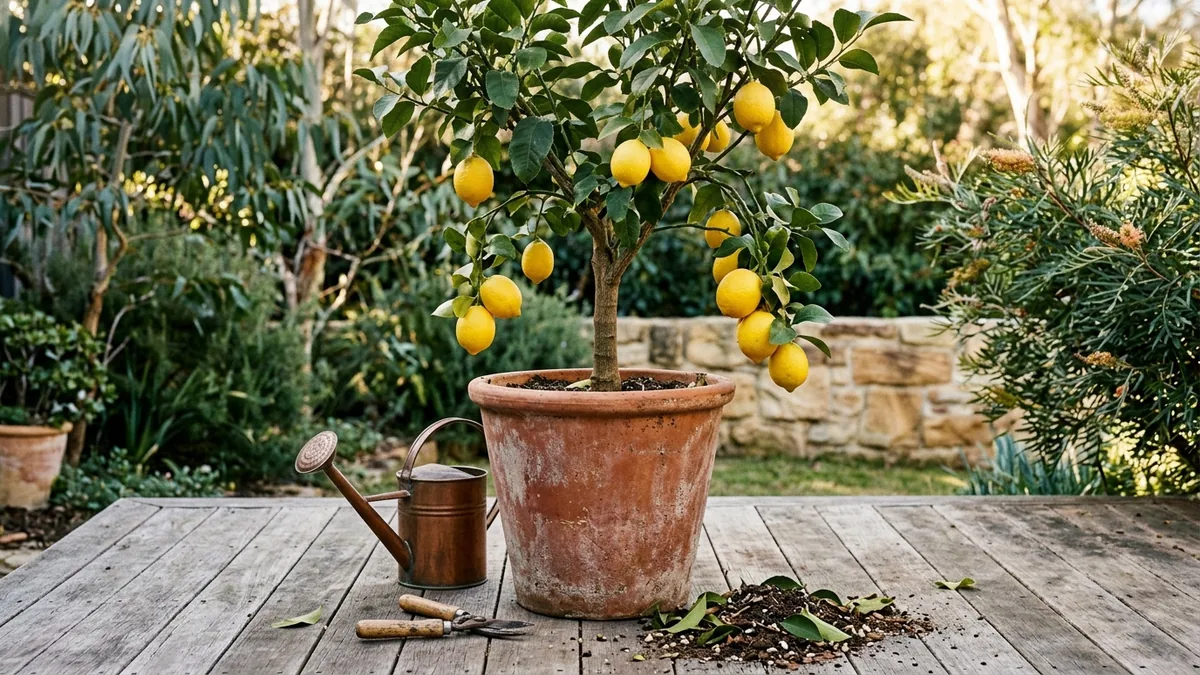
Lemons, limes, mandarins, oranges and kumquats for balconies, courtyards and cooler regions
Citrus are one of the most rewarding fruits you can grow in a pot. A single well-fed tree gives you fragrant blossom, glossy evergreen leaves and a steady supply of fruit, all from a container you can stand by the back door. Because the roots are confined, a potted citrus stays smaller and comes into fruit quickly, which makes it perfect for balconies, courtyards, small sections and rented homes where you cannot plant in the ground.
Pots also unlock citrus for cooler parts of New Zealand. Citrus dislike hard frost, so the ability to shift a pot to a sheltered spot, against a warm wall, into a glasshouse or indoors over winter is a real advantage in the south and inland. Get the pot size, the mix, the watering and the feeding right and a container citrus will crop happily for many years. Use the helper below to size your pot and set up a feeding routine, then read on for variety picks and care.
Pot size and feeding helper
Choosing a Tree and Dwarf Rootstock
Almost all citrus sold in New Zealand are grafted, with the fruiting variety joined onto the roots of a tougher, more disease-resistant plant. For pots, ask specifically for a tree on a dwarfing rootstock. The classic choice is Flying Dragon (a contorted form of Poncirus trifoliata), which holds a tree to roughly half the size of a standard one, keeps it in scale for a container, and often brings it into fruit a year or two sooner. Standard Trifoliata rootstock is also widely used in New Zealand and suits pots well in cooler areas.
Buy a healthy, well-grown two to three year old grafted tree from a reputable garden centre rather than a tiny seedling. Seed-grown citrus take many years to fruit and are not true to type, so a grafted, named variety is always the better buy for a pot.
The best types for containers are the compact, reliable croppers:
- Lemon: Meyer (the New Zealand staple, the most cold-tolerant and the obvious first choice for pots) and Lisbon for a true sharp lemon.
- Lime: Tahitian (Bearss) lime, and the fragrant kaffir or makrut lime grown for its leaves.
- Mandarin: Satsuma and Clementine are productive, easy to peel and among the more cold-hardy citrus.
- Orange: Best Seedless and Navel, choosing compact or dwarf-grafted forms.
- Kumquat: one of the very best citrus for pots, naturally small, heavily ornamental and easy to crop.
Pot, Mix and Position
Use a pot with plenty of drainage holes and stand it on pot feet so excess water can escape and the base does not sit in a puddle. Fill with a premium free-draining potting mix or a dedicated citrus and fruit mix. Never use garden soil or heavy clay in a pot, as it compacts, holds water and suffocates the roots.
Position is everything. Citrus crop best in full sun, a minimum of six to eight hours of direct light a day. Pick the warmest, brightest, most sheltered spot you have and protect young trees from strong wind and frost. A sunny north-facing wall that radiates warmth is ideal, especially in cooler districts.
Watering
Watering is the single biggest cause of problems with potted citrus, in both directions. The aim is consistent moisture without waterlogging. Water when the top 3 to 5 cm of mix feels dry, then soak the pot until water runs freely from the drainage holes. In peak summer heat a pot may need watering every day. Mulch the surface of the mix to slow evaporation and keep the roots cool.
Just as important, never leave the pot standing in a saucer of water. Constant wet feet lead to root rot, which is often the real reason behind sudden yellowing and leaf drop. Young trees need the most consistent moisture while they establish their roots.
Feeding
Citrus are gross feeders, and potted trees are hungrier still because every watering washes nutrients out of the mix. Feed little and often through the growing season with a citrus-specific fertiliser that contains trace elements, especially magnesium, iron and zinc. A simple routine is a complete citrus food in early spring, again in early summer and again in early autumn, topped up with a monthly liquid feed of seaweed or fish emulsion. Ease right off through winter when the tree is barely growing.
Match the strength to the tree. Young trees do best on lighter, more frequent diluted feeds, while established trees can take the full rate at each seasonal point. Always water before and after feeding so the roots are never fed when dry.
Pruning and Fruit
Citrus need only light pruning. Shape the tree to keep it open and balanced, remove any dead or crossing branches, and snip back the odd wayward shoot. The one job not to skip is removing rootstock suckers, any vigorous shoots that appear from below the graft union. They are not your fruiting variety and will sap the tree, so rub or cut them off as soon as you see them.
On a very young tree it pays to remove the fruit in the first year and to thin a heavy set in the next year or two. It feels harsh, but it lets the tree put its energy into building a strong framework rather than stalling under a load of fruit it is too small to carry.
Common Problems
Yellow leaves
Yellowing is the most common citrus complaint and the cause is written in the pattern:
- Over-watering or poor drainage: overall dull yellowing with soggy mix. Let the pot dry out more between waterings and check the drainage holes are clear.
- Nitrogen deficiency: even, pale yellowing across older leaves first. Feed with a complete citrus fertiliser.
- Magnesium deficiency: yellowing between the veins on older leaves, with a green inverted V at the base. Common in pots, and corrected with a citrus food containing magnesium or a watering of Epsom salts.
- Iron deficiency: yellowing on the newest leaves while the veins stay green. Usually linked to cold, wet or alkaline conditions, and helped by a chelated iron drench.
- Cold stress: general yellowing and leaf drop after cold snaps, common in a New Zealand winter. Move the pot to shelter.
Citrus leafminer
Leafminer leaves silvery, squiggly trails inside new leaves, which then curl. It is mostly cosmetic. Tolerate it on established trees and protect only the new flushes on young trees, with horticultural oil applied to the soft new growth.
Scale, sooty mould and aphids
Scale insects suck sap and excrete honeydew, which grows a black sooty mould on the leaves. Aphids cluster on new shoots. Treat all three with a thorough spray of horticultural oil, which smothers scale and clears the way for the mould to wash off.
Collar and root rot
Soggy mix and wet feet cause collar and root rot, seen as gum oozing at the base and a tree in slow decline. Prevention is the cure: free-draining mix, pot feet, and never standing the pot in water.
Winter Care in Cold Areas
This is where pots earn their keep. In cold, frost-prone districts move the pots before the first hard frost to a sheltered, sunny position, against a warm wall, into a glasshouse, or indoors next to a bright window. Reduce watering over winter, since a cool, barely growing tree needs far less, and stop feeding altogether until spring. Protect the canopy from frost with frost cloth if a cold night threatens, then move the tree back into the open as the weather warms.
Best Citrus Varieties for Pots in New Zealand
| Citrus | Good pot picks | Notes |
|---|---|---|
| Lemon | Meyer, Lisbon | Meyer is the New Zealand staple, the most cold-tolerant lemon and ideal for pots. Lisbon gives a true sharp lemon for warmer, more sheltered spots. |
| Lime | Tahitian (Bearss), kaffir | Tahitian is the reliable juicy lime. Kaffir is grown for its fragrant leaves and stays well sized in a pot. |
| Mandarin | Satsuma, Clementine | Easy-peel and among the more cold-hardy citrus, a good choice for cooler regions. |
| Orange | Best Seedless, Navel | Choose a dwarf-grafted form, as oranges are vigorous and need the bigger pot and the warmest spot. |
| Kumquat | Nagami, Meiwa | One of the very best for pots. Small, ornamental and heavy-cropping. Nagami is tart, Meiwa sweeter. |
Meyer lemon
The classic New Zealand pot lemon. Naturally compact, heavy-cropping and the most cold-tolerant lemon, with sweeter, thin-skinned fruit. The first choice for beginners and cooler regions.
Tahitian (Bearss) lime
The reliable juicy lime for pots, seedless and productive. Pair it with a kaffir lime if you cook with citrus leaves.
Satsuma mandarin
An easy-peel, sweet mandarin that is among the more cold-hardy citrus, making it a sound choice for a pot in cooler districts.
Nagami kumquat
Possibly the perfect container citrus. Small, glossy and ornamental, it carries masses of tart little fruit and shrugs off pot life better than most.
Track Your Potted Citrus
Add your citrus to your garden in the Planting Season app and get reminders for feeding, watering and harvest.
Open the App →Frequently Asked Questions
What is the best citrus to grow in a pot in New Zealand?
The Meyer lemon is the go-to potted citrus in New Zealand because it is the most cold-tolerant and crops reliably even in cooler regions. Kumquats, limes, mandarins and compact oranges also do well. Buy a tree grafted onto dwarfing rootstock so it stays a manageable size and fruits earlier.
What size pot does a citrus tree need?
Start a young tree in a pot about 35 to 40 cm wide, then pot up gradually to a final container of 45 to 60 cm wide, roughly the size of a half wine barrel. Move up one pot size at a time rather than going straight into a huge pot, which stays cold and wet around the small rootball.
Why are my potted citrus leaves turning yellow?
The usual causes are over-watering or poor drainage, a nutrient shortage, or cold stress. Even yellowing with green veins on older leaves points to magnesium deficiency, yellowing on new leaves points to iron deficiency, and pale leaves overall point to a lack of nitrogen. Feed with a citrus fertiliser that contains trace elements, water correctly, and make sure the pot drains freely.
How often should I feed citrus in pots?
Potted citrus need feeding more often than trees in the ground because nutrients leach out with every watering. Apply a complete citrus fertiliser in early spring, again in early summer and again in early autumn, plus a monthly liquid seaweed or fish feed through the growing season. Ease right off in winter.
How often should I water citrus in pots?
Water when the top 3 to 5 cm of mix is dry, soaking until water runs from the drainage holes. In peak summer heat that can mean watering every day. Never leave the pot standing in a saucer of water, as constant wet feet cause root rot.
Do citrus in pots need full sun?
Yes. Citrus need a minimum of six to eight hours of direct sun a day to crop well. Pick the sunniest, most sheltered spot you have and shield young trees from strong wind and frost.
Can potted citrus survive winter outside in cold areas?
This is the great advantage of growing citrus in pots. In cold, frost-prone districts move the pots to a sheltered sunny spot, against a warm wall, into a glasshouse or indoors near a bright window before the first hard frost. Reduce watering and stop feeding over winter, then move them back out in spring.
What does dwarf rootstock mean?
Most citrus are grafted, with the fruiting variety joined to the roots of a different plant. A dwarfing rootstock such as Flying Dragon (a form of Poncirus trifoliata) limits the tree's size, keeps it in scale for a pot, and often brings it into fruit a year or two earlier than a full-size tree.
See also: Lemons in the Plant Library