
Companion Planting
Updated June 2026
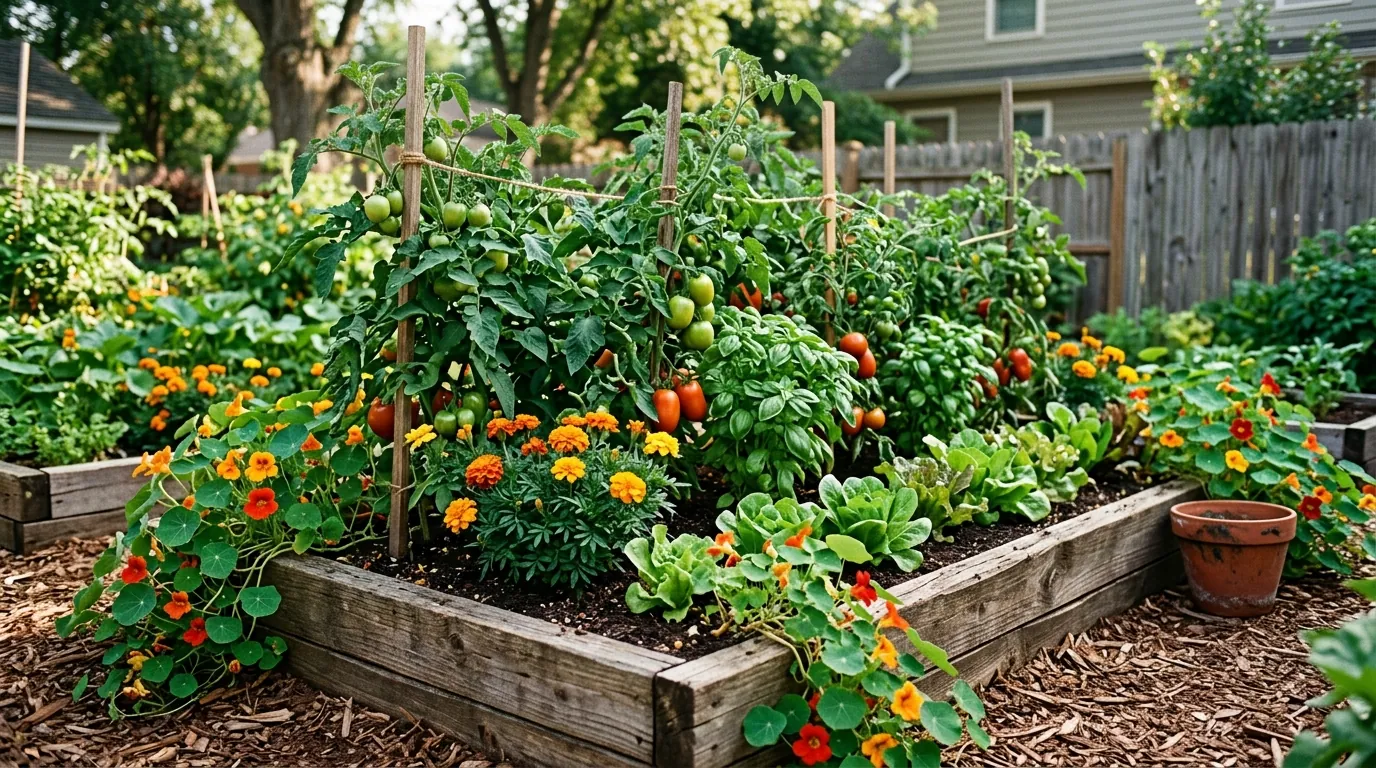
Companion planting is the simple idea that some plants grow better together. The right neighbours can deter pests, attract helpful insects, improve flavour and make better use of space.
See our full companion planting guide with an interactive picker.
It is not a magic fix, but plenty of Kiwi gardeners swear by certain pairings, and most cost you nothing to try. Tucking flowers and herbs among the vegetables also makes for a prettier, busier garden.
How companion planting helps
Some companions confuse or repel pests with their scent, while others attract bees and hoverflies that pollinate crops and prey on aphids. Tall plants can shelter shorter ones, and quick crops can fill the space between slow ones.
Legumes such as peas and beans pull nitrogen from the air and feed it into the soil, leaving the ground richer for whatever follows. Strong-smelling herbs woven through the beds help mask the crops that pests are hunting for.
Classic combinations to try
The best-known example is the Three Sisters, where maize, beans and squash grow together. The maize gives the beans a frame to climb, the beans feed the soil with nitrogen, and the sprawling squash shades the ground and keeps weeds down.
Around the vegetable patch, basil is a good friend to tomatoes, carrots and onions confuse each other's pests, and a border of marigolds or calendula brings in the good bugs while deterring some of the bad.
- Tomatoes with basil and marigolds
- Carrots with onions, leeks or spring onions
- Beans and peas near leafy greens that enjoy the extra nitrogen
- Lettuce in the light shade of taller crops over summer
- Marigolds, calendula and borage scattered through to bring in bees
Pairings to keep apart
A few plants simply do not get on. Onions and garlic can stunt beans and peas, and fennel is best grown well away from almost everything, as it discourages nearby plants.
Keep crops from the same family spread out too, so pests and diseases cannot move easily from one to the next. This sits hand in hand with crop rotation, which moves families around the garden each year.
Frequently Asked Questions
Does companion planting really work?
Some pairings have solid backing, like legumes feeding the soil and flowers drawing in beneficial insects. Others are more traditional wisdom. Either way it costs little to try and adds variety that benefits the whole garden.
What grows well with tomatoes?
Basil is the classic partner, and many gardeners feel it improves flavour and helps with pests. Marigolds and calendula nearby attract good bugs. Keep tomatoes away from potatoes, as they share diseases.
Which plants should not go together?
Keep onions and garlic away from beans and peas, and grow fennel on its own. As a general rule, spread out plants from the same family so pests and diseases cannot spread between them.