
Growing Tomatoes From Seed in New Zealand
Updated June 2026
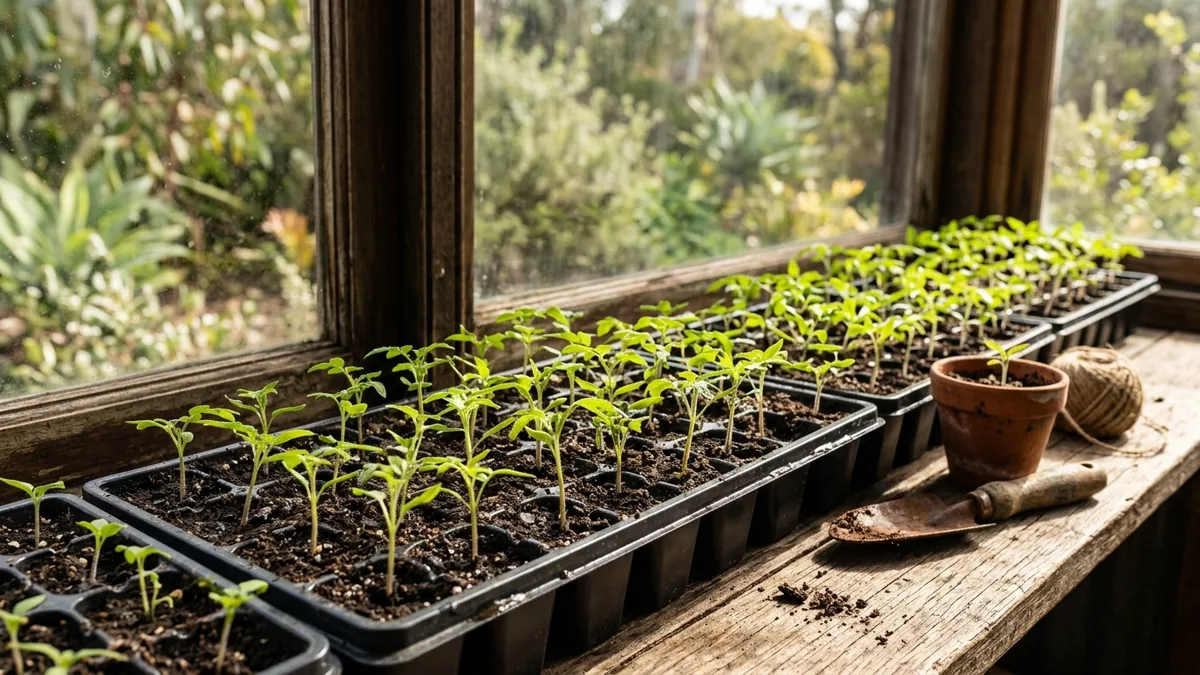
Timing, seed-raising mix, warmth, light, potting on, hardening off and how to beat damping off
Raising your own tomatoes from seed is the single best upgrade most Kiwi gardeners can make. A punnet of seedlings gives you a few plants of whatever the garden centre happened to grow. A single seed packet gives you dozens of plants of exactly the variety you want, for a fraction of the price.
This guide walks through the whole journey, from choosing a sowing date with the interactive calculator below, through germination warmth and light, to potting on, hardening off and planting out. Get the timing and the warmth right and tomato seed is one of the easiest things to grow.
Why grow tomatoes from seed
- Variety choice. Garden centres stock a handful of common types. From seed you can grow heirlooms like Black Russian and Brandywine, the sweetest cherries like Sungold and Tommy Toe, and paste tomatoes like San Marzano for sauce. See our how to grow tomatoes guide and its variety picker for ideas.
- Cost. One packet of 20 to 50 seeds costs about the same as a single punnet of seedlings, and tomato seed stays viable for years if stored cool and dry.
- Stronger plants. You control the light, warmth and watering from day one, so you raise sturdy seedlings rather than leggy, root-bound punnet plants, and you avoid bringing home pests or disease.
- Seed saving. Grow an open-pollinated variety and you can save seed from your best fruit for next year. See our seed saving guide.
Seed-starting timing calculator
Tell us your last frost (a region or month is fine) and we will count back to your sow-indoors date and forward to potting on, hardening off and planting out.
In the coldest southern districts a glasshouse, tunnel house or cloche lets you start earlier and plant out sooner with less risk.
Step 1: Seed-raising mix
Sow into a proper seed-raising mix, not garden soil or general potting mix. Seed-raising mix is fine, light and low in nutrients, which is exactly what tiny roots want, and it drains freely so seedlings do not sit wet. Garden soil compacts, holds disease, and is far too rich and heavy for germinating seed.
Fill clean punnets, cells or a seed tray, firm the mix lightly and water it before sowing. Sow seed about 5 mm deep, cover lightly, and label every variety. Sow two seeds per cell and thin to the stronger one later.
Step 2: Warmth for germination
Warmth is the biggest single factor in good germination. Tomato seed comes up best at a soil temperature of about 20 to 27 degrees Celsius. In that range it germinates evenly in 6 to 10 days. In cold mix it is slow, patchy, and far more likely to rot before it sprouts, which is a real risk in a cool New Zealand spring.
Indoors in late winter and early spring, a windowsill is often too cold at night. A heat mat under the tray gives the steady bottom warmth tomato seed loves and is the most reliable way to get an even strike. A hot-water cupboard or the top of the fridge also works. Keep the mix moist but never soggy until the seedlings emerge.
Step 3: Light (and beating leggy seedlings)
The moment seedlings emerge they need bright light, fast. Tomato seedlings that get too little light stretch toward the window with long, weak, pale stems. These leggy seedlings flop over and are slow to establish.
A windowsill is rarely bright enough in late winter. If your seedlings are stretching, give them more light:
- Move them to the brightest possible spot and turn the tray daily so they grow evenly.
- Better still, use a grow light positioned 5 to 10 cm above the seedlings for 14 to 16 hours a day, raising it as they grow.
- Drop the temperature a little once they are up. Warm, dim conditions are what cause stretching.
Step 4: Potting on
Once seedlings have their first one or two sets of true leaves (the second pair, which look like real tomato leaves rather than the rounded seed leaves), pot them up individually into 7 to 10 cm pots. This gives the roots room to develop into strong, stocky plants.
Handle seedlings by a leaf, never the fragile stem, and lift them out with a dibber or the handle of a spoon. Plant each one deeper than it was, burying the stem up to the lowest leaves, and water gently. Move them into individual pots of standard potting mix now that they need more nutrients than seed-raising mix provides.
Step 5: Preventing damping off
Damping off is the heartbreak of seed raising. Healthy seedlings suddenly keel over, pinched and rotted at soil level, often overnight. It is caused by soil-borne fungi that thrive in cool, wet, still, overcrowded conditions, exactly the conditions of a chilly spring windowsill. You cannot cure it, only prevent it:
- Use fresh, sterile seed-raising mix and clean trays. Reused mix and dirty pots carry the fungus.
- Sow thinly so seedlings are not crowded, and thin early.
- Water from the base by standing the tray in shallow water, and let the surface dry slightly between waterings.
- Give good airflow. A gentle breeze or a small fan keeps the surface drier and stems stronger.
- Remove humidity covers as soon as seeds germinate, and never let the mix stay waterlogged.
Step 6: Hardening off
Seedlings raised indoors are soft and have never felt wind, full sun or cold. Throwing them straight into the garden shocks them badly. Harden them off over 7 to 10 days by gradually exposing them to outdoor conditions.
Start by putting them outside in a sheltered, partly shaded spot for an hour or two, then bring them back in. Each day leave them out a little longer and in slightly more sun and wind, until after a week or so they are spending all day and night outside. By the end they are toughened up and ready to plant.
Step 7: Transplanting deep
Plant out once all frost risk has passed, the soil is consistently above 16 degrees Celsius, and seedlings are 15 to 20 cm tall. Cold soil stalls tomatoes for weeks, so wait for warmth rather than rushing, especially in the south.
The golden rule is to plant tomatoes deep. Bury the stem up to the first set of leaves, or lay a leggy plant in a shallow trench with just the top poking out. Every part of the buried stem grows new roots, giving you a much stronger, more drought-resilient plant. Water in well and mulch, leaving a small gap around the stem.
| Stage | Timing | Key conditions |
|---|---|---|
| Sow indoors | 6 to 8 weeks before last frost | Seed-raising mix, 5 mm deep, 20 to 27 C soil |
| Germination | 6 to 10 days after sowing | Warm, moist, covered until sprouted |
| Pot on | At 1 to 2 sets of true leaves | Individual pots, potting mix, plant deeper |
| Harden off | 7 to 10 days before planting out | Increasing time outdoors in sun and wind |
| Transplant | After last frost, soil above 16 C | Full sun, plant deep, water in, mulch |
When to sow in your region
Use the calculator above for your exact dates, and pick your region for a live tomato calendar in the app or on Find My Region.
Track Your Seedlings From Sowing to Harvest
Add tomatoes to your garden in the Planting Season app and get reminders for sowing, potting on, hardening off, planting out and harvest, all tuned to your New Zealand region.
Open the App →Frequently Asked Questions
When should I start tomato seeds in New Zealand?
Sow tomato seed indoors about 6 to 8 weeks before your last expected frost. In most of New Zealand that means sowing from late August to September for an October to November planting out. The warm north can sow earlier, while cold southern districts like Otago and Southland sow a little later. Use the calculator on this page to work out your dates.
Why grow tomatoes from seed instead of buying seedlings?
Seed gives you a huge choice of varieties that garden centres never stock, including heirlooms and the sweetest cherries, and a single packet costs less than a few punnets of seedlings. You also control the growing conditions from day one, which means stronger, healthier plants and no imported pests or disease.
What temperature do tomato seeds need to germinate?
Tomato seeds germinate best at a soil temperature of about 20 to 27 degrees Celsius. At that warmth they come up in 6 to 10 days. In cold soil they are slow and prone to rotting. A heat mat or a warm spot indoors gives the most reliable, even germination, which matters in a cool New Zealand spring.
Why are my tomato seedlings tall and leggy?
Leggy seedlings are stretching toward weak light. A bright windowsill is rarely enough in late winter. Give seedlings as much direct light as possible, or use a grow light 5 to 10 cm above the plants for 14 to 16 hours a day. Keep them cooler once germinated, and bury leggy stems deep when you pot on, as tomatoes grow roots along buried stems.
How do I stop damping off?
Damping off is a fungal rot that topples seedlings at soil level. Prevent it by using fresh sterile seed-raising mix and clean trays, sowing thinly, watering from the base, keeping good airflow, and never letting the mix stay waterlogged. Avoid overwatering and overheating once seedlings are up.
When do I transplant tomato seedlings outside?
Transplant once all frost risk has passed, the soil is consistently above 16 degrees Celsius, and seedlings are 15 to 20 cm tall with a few sets of true leaves. Harden them off over 7 to 10 days first, then plant deep, burying the stem up to the lowest leaves.
See also: How to Grow Tomatoes, Seed Raising Guide and Tomato in the Plant Library