
How to Cure Olives at Home in NZ: Brine, Water and Salt Cure Methods
Updated November 2026
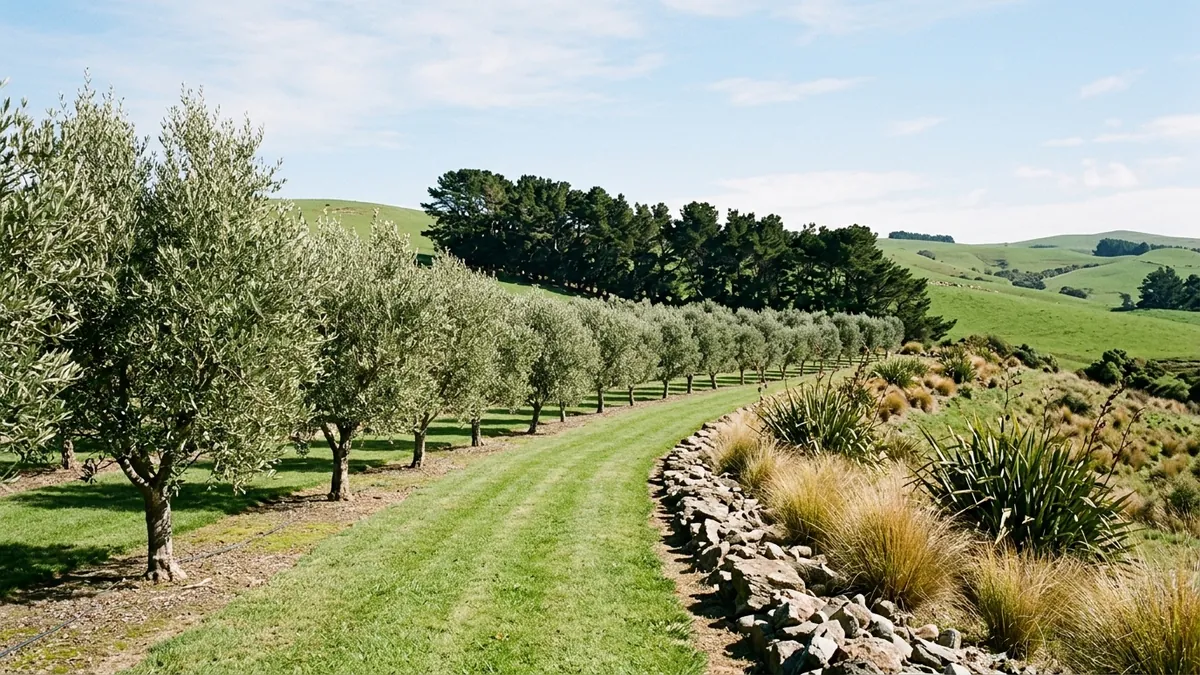
Olives picked from the tree are far too bitter to eat, because they contain a compound called oleuropein, so they must be cured. This page gives tested home methods for water cured, brine cured and dry salt cured olives, with the quantities converted to metric. Every method here comes from one source, the University of California Agriculture and Natural Resources Publication 8267, Olives: Safe Methods for Home Pickling, revised by Sylvia Yada and Linda J. Harris of UC Davis. Food safety comes first: stick to the quantities and times given, and never improvise the salt strength.
When to Pick Olives in NZ
Olives in New Zealand ripen from mid autumn to early winter, about April to June, according to our olive growing guide. Use only fresh, firm, unbruised fruit and cure it within a few days of picking, because naturally black ripe olives especially do not keep. The UC publication describes two stages. Green ripe olives are full size and coloured from yellow green to straw, and release a creamy white juice when squeezed. Naturally black ripe olives have been left to ripen fully on the tree and are dark red to purple or black. Sort the fruit by ripeness and size before you start, so each batch cures evenly.
Kalamata and Manzanillo are the table varieties on our olive page. The UC publication matches varieties to methods: Kalamata and Mission suit water cured and dry salt cured olives, Manzanillo suits Spanish style green olives and lye curing, and large varieties such as Sevillano are used for the Sicilian style.
Choose a Method
| Method | Fruit to use | How long | How long it keeps |
|---|---|---|---|
| Kalamata style, water cured | Naturally black ripe, oil rich olives such as Kalamata | 8 to 10 days of daily water changes, then about 1 month in finish brine | About 1 year in the finish brine, in a cool, dark place or the fridge, if the container stays airtight |
| Mediterranean style, cracked | Green ripe olives of any variety | 6 to 7 days of daily water changes, ready after 4 days in finish brine | Up to 1 year in the fridge, and they must stay refrigerated |
| Greek style black olives in brine | Mature, fully coloured fruit, often Manzanillo, Mission or Kalamata | At least 2 months, and 3 months for less bitter olives | At least 1 year in strong brine in a cool, dark place, if the jars stay airtight |
| Sicilian style green olives in brine | Green ripe olives, usually a large variety such as Sevillano | About 2 months fermenting, then another 2 to 4 months | At least 1 year in brine, in a cool, dark place, if the jars stay airtight |
| Dry salt cured | Fully ripe, small olives, dark red to black | About 5 to 6 weeks of salting and weekly turning | Up to 6 months in the fridge, or up to a year in the freezer |
Brine cured olives ferment naturally, in a way similar to dill pickles and sauerkraut, and taste saltier and more complex. Water curing changes the flavour least, and the olives stay slightly bitter. Dry salt curing leaves a soft, shrivelled, salty olive with some bitterness.
Salt, Containers and Conversions
Use pure salt without additives, sold as pickling or canning salt. The anti-caking agents in ordinary table salt turn the brine cloudy, and salt substitutes must not be used. Weigh the salt rather than measuring by the cup, because coarse and fine salts differ in density. Use glass or food grade plastic containers that can be made airtight, and nothing metal.
| Brine | UC quantity per gallon of cool water | Approximate metric per litre |
|---|---|---|
| Medium brine | 8 ounces (3/4 cup) pickling salt | About 60 g of salt |
| Medium strong brine, for large olives | 10 ounces (1 cup) pickling salt | About 75 g of salt |
| Strong brine | 1 pound (1 1/2 cups) pickling salt | About 120 g of salt |
One US gallon is about 3.8 litres. Keep the olives under the brine at all times with a weighted plate, or a sealed bag of water.
Method 1: Kalamata Style Water Cured Olives
Use firm, fully coloured, dark red to purple black olives, harvested before the first frost, from an oil rich variety such as Kalamata or Mission. Large soft varieties such as Sevillano go too soft.
- Sort the fruit, discard bruised olives, rinse and drain.
- Make two lengthwise cuts in each olive, about 3 mm deep (1/8 inch).
- Cover with fresh, cool water in a food grade container, keep the olives submerged and close the lid loosely.
- Drain and replace the water every 24 hours for 8 to 10 days. For a less bitter olive, soak for up to 20 days, but taste regularly, because over soaking gives soft, washed out olives.
- Make the finish brine: 120 g of salt per litre of water (1 pound per gallon), plus 250 mL of red wine vinegar per litre (1 quart per gallon). This is enough for about 4.5 kg of olives.
- Drain the olives, cover them with the finish brine and pour 6 to 9 mm of olive oil on top. Close the lid firmly and store at about 15 to 27°C.
- Leave them for about a month to develop flavour. Store in the finish brine in a cool, dark place or the fridge for about a year, keeping the container airtight.
Method 2: Greek Style Black Olives in Brine
Use mature, fully coloured fruit, firm and harvested before the first frost.
- Sort the olives by size and pack them into jars that can be made airtight, with 1 litre (a quart) the smallest recommended size.
- Cover with medium brine, about 60 g of salt per litre, and close the lids loosely. Store at about 15 to 27°C.
- After 7 days, replace it with strong brine, about 120 g of salt per litre, and close the lids firmly.
- Leave the olives in strong brine for at least 2 months. For milder olives, replace the strong brine monthly for 2 or 3 months.
- Check the jars regularly. If a lid bulges from fermentation gas, loosen it to release the gas, then close it firmly. Top up with fresh strong brine if any leaks out.
- Eat after 2 months if you like them bitter, or after at least 3 months for milder olives. Refrigerate opened jars to prevent surface mould, and soak olives in water overnight to reduce saltiness before eating.
Method 3: Mediterranean Style Cracked Green Olives
- Use green ripe fruit of any variety. Sort, rinse and drain.
- Strike each olive with a mallet or rolling pin to crack the flesh, without breaking the stone.
- Cover with fresh, cool water, keep the olives submerged, and change the water every 24 hours for 6 to 7 days.
- Make the finish brine: 120 g of salt per litre of water, plus about 125 mL of white wine vinegar per litre (2 cups per gallon). Drain the olives and cover them. Herbs, garlic and lemon slices can be added.
- Close the lid and refrigerate. These olives must be kept in the fridge. They are ready after 4 days and keep in the fridge for up to a year in the brine.
Method 4: Sicilian Style Green Olives
Use green ripe olives, discarding any with colour, which soften. Pack into jars with your chosen seasonings, then cover with brine plus vinegar: about 75 g of salt per litre for large olives or 120 g per litre for small olives, with about 125 mL of vinegar (5 per cent acetic acid) per litre. Keep them at about 21°C for about 2 months, topping up lost brine in the first 4 or 5 days of vigorous fermentation, then seal and store for another 2 to 4 months until the flavour suits you. The UC Publication 8267 gives the full instructions and the replacement brine quantities.
Troubleshooting
| Problem | Likely cause | What to do |
|---|---|---|
| Cloudy brine from the start | Table salt with anti-caking agents | Use pickling salt, and weigh it |
| Soft olives | Over soaking, over ripe fruit or a large variety used for a method that suits small fruit | Use firmer fruit, shorten the soak, and match the variety to the method |
| Still very bitter | Not enough time, or the olives were not cut or cracked | Soak or brine for longer, and taste a sample |
| White film on the surface | Surface yeast or mould from air contact | Keep containers airtight, and refrigerate opened jars. If olives are soft, slimy or smell bad, throw them out |
| Lid bulging | Fermentation gas | Loosen the lid to release the gas, then close it firmly |
Frequently Asked Questions
How long does it take to cure olives?
It depends on the method. A water cure takes about 8 to 10 days of soaking plus a month in finish brine, dry salt curing takes about 5 to 6 weeks, and brine curing takes at least 2 to 3 months and up to 6 months or more.
Can I eat olives straight from the tree?
No. Fresh olives contain oleuropein, which is very bitter, so they must be cured first.
Can I use ordinary table salt to cure olives?
The University of California advises pickling or canning salt, which has no additives. The anti-caking agents in table salt cloud the brine, and salt substitutes must not be used.
How do I know if cured olives are safe to eat?
Throw them out if they are mouldy, soft or bad smelling. Follow the quantities and times in the tested method exactly, keep olives under the brine, and refrigerate where the method says to.
Source: University of California Agriculture and Natural Resources Publication 8267, Olives: Safe Methods for Home Pickling, revised by Sylvia Yada and Linda J. Harris, Department of Food Science and Technology, UC Davis, 2007. Salt and vinegar quantities are converted to metric and rounded, and the original figures are shown beside them. Harvest months for New Zealand come from our own olive guide.