
Asparagus Growing Guide NZ: Planting Crowns and Harvesting
Updated October 2026
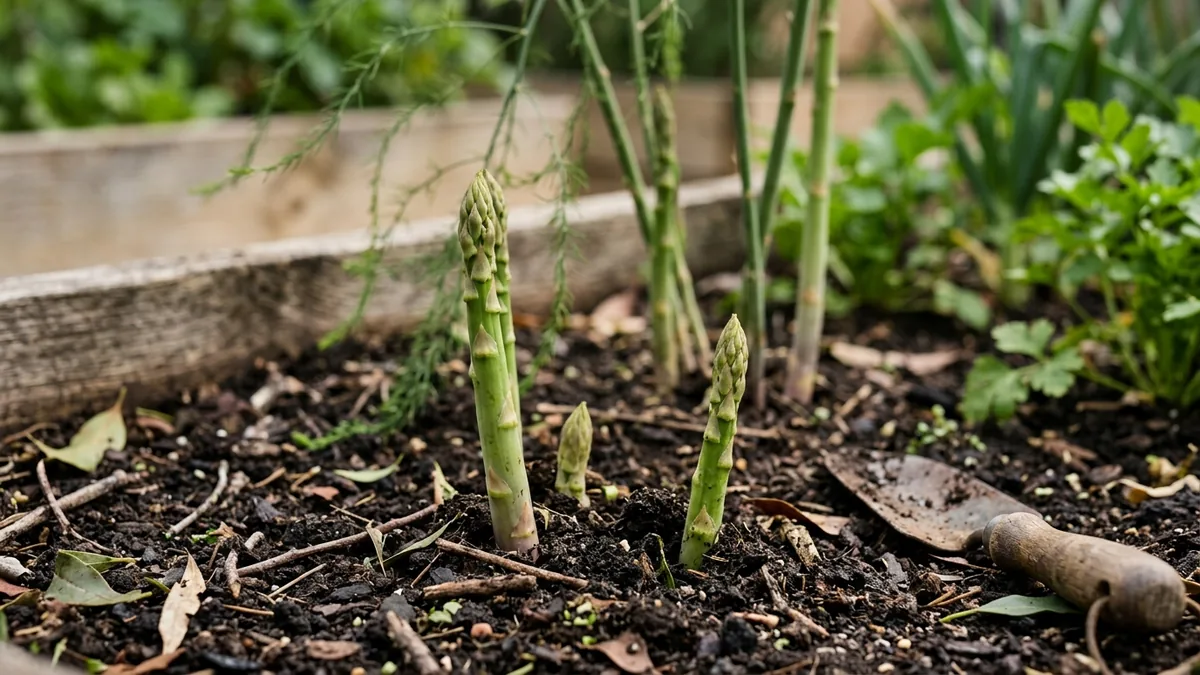
Plant it once, eat from it for 15 to 20 years. Asparagus is the long game of the vegetable garden, and crowns are the smart way to play it.
What it looks like as it grows


Asparagus is a true perennial. You give it a deep, well-fed bed and a few years of patience, and in return it sends up tender spears every spring for two decades. The fastest start is from one-year-old crowns rather than seed, which brings your first real harvest roughly a year sooner and lets you pick a high-yielding all-male hybrid.
The trade is patience. You will not cut a single spear in the first year, and only a light pick in the second. From the third spring onward the bed hits its stride, cropping for six to eight weeks while the soil is still cool. Get the planting and the feeding right now and you set up a bed that quietly out-earns almost anything else in the garden.
Asparagus bed planner and harvest timeline
Work out how long a row your crowns need, and what to expect each spring as the bed matures.
- Year 1 No harvest. Let every spear grow into fern to build the crown. Weed and feed.
- Year 2 Light pick only, about 2 to 3 weeks. Stop the moment spears thin to pencil width.
- Year 3 and on Full harvest, about 6 to 8 weeks each spring, then let the ferns run all summer.
🌱 Plant profile: Asparagus, with sowing times for your region, companion plants and common pests.
When to Plant Asparagus in Your Region
Asparagus is planted as one-year-old crowns while they are still dormant. These are the planting months for each of our nine New Zealand regions, straight from our planting data. Each region links to its vegetable planting calendar, and the Asparagus plant page has spacing, companions and care notes for your region.
| Region | Plant crowns | Local note |
|---|---|---|
| Northland | August to November | Effectively frost free. |
| Auckland | August to November | Effectively frost free. |
| Waikato & Bay of Plenty | August to November | Frosts on average from 5 May to 25 September. |
| Central North Island | August to November | Frosts on average from 15 April to 15 October. |
| Wellington & Lower North Island | August to November | Frosts on average from 10 June to 30 August. |
| Nelson & Marlborough | August to November | Frosts on average from 10 May to 20 September. |
| Canterbury | August to November | Frosts on average from 20 April to 10 October. |
| Otago & Southland | September to November | Plant Sep to Nov, once the soil can be worked. |
| Central Otago | September to November | Plant Sep to Nov, once the soil can be worked. |
From Northland to Canterbury, including the central North Island, our data plants asparagus crowns from August to November. Otago and Southland and Central Otago plant from September to November, once the soil can be worked. In every region the crowns go in while they are still dormant, before the first spears push through.
Position and soil
Choose the spot carefully, because this bed stays put for 15 to 20 years. Asparagus wants full sun, shelter from strong wind, and free-draining soil that never sits wet over winter. Heavy clay rots crowns, so on heavy ground build a raised mound or work in plenty of grit and compost first.
Dig the bed over deeply and clear every scrap of perennial weed, particularly couch and oxalis, before you plant. Weeds are the single biggest enemy of a young asparagus bed and there is no easy way to remove them once the crowns are in. Work in generous compost and a balanced fertiliser, and aim for a soil pH around 6.5 to 7.0.
Planting crowns in trenches
Plant one-year-old crowns in your region's planting months, while they are still dormant. Dig a trench about 20cm deep, mound a low ridge of compost-enriched soil along the bottom, and drape each crown over the ridge so the roots spread out and down like an octopus. Set the bud (the growing point) facing up.
Cover the crowns with only about 5cm of soil to start. As the first spears push up through the season, gradually backfill the trench around them until it is level. This staged backfill lets the shoots reach the light without exhausting themselves through a deep cover of soil.
Spacing and male versus female plants
Space crowns about 30 to 45cm apart along the trench, with rows about 1m apart. Use the planner above to turn your crown count and spacing into a row length in metres.
Old open-pollinated varieties carry both male and female plants. Female plants divert energy into red berries and seed, which lowers their spear yield and scatters weedy seedlings through the bed. All-male F1 hybrids, the Jersey types, skip the seed entirely and put that energy into spears, so they crop more heavily and stay tidy. If you are buying crowns once for 20 years, an all-male hybrid is usually the better value.
Watering and feeding
Asparagus is a hungry, thirsty plant. Keep the bed evenly moist through spring and summer, especially in the first two years while the root system is establishing. Mulch heavily to lock in moisture and smother weeds.
Feed in early spring as growth begins, with compost plus a balanced fertiliser, and again lightly after the harvest finishes to power the summer fern growth. A top-up of compost or aged manure each winter keeps the bed in good heart for the long haul.
What to Plant With Asparagus
Our companion data pairs asparagus with tomatoes, parsley, basil and marigolds. Keep onions, garlic and potatoes away from the bed. Whatever you plant nearby, keep it from shading the summer fern, which feeds the crowns for next spring. Our companion planting guide has more pairings.
Can You Grow Asparagus in a Pot?
Our plant data rates asparagus as only partly suited to containers, in a pot at least 50 cm deep. A pot holds far fewer crowns than a bed and needs more watering and feeding, so it suits a small courtyard rather than a household supply. A mature crown gives about 20 to 25 spears a year.
Weeds, pests and problems
Relentless weeding is the price of a good bed. Hand weed little and often rather than hoeing deeply, since the feeding roots run near the surface. A thick mulch does most of the work for you.
Watch for slugs on emerging spears in spring and aphids on the summer fern. Asparagus rust and crown rot can appear in wet seasons; good drainage, airflow and cutting down the spent ferns each winter are your best defences. See the NZ pest and disease guide for organic controls.
Harvest and storage
From year three, harvest spears when they are 15 to 20cm tall and the tips are still tight. Snap them off at ground level or cut just below the soil with a sharp knife, every day or two during the flush. Keep picking for about six to eight weeks, then stop and let the remaining spears grow into ferns.
Those ferns feed the crown all summer, so leave them alone even as they get tall and untidy. Once they yellow off in late autumn or winter, cut them to the ground and clear the debris. Fresh-cut asparagus stores best stood upright in a little water in the fridge, like cut flowers, and is sweetest eaten within a day or two.
Best asparagus varieties for New Zealand
| Variety | Type | Why grow it |
|---|---|---|
| Mary Washington | Heritage, open-pollinated | Reliable old standard with good spear size and some rust resistance. Carries male and female plants. |
| Pacific Purple | Purple, open-pollinated | Sweet, tender, low-fibre purple spears that are lovely raw or lightly cooked. |
| Jersey Knight / Jersey Giant | All-male F1 hybrid | High-yielding, disease-resistant and tidy. No seed waste, so most of the plant's energy goes into spears. |
| UC157 | Commercial F1 | Uniform, tight-tipped spears, heat tolerant and productive. A good choice in warmer districts. |
Asparagus across New Zealand
Plant crowns from August to November in most regions, and from September to November in Otago, Southland and Central Otago, while they are still dormant. Our plant data puts the spear season between September and January, with each established bed cropping for about six to eight weeks of it. Asparagus thrives in New Zealand's cool temperate climate because it needs a proper winter dormancy to crop well, so it does beautifully from Canterbury and Otago up through the cooler North Island. In warm, humid Northland it will still grow, but give it the coolest, airiest spot you have.
Asparagus FAQ
When should I plant asparagus crowns in New Zealand?
Our planting data gives August to November in every region from Northland to Canterbury, and September to November in Otago, Southland and Central Otago. Plant one-year-old crowns while they are still dormant, and the bed sends up its first spears as the soil warms.
Should I grow asparagus from seed or crowns?
Crowns are the easier and faster route. A one-year-old crown brings a usable harvest about a year sooner than starting from seed, and you can choose a high-yielding all-male hybrid.
Why choose an all-male F1 variety?
Female plants spend energy producing berries and seed. All-male F1 hybrids such as the Jersey types put that energy into spears instead, so they crop more heavily and do not self-seed weedy seedlings through the bed.
How long until I can harvest asparagus?
Do not cut in the first year. Take a light pick of two to three weeks in year two, stopping once spears thin to pencil width. From year three onward you can harvest fully for about six to eight weeks each spring.
How far apart do I space the crowns?
Set crowns about 30 to 45cm apart along the trench, with rows about 1m apart. Wider spacing gives bigger plants and a little more room for weeding.
What do I do with the ferns at the end of summer?
Let the ferns grow all summer to feed the crowns, then cut them to the ground once they yellow off in late autumn or winter. Removing the spent fern also reduces overwintering pests and rust.
How long does an asparagus bed last?
A well-kept bed crops for 15 to 20 years, so it pays to prepare the soil deeply and weed it well from the start.
When is asparagus season in NZ?
Our plant data puts the spear season between September and January. An established bed crops for about six to eight weeks of that, then the spears are left to grow into fern.
Can you grow asparagus in Otago and Southland?
Yes. Asparagus needs a proper winter dormancy, which the south provides, and our data plants crowns there from September to November, once the soil can be worked.
What should you not plant next to asparagus?
Our companion data says to keep onions, garlic and potatoes away from asparagus. Tomatoes, parsley, basil and marigolds are good neighbours.
Can you grow asparagus in a pot?
Only in a large pot, at least 50 cm deep, and it gives a much smaller harvest than a bed. A bed in the ground is the better choice for a crop that lasts 15 to 20 years.
Related guides
See also: Asparagus in the Plant Library
Plant profile
The asparagus profile has sowing times for your region, companion plants and common pests.