
How to Grow Donut Peaches in New Zealand
Updated June 2026
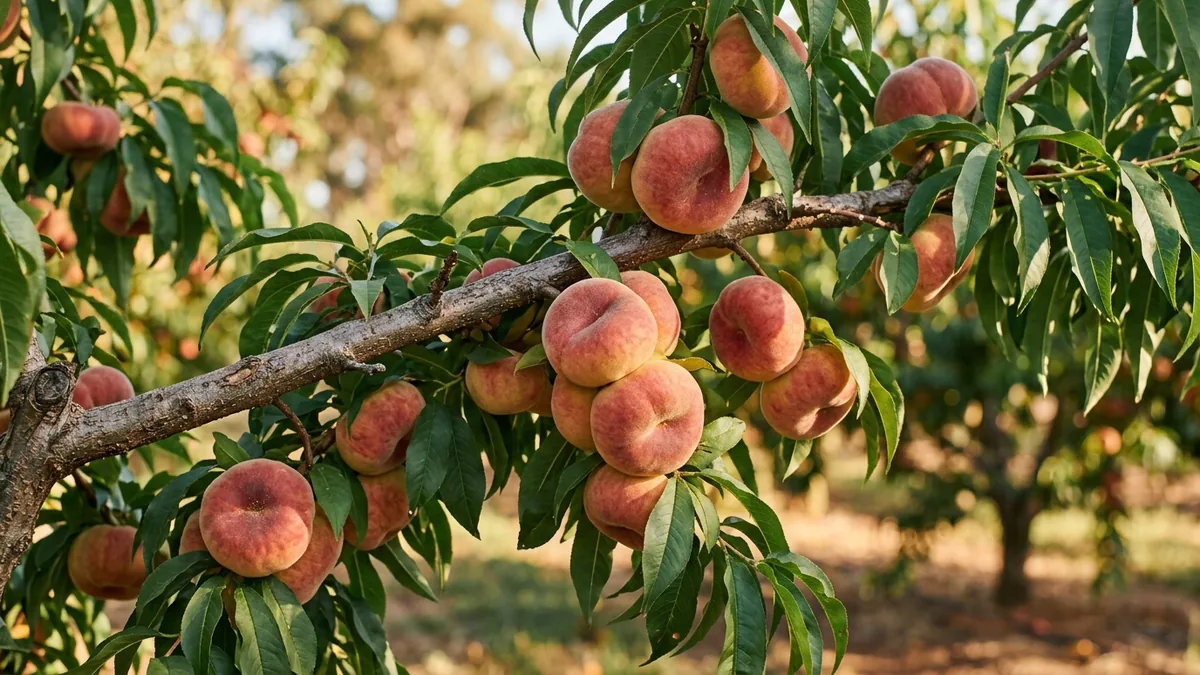
The flat, sweet, easy-eating peach that thrives across most of the country, with low-chill cultivars for the warm north
Donut peaches, also called flat or Saturn peaches, are true peaches with a squashed, doughnut shape and a small sunken middle. The flesh is sweet, low in acid and very easy to eat, which makes them a favourite with children. They grow on an ordinary deciduous peach tree and are cared for in exactly the same way as a round peach.
Like all peaches, they are frost-hardy when dormant in winter but need a spell of winter chill to fruit well, and their spring blossom is frost-tender. They suit most of New Zealand thanks to our cool winters, with low-chill cultivars covering the warm far north. The two jobs that matter most here are protecting spring blossom from late frost and spraying copper for leaf curl.
Is a Donut Peach Right for Your Climate?
The key question with any peach is winter chill, the number of cold hours that break dormancy. Choose your nearest climate below and the tool tells you whether you have enough chill, which cultivars to pick, and how to handle frost and leaf curl.
Climate and Position
Donut peaches need winter chill to break dormancy and fruit well. Standard donut types such as Saturn need around 400 to 600 chill hours, while low-chill cultivars such as TangOs and UFO need only about 150 to 300 hours. Most of New Zealand comfortably delivers that chill, and the cool and cold South Island has it in abundance. Only the warm far north is short on chill, where low-chill cultivars are the right pick.
Give the tree full sun and an open, airy position with good air movement, which also helps reduce leaf curl. The dormant winter tree is frost-hardy, so the real risk is a late spring frost catching the open blossom, which can wipe out that year's crop. A sheltered spot, or a position where you can throw frost cloth over a smaller tree on a frosty spring night, makes a real difference.
Planting
Plant bare-root donut peach trees in winter, from about June to August, while they are dormant and leafless. Bare-root is the cheapest way to buy a fruit tree and they establish well in the cool season. Dig a generous hole in free-draining soil in full sun, spread the roots out, and plant to the same depth the tree was grown at, with the graft union kept above the soil. Firm in, stake if needed, and water well.
Potted or container-grown trees can go in at most times of year. For a small garden, courtyard or balcony, choose a dwarf or patio peach and grow it in a large pot of good free-draining mix. Avoid heavy, wet ground, as peaches dislike waterlogged soil, so raise the planting area or add grit if your soil is heavy.
Watering and Feeding
Keep a young tree well watered through its first couple of summers while it establishes, and water any tree deeply during dry spells, especially while fruit is swelling, as drought stress at that stage gives small, dropped fruit. Mulch over the root zone to hold moisture and keep weeds down, keeping the mulch back from the trunk.
Feed in late winter to early spring with a balanced fruit-tree fertiliser or well-rotted compost spread around the drip line. Peaches are fairly hungry trees, but avoid heavy nitrogen, which pushes soft, leaf-curl-prone growth at the expense of fruit. A second light feed after fruit set helps carry a heavy crop.
Pruning and Thinning
Donut peaches are pruned the same way as round peaches, to an open vase shape. Peaches fruit on wood grown the previous year, so each year you remove old fruited wood and crowded growth to make room for fresh young shoots, keeping the centre open to light and air. Prune in summer after harvest, or in late winter, always with clean, sharp tools to reduce disease entering the cuts.
Thinning the young fruit is just as important as pruning. When the fruitlets are small, remove enough so those left are spaced roughly a hand-width apart along the branch. It feels harsh, but thinning gives you fewer, much larger and sweeter peaches, stops branches breaking under the weight, and keeps the tree cropping steadily year to year rather than swinging between a glut and nothing.
Harvest and Storage
Donut peaches usually ripen through summer, the exact timing depending on cultivar and region. A peach is ready when the background colour has turned from green to creamy or golden, the fruit smells sweet, and it gives slightly to gentle pressure and parts easily from the branch with a light twist. Pick into a shallow tray so they do not bruise, as ripe peaches are soft and tender.
Ripe donut peaches keep only a few days at room temperature, or up to a week or so in the fridge, and are at their best eaten fresh. A glut freezes well sliced, and they make excellent jam, chutney and bottled fruit. See the preserving guide for keeping a summer flood of peaches.
Pests and Problems
Leaf curl is the biggest problem for peaches in New Zealand. This fungal disease puffs up and reddens the new spring leaves and weakens the tree. The standard control is to spray copper at bud swell in late winter, before the buds open, and again at leaf fall in autumn, following the product label. An open, airy position and cleaning up fallen leaves also help.
Brown rot can spoil ripening and stored fruit, so remove any mummified fruit and prune for good airflow. Aphids may curl new growth, and birds will take ripe fruit, so net if needed. Late spring frost on the open blossom is the other major cause of a lost crop, handled by site choice and frost cloth on a smaller tree.
Varieties for New Zealand
Match the cultivar to your winter chill. In most of the country a standard donut peach fruits well, while the warm far north needs a low-chill type. All are mostly self-fertile, so one tree is enough.
| Variety | Type or flesh | Chill | Best for |
|---|---|---|---|
| Saturn | Classic white-flesh donut, very sweet | About 400 to 500 hours | The benchmark donut peach for most of New Zealand |
| Galaxy | White-flesh donut, sweet and aromatic | About 400 to 500 hours | Cooler regions with reliable winter chill |
| TangOs / TangOs II | Low-chill flat peach | About 200 to 300 hours | The warm far north and mild coastal spots |
| UFO | Low-chill flat peach | About 200 to 300 hours | Warm, low-chill gardens where standard types struggle |
| Dwarf / patio peach | Small tree, round or flat fruit | Varies by cultivar | Pots, courtyards, balconies and small gardens |
Region and Season Notes
New Zealand runs on southern-hemisphere seasons, so the fruit-tree calendar puts planting in the cool months. Buy and plant bare-root donut peaches in winter, from about June to August, while the tree is dormant, then look for blossom in spring and fruit through summer.
- Warm far north (Northland, coastal Auckland): the only place chill can run short. Choose a low-chill cultivar such as UFO or TangOs at around 200 to 300 chill hours.
- Central and lower North Island, top of the South Island: excellent. Ample chill for standard donut peaches like Saturn and Galaxy. Watch for late spring frost on the blossom.
- Cool and cold South Island: plenty of chill, so Saturn-type donut peaches thrive. The dormant tree is frost-hardy, so the main job is protecting the spring blossom from late frost.
For frost dates and chill tuned to your exact spot, use Find My Region or open the Planting Season app.
Match the right peach to your winter chill
The Planting Season app carries Fruit Tree Variety notes and chill-hours data for all 9 New Zealand regions, so you can pick a donut peach that will actually fruit where you live. Set spray reminders for copper at bud swell and log your harvest as the summer crop comes in.
Open the App →Frequently Asked Questions
What is a donut peach?
A donut peach, also called a flat or Saturn peach, is a true peach with a squashed, doughnut-like shape and a small sunken centre instead of a round profile. It is the same species as an ordinary peach, just a different variety, and the flesh is usually sweet, low in acid and easy to eat. It grows on a normal deciduous peach tree and is cared for in exactly the same way as a round peach.
Do donut peaches need winter chill?
Yes. Like all peaches, donut peaches need a spell of winter cold to break dormancy and fruit well. Standard donut types such as Saturn need around 400 to 600 chill hours, while low-chill cultivars such as TangOs and UFO need only about 150 to 300 hours. Most of New Zealand gets ample chill, so the main question is choosing a low-chill cultivar if you garden in the warm far north.
Can you grow donut peaches in New Zealand?
Yes, and very well across most of the country. Most New Zealand regions get plenty of winter chill for standard donut peaches, and the cool and cold South Island gets ample chill. The warm far north is the only place you need to be careful, where low-chill cultivars such as TangOs and UFO are the right choice. The tree is frost-hardy when dormant, so the main job is protecting the spring blossom from late frost.
What is leaf curl and how do I stop it?
Leaf curl is a fungal disease that puffs up and reddens new peach leaves in spring, and it is one of the biggest problems for peaches in New Zealand. The standard control is to spray copper at bud swell in late winter, before the buds open, and again at leaf fall in autumn, following the product label. Choosing an open, airy position and cleaning up fallen leaves also helps reduce the disease.
How do you prune a donut peach tree?
Donut peaches are pruned the same way as round peaches, to an open vase shape. Peaches fruit on wood grown the previous year, so each year you remove old fruited wood and crowded growth to make room for fresh young shoots, keeping the centre open to light and air. Prune in summer after harvest or in late winter, and always with clean, sharp tools to reduce disease entering the cuts.
Why should I thin the fruit on a donut peach?
Thinning the young fruit gives you fewer but much larger, sweeter peaches, and it stops branches breaking under the weight of a heavy crop. When the fruitlets are small, remove enough so that those left are spaced roughly a hand-width apart along the branch. It feels harsh to drop so much young fruit, but a thinned tree ripens better fruit and is less likely to fall into biennial cropping.
Can you grow donut peaches in a pot?
Yes. Dwarf and patio peach varieties are bred for containers and stay small enough for a courtyard, balcony or small garden. Use a large pot of good free-draining mix, keep it well watered and fed through the growing season, and still spray copper for leaf curl. A potted tree is easy to move into a sheltered spot if late frost threatens the spring blossom.
When should I plant a donut peach in New Zealand?
Plant bare-root donut peach trees in winter, from about June to August, while the tree is dormant and leafless. This is the cheapest way to buy fruit trees and they establish well planted in the cool season. Potted or container-grown trees can go in at most times of year, but winter planting of a bare-root tree into free-draining soil in full sun gives the best start.
See also: How to Grow Peaches and Low-Chill Fruit for Warm New Zealand
See also: Peach in the Plant Library