
How to Grow Nashi (Asian Pear) in New Zealand
Updated June 2026
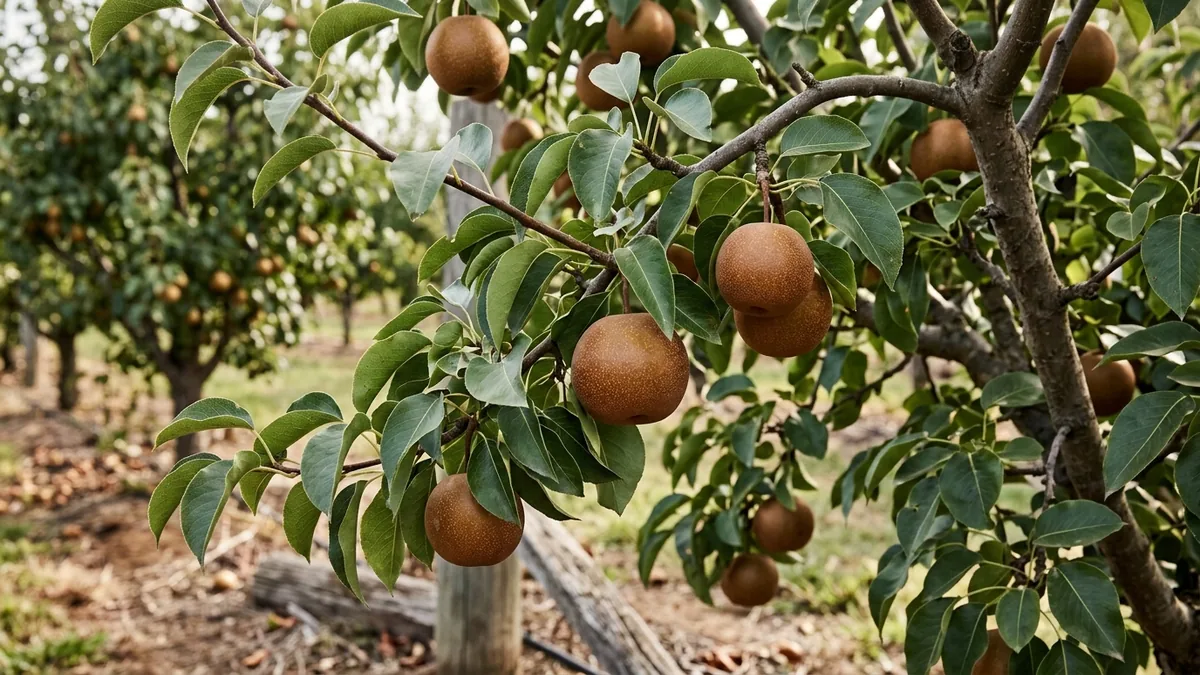
The crisp, juicy Asian pear that thrives across most of the country, as long as you plant a pollinator partner
Nashi, the Asian pear, is a deciduous fruit tree closely related to the European pear. Where a European pear is soft and buttery, a nashi is round like an apple, crisp and very juicy, and is eaten firm and fresh rather than left to soften. The fruit ranges from smooth green-yellow to a handsome golden-brown russet, and the tree is grown and pruned much like an apple or pear.
Nashi are well suited to New Zealand's cool winters. They need a spell of winter chill to fruit and their spring blossom is frost-tender, but the dormant tree is frost-hardy. The one detail that trips people up is pollination, because most nashi need a compatible second variety nearby to set a good crop, so plan to plant a partner from the start.
Is a Nashi Right for Your Climate?
Nashi want winter chill and a pollinator, and they grow across most of New Zealand. Choose your nearest climate below and the tool tells you whether you have enough chill, which varieties suit, and how to handle pollination and spring frost.
Climate and Position
Nashi are temperate trees that need winter chill to break dormancy and fruit well, most needing around 400 to 600 chill hours. Most of New Zealand comfortably delivers that, and the cool and cold South Island provides ideal chill. Only the warm far north can run short, where the lowest-chill cultivars are the safest choice.
Give a nashi full sun and free-draining soil with good air movement. The dormant winter tree is frost-hardy, so the real risk is a late spring frost catching the open blossom, which can wipe out that year's crop. A sheltered position, or a smaller tree you can cover with frost cloth on a frosty spring night, protects the flowers when it matters most.
Planting and Pollination
Most nashi need a compatible second variety flowering nearby to set a good crop, so this is the first thing to plan. Good pairings include Hosui, Nijisseiki and Shinseiki, which cross-pollinate one another well and flower around the same time, so any two of them make a reliable pair. A European pear such as Williams or Bartlett flowering at the same time can also pollinate a nashi. Even the more self-fertile types like Nijisseiki and Shinseiki crop more heavily with a partner, so plant two compatible trees wherever you have room.
Plant bare-root nashi in winter, from about June to August, while dormant and leafless, which is the cheapest way to buy fruit trees and gives them a strong start. Dig a generous hole in free-draining soil in full sun, spread the roots, plant to the depth the tree was grown at with the graft union above the soil, firm in, stake if needed and water well. Plant the pollinator partner at the same time.
Watering and Feeding
Water a young nashi well through its first couple of summers while it establishes, and water any tree deeply in dry spells, especially while the fruit is swelling, as drought stress at that stage gives small fruit. Mulch over the root zone to hold moisture and suppress weeds, keeping the mulch back from the trunk.
Feed in late winter to early spring with a balanced fruit-tree fertiliser or well-rotted compost spread around the drip line. Avoid heavy nitrogen, which pushes soft, disease-prone growth at the expense of fruit and spurs. A nashi in good, evenly moist soil with steady feeding crops far more reliably than one left to fend for itself.
Pruning and Thinning
Nashi are usually trained to a central leader, like an apple, with a main upright trunk and tiers of side branches. Nashi fruit on long-lived fruiting spurs, so pruning aims to build a strong framework, keep the centre open to light and air, and renew the fruiting wood over time. Prune in winter while dormant for shape and structure, with lighter summer pruning to manage vigorous upright growth, always using clean, sharp tools.
Thinning is essential with nashi, because the trees tend to over-set and carry far more fruit than they can size. After fruit set, remove most of the small fruitlets, leaving roughly one fruit per cluster spaced well apart along the branch. Thinning gives you fewer but much larger, sweeter nashi, protects branches from breaking under the weight, and keeps the tree cropping evenly each year rather than swinging between heavy and light seasons.
Harvest and Storage
Unlike European pears, nashi ripen on the tree and are eaten firm and crisp, not soft. A nashi is ready when the skin colour has developed fully for the variety, green types turning more yellow and russet types a richer brown, the fruit smells sweet, and it parts easily from the spur with a gentle lift and twist. Taste-test as they colour up and pick over several pickings as the fruit ripens.
Nashi store well for the family, keeping for several weeks to a couple of months in the fridge or a cool place, longer than most European pears, and they bruise easily so handle them gently. They are best eaten fresh and crisp, and a glut can be turned into chutney, poached fruit or bottled fruit. See the preserving guide for ideas.
Pests and Problems
Birds and codling moth are the two pests most likely to spoil a nashi crop in New Zealand. Birds peck and take ripening fruit, and codling moth grubs tunnel into the fruit, so netting the tree and bagging individual fruit as they develop are both effective, low-spray controls. Hang codling moth traps to time any further action.
Pear and cherry slug, a small slug-like sawfly larva, can skeletonise the leaves and is easily knocked off with a hose or dusted with wood ash. Watch also for the fungal and bacterial diseases that affect pears, helped by good airflow, winter clean-up and an open canopy. As with all pears, a late spring frost on the open blossom, or simply a lack of a pollinator partner, are the most common reasons for little or no fruit.
Varieties for New Zealand
All of these need a compatible pollinator nearby for the best crop. Hosui, Nijisseiki and Shinseiki cross-pollinate well together, and a European pear like Williams or Bartlett flowering at the same time can also do the job.
| Variety | Type or flesh | Pollination | Best for |
|---|---|---|---|
| Nijisseiki (20th Century) | Crisp green-yellow, juicy | Partly self-fertile, much better with a pollinator | The classic nashi, a reliable anchor tree |
| Hosui | Golden-brown russet, sweet | Needs a pollinator | Excellent flavour, pairs well with Nijisseiki |
| Shinseiki | Yellow, crisp | More self-fertile, still better with a partner | The closest to a single-tree option |
| Kosui | Small, very sweet | Needs a pollinator | Sweetest eating, for a mixed nashi planting |
| Chojuro | Russet, firm, rich | Needs a pollinator | Good keeper, distinctive flavour |
Region and Season Notes
New Zealand runs on southern-hemisphere seasons, so the fruit-tree calendar puts planting in the cool months. Buy and plant bare-root nashi, with a pollinator partner, in winter from about June to August while the trees are dormant, then look for blossom in spring and fruit through late summer into autumn.
- Warm far north (Northland, coastal Auckland): chill can run short, so choose only the lowest-chill cultivars and accept this is the trickiest region for nashi.
- Central and lower North Island, top of the South Island: well suited. Good chill for most nashi, with a pollinator partner planted alongside. Watch for late spring frost on the blossom.
- Cool and cold South Island: ideal. Ample chill and a frost-hardy dormant tree, so nashi crop superbly. The main job is protecting the spring blossom from late frost.
For frost dates and chill tuned to your exact spot, use Find My Region or open the Planting Season app.
Pick a pollinator pair that actually fruits
The Planting Season app carries Fruit Tree Variety notes, pollination partners and chill-hours data for all 9 New Zealand regions, so you can plant two compatible nashi that crop. Log your trees, set reminders for winter pruning and fruit thinning, and watch your harvest add up.
Open the App →Frequently Asked Questions
What is a nashi?
A nashi is an Asian pear, a deciduous fruit tree closely related to the European pear. Unlike a European pear, a nashi is round like an apple, crisp and very juicy when ripe, and is eaten firm and fresh rather than left to soften. The fruit can be smooth and green-yellow or covered in a golden-brown russet, depending on the variety, and the tree is grown and pruned much like an apple or pear.
Do nashi trees need a pollinator?
Most do. Nearly all nashi varieties set far better fruit, or only set fruit at all, when a second compatible variety flowers nearby. Good pairings include Hosui, Nijisseiki and Shinseiki, which cross-pollinate well together. A European pear flowering at the same time, such as Williams or Bartlett, can also pollinate a nashi. Even partly self-fertile types like Nijisseiki and Shinseiki crop more heavily with a partner, so plant two compatible trees where you can.
Can you grow nashi in New Zealand?
Yes, very well across most of the country. Nashi are well suited to New Zealand's cool winters and grow happily in most regions, with the cool and cold South Island giving ideal chill. The warm far north is the only place to take care, where only the lowest-chill cultivars suit. The dormant tree is frost-hardy, so the main job is protecting the spring blossom from late frost.
Why should I thin nashi fruit?
Nashi trees tend to over-set, carrying far more fruit than they can size up, so thinning is essential. After fruit set, remove most of the small fruitlets, leaving roughly one fruit per cluster spaced well apart along the branch. Thinning gives you fewer but much larger, sweeter nashi, protects the branches from breaking under the weight, and helps the tree crop evenly each year rather than swinging between heavy and light seasons.
How do you prune a nashi tree?
Nashi are usually trained to a central leader, like an apple, with a main upright trunk and tiers of side branches. Nashi fruit on long-lived fruiting spurs, so pruning aims to build a strong framework, keep the centre open to light and air, and renew the fruiting wood over time. Prune in winter while dormant for shape and structure, with lighter summer pruning to manage vigorous upright growth. Always use clean, sharp tools.
Are Hosui, Nijisseiki and Shinseiki good together?
Yes. Hosui, Nijisseiki (also sold as 20th Century) and Shinseiki cross-pollinate one another well and flower around the same time, so any two of them planted together make a reliable pair. Nijisseiki is the classic crisp green-yellow nashi, Hosui is a sweet russet type with excellent flavour, and Shinseiki is a yellow variety that is more self-fertile. A European pear such as Williams or Bartlett flowering at the same time can also act as a pollinator.
How do you know when a nashi is ripe?
Unlike European pears, nashi ripen on the tree and are eaten firm and crisp, not soft. A nashi is ready when the skin colour has developed fully for the variety, green types turning more yellow and russet types a richer brown, the fruit smells sweet, and it parts easily from the spur with a gentle lift and twist. Taste-test as they colour up, and pick over several pickings as the fruit ripens.
When should I plant a nashi in New Zealand?
Plant bare-root nashi trees in winter, from about June to August, while they are dormant and leafless. Bare-root is the cheapest way to buy fruit trees and they establish well in the cool season. Plant a compatible second variety at the same time for pollination. Potted trees can go in at most times of year, but a winter-planted bare-root tree in free-draining soil and full sun gets the best start.
See also: How to Grow Pears and How to Grow Apples