
How to Grow Snow Peas and Sugar Snap Peas
Updated June 2026
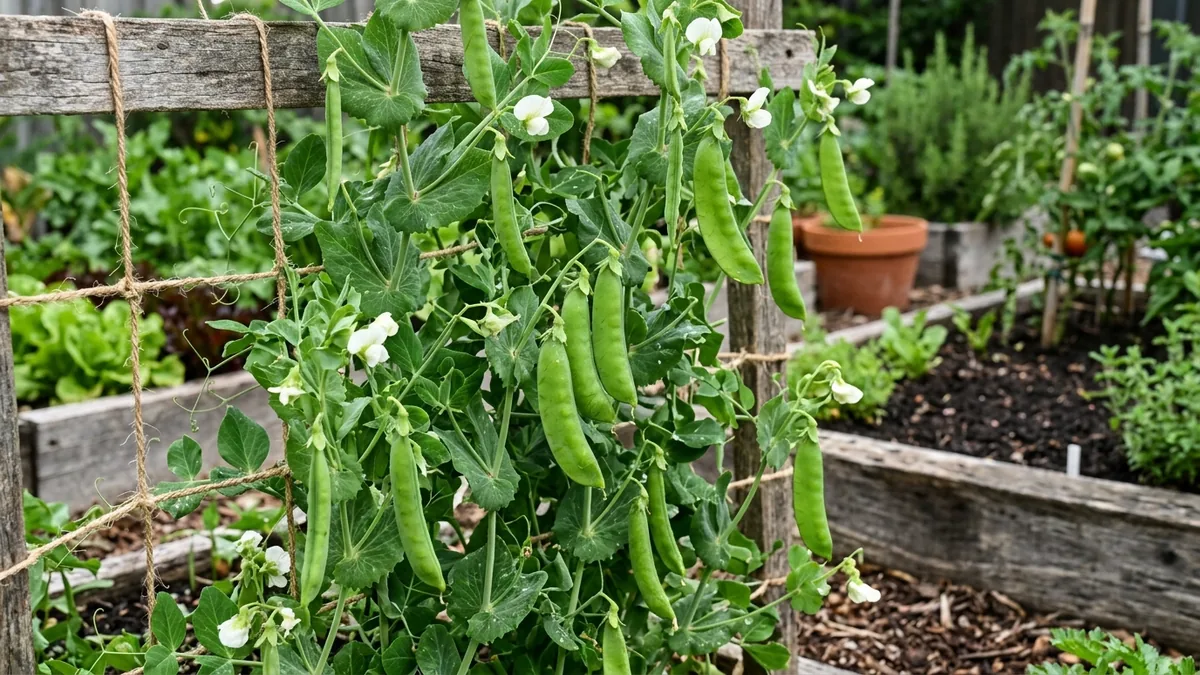
A cool-season legend you eat pod and all, with a succession planner that maps your region
Snow peas and sugar snap peas are the quickest reward in the cool-season garden. They are legumes you eat whole, pod and all, so there is no shelling and no waste. From a tiny seed pushed into cool spring or autumn soil you get a climbing vine that hangs with sweet, crisp pods in a couple of months, and the more you pick the more it gives.
They are also the crop most worth growing yourself, because a home-grown pea eaten straight off the vine is sweeter than anything you will find in a shop. The sugars start turning to starch the moment a pod is picked, so the gap between vine and plate is the whole point. Grow a short row, pick a handful every few days, and you will rarely make it back to the kitchen with a full bowl.
Snow Peas, Sugar Snaps and Shelling Peas
All three are the same species, Pisum sativum, grown for different stages and parts of the pod. Snow peas are the variety macrocarpon. Getting the difference clear is the key to picking each one at the right moment.
Snow peas
Flat and tender, eaten whole while the pod is still immature and the peas inside have barely begun to swell. The French call them mangetout, eat-all. Pick them young and flat for the sweetest, stringless pods.
Sugar snap peas
Rounded and plump, eaten whole pod and all once the peas inside are full size and the pod is crisp and sweet. They are the best of both worlds, the crunch of a pod with the sweetness of a full pea.
Shelling or garden peas
Grown only for the peas inside. The pod is fibrous and is split open and thrown away, and only the round green peas are eaten. These are the classic peas you pod into a bowl.
Climbing or Dwarf, Pick Your Plant
Both snow peas and sugar snaps come in tall climbing and short dwarf forms, and the choice shapes everything from your support to your harvest.
Tall climbers reach 1.5 to 2 metres, crop over a longer window and give a heavier total harvest, but they must have a sturdy support to climb. Dwarf or bush types grow around 60 to 90 centimetres, need little or no support, and are the better pick for pots, balconies and windy spots where a tall vine would thrash about. Dwarf types crop a little earlier and over a shorter, sharper window, which suits a short cool season.
Giving Peas Something to Climb
Set up the support before or at sowing, not later, so you never disturb the roots or snap a tendril reaching for nothing. Peas climb with curling tendrils rather than twining stems, so they need something thin enough to grab.
- Trellis, netting or mesh. The classic choice for a row. Pea netting, chicken wire or any mesh with gaps the tendrils can wrap around works well.
- A teepee of stakes. Three or four stakes tied at the top make a strong, good-looking frame for a clump in a bed or a pot.
- Twiggy pea sticks. The old cottage-garden trick. Push prunings and twiggy branches into the soil along the row and the peas scramble up them for free.
The tendrils do the climbing themselves, so you only need to give the young plants a gentle hand toward the support in the first week or two. After that they take care of it.
Succession Sowing Planner
Peas crop hardest when you sow a little and often rather than one big row that all finishes at once. Pick your region below to see your sowing window and how many short rows you can stagger across it.
Why Timing Is Everything
Peas are a cool-season crop, and getting the timing right is the difference between a heavy harvest and a row of bare vines. They grow and flower best in the mild weather of spring and autumn, depending on your region, and the planner above pins your window. The whole aim is to have the plants flowering and filling pods before real heat arrives.
Heat is the enemy. Once the weather warms, pea flowers drop without setting pods, and powdery mildew climbs the leaves in warm, humid spells. A row sown too late simply runs out of cool weather and gives you leaves but no peas. Sow early enough that the plants are in full production while it is still cool, and stop sowing once the next stretch of warm weather would catch the late rows out.
Sowing Seed Direct
Peas resent root disturbance, so sow the seed straight where it is to grow rather than transplanting. Sow 2 to 3 centimetres deep and about 5 to 7 centimetres apart, in single rows or a double row either side of the support. A double row uses a trellis well and shades the soil to keep roots cool.
Sow into moist but not waterlogged soil. Cold, soggy soil rots the seed before it sprouts, which is the most common reason a sowing fails. There is no need to soak the seed for long, an hour or two at most, as over-soaked seed in cold ground simply rots. Peas germinate in cool soil from around 10 degrees, slow but steady, so patience beats sowing into ground that is too wet. Resow any gaps after a week or two to keep the row even.
Watering
Keep the soil evenly moist, with the two times that matter most being flowering and pod-fill, when a dry spell will cut your harvest sharply. A layer of mulch along the row holds moisture and keeps the roots cool, which peas love. Water at the base in the morning rather than wetting the foliage late in the day, as damp leaves overnight invite powdery mildew.
Feeding
Peas are legumes and fix their own nitrogen from the air through their roots, so go easy on nitrogen. Too much and you get a jungle of leaves and very few pods. A bed enriched with compost before sowing is usually plenty. If you feed at all, lean toward potassium and phosphorus rather than nitrogen, which support flowering and pod set rather than leaf.
Picking Often
Picking is not just harvesting, it is what keeps the plant cropping. Pick snow peas young and flat, before the peas swell and the pod toughens, and pick sugar snaps when the pod is plump and crisp and the peas inside are full. Go over the plants every 2 to 3 days. Every pod you leave to mature on the vine tells the plant its job is done and slows new flowering, so steady picking is the single best thing you can do for a long harvest.
Common Problems
- Powdery mildew. The most common pea problem, a white dusty film on the leaves, worse in warm, dry-then-humid spells late in the season. Space plants for airflow, grow them up a support, water at the base in the morning, and choose mildew-tolerant varieties such as Oregon Sugar Pod.
- Birds. Sparrows and pigeons pull up seedlings and strip flowers. Net young plants or lay twiggy sticks over the row until the seedlings are established.
- Aphids and pea weevil. Aphids cluster on tips and flowers, knock them off with a hose or squash them. Pea weevil notches leaf edges but rarely does serious harm to an otherwise healthy plant.
- Seed rot. In cold, wet soil seed rots before it sprouts. Sow into moist but well-drained ground and avoid soaking the seed for long.
Varieties to Try
| Variety | Type | Habit | Notes |
|---|---|---|---|
| Oregon Sugar Pod II | Snow | Semi-dwarf | Reliable and mildew-tolerant, large flat pods, a good first snow pea. |
| Mammoth Melting | Snow | Tall climber | Heavy cropper of big tender pods, needs a full-height trellis. |
| Golden Sweet | Snow | Tall climber | Yellow flat pods and purple flowers, ornamental as well as edible. |
| Sugar Ann | Snap | Dwarf | Early and compact, crops fast, ideal for pots and short seasons. |
| Sugar Snap | Snap | Tall climber | The classic plump snap pea, sweet and crisp, long cropping on a tall vine. |
| Cascadia | Snap | Dwarf | Compact snap with good mildew resistance, thick sweet pods. |
A note on the season here
New Zealand runs on southern-hemisphere seasons, so peas go in through spring and autumn rather than summer. The warm upper North Island can sow right through the cool months from autumn to early spring. The lower North Island and coastal areas get a long spring run and a second autumn sowing. Inland and across the South Island, sow in spring once hard frosts ease, with a short autumn option only in milder spots. The planner above pins the window for your region.
Let the app pin your pea sowings to the week
The Planting Season app tracks your region's cool season and reminds you when each succession row is due, so you keep peas coming instead of sowing one big row that all finishes at once. Log the harvest and watch the savings add up.
Open the App →Frequently Asked Questions
What is the difference between snow peas and sugar snap peas?
Snow peas are picked flat and immature, before the peas swell, and the whole tender pod is eaten. Sugar snap peas are left until the pod is plump and rounded with full-size peas inside, then the whole crisp pod is eaten. Both are the same species, Pisum sativum, and both differ from shelling or garden peas, where only the peas are eaten and the pod is thrown away.
Do snow peas need a trellis or support?
Tall climbing types reach 1.5 to 2 metres and need a trellis, netting, mesh or a teepee of stakes set up at sowing time. Dwarf or bush types grow around 60 to 90 centimetres and need little or no support, which makes them good for pots and windy spots. Even dwarf types crop a little better with a few twiggy pea sticks to lean on.
When should I sow peas in my area?
Peas are a cool-season crop. In the warm upper North Island sow autumn to early spring. In the lower North Island and coastal areas sow late winter to spring, with an autumn sowing too. Inland and across the South Island sow in spring once hard frosts ease, around September to November, with a short autumn option in milder spots. Use the succession sowing planner on this page and sow a fresh short row every 2 to 3 weeks through your window.
Why are my pea flowers dropping with no pods?
Peas hate heat. When temperatures climb the flowers drop without setting pods, and powdery mildew rises. This is the main reason a late sowing fails. Sow early enough that the plants flower and fill pods before real heat arrives, keep the soil evenly moist at flowering, and treat peas as the cool-season crop they are rather than fighting summer.
How do I stop powdery mildew on peas?
Powdery mildew is the most common pea problem and it worsens in warm, dry-then-humid spells late in the season. Space plants for good airflow, grow them up a support rather than in a tangle, water in the morning at the base rather than wetting the foliage late in the day, and choose mildew-tolerant varieties such as Oregon Sugar Pod. Pull and bin badly affected plants at the end of the run.
How often should I pick?
Pick every 2 to 3 days through the cropping period. Snow peas are best picked young and flat before the peas swell, and sugar snaps when the pod is plump and crisp. Regular picking keeps the plant producing. Pods left to mature on the vine signal the plant to stop, so steady picking is the single best thing you can do for a long harvest.
Can I grow peas in pots?
Yes. Dwarf and bush types suit a pot of about 30 centimetres or more with free-draining mix, and need only a few twiggy sticks for support. Climbing types also grow in a large pot if you give them a trellis. Keep the mix evenly moist, as pots dry out faster, and feed lightly since peas fix their own nitrogen.
See also: How to Grow Sugar Snap Peas and How to Grow Peas
See also: Snow Peas in the Plant Library