
How to Grow Potatoes in Containers
Updated June 2026
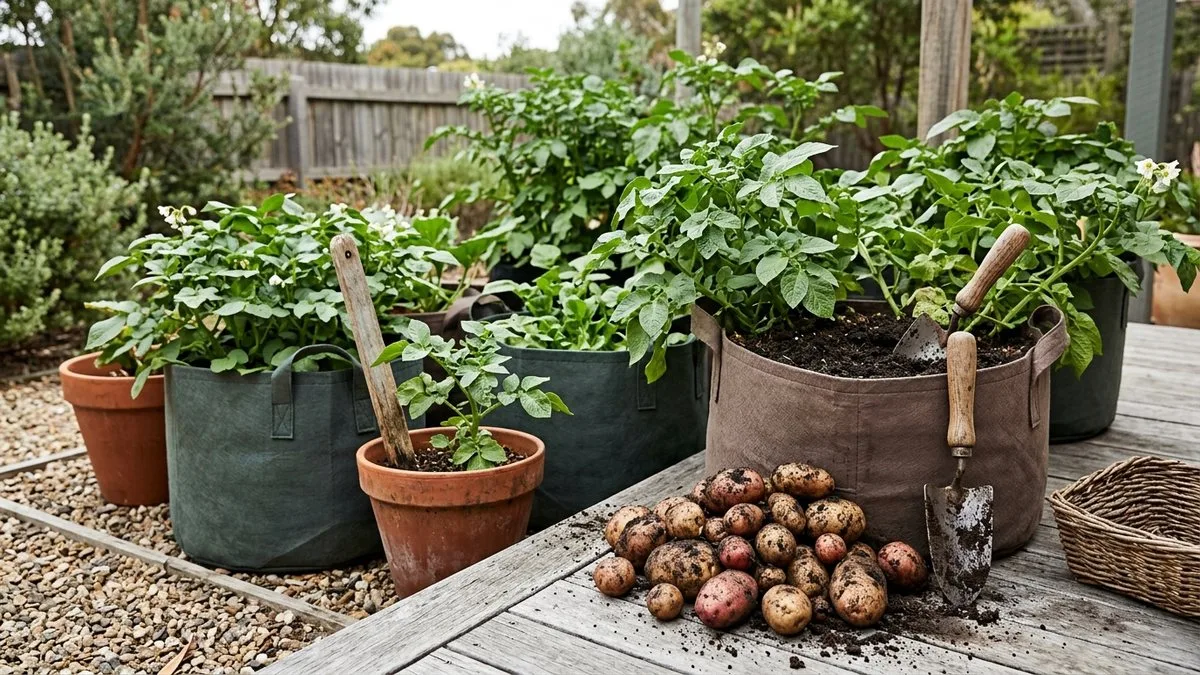
No garden bed needed. A bag or tub on a sunny balcony grows a surprising crop of clean spuds.
Potatoes are one of the most satisfying crops to grow in a container. You need no garden bed, the harvest is clean and easy to dig, and a single bag or tub can yield a good feed of new potatoes. It is one of the best crops for a balcony or small courtyard.
Choose your container
Potatoes want depth and room. Good options are a 40 litre or larger fabric grow bag, a plastic tub, a large pot, or even a hessian sack. Whatever you use, it must have drainage holes, as potatoes rot in waterlogged soil. Bigger is better, a 40 to 60 litre container suits two or three seed potatoes.
Soil and seed potatoes
Fill with a free-draining, rich mix, a blend of quality potting mix and compost is ideal. Start with seed potatoes, ideally certified ones, rather than supermarket spuds which may carry disease or be treated to stop sprouting. Let them sprout (chit) in a cool, light spot until they have short green shoots before planting.
Planting and hilling
Start with only 10 to 15 cm of mix in the bottom. Sit the seed potatoes on it, shoots up, spaced a hand apart, and cover with 10 cm of mix. As the shoots grow, keep adding mix around the stems, leaving the top few leaves exposed. This hilling is the secret to a big crop, because potatoes form along the buried stem, so the deeper you build it up, the more you grow.
Water and feed
Containers dry out fast, so keep the mix evenly moist, never soggy and never bone dry. Potatoes are thirsty once they are bulking up. Feed every couple of weeks with a balanced liquid fertiliser, easing toward higher potassium as the plants flower and tubers form.
Harvest
For new potatoes, dig in gently a few weeks after the plants flower. For a full crop to store, wait until the foliage yellows and dies back, then tip the whole container out, the easiest harvest in gardening. A 40 litre bag can return a couple of kilos from a few seed potatoes.
Catch problems before they cost you a crop
Track every bed in the Planting Season app, log what is going wrong, and get region-specific reminders so the same problem does not bite twice.
Open the App →Frequently Asked Questions
How big a container do I need for potatoes?
At least 40 litres for two or three seed potatoes, and bigger is better. A 40 to 60 litre fabric grow bag, tub or large pot works well. It must have drainage holes, as potatoes rot in waterlogged mix.
How many potatoes will one bag grow?
A 40 litre bag planted with two or three chitted seed potatoes typically returns one to two kilos, depending on variety, feeding and how well you hill up the stems. Bigger containers and good watering give more.
Can I grow potatoes from supermarket potatoes?
You can, but it is risky. Supermarket spuds may carry disease or be treated to suppress sprouting. Certified seed potatoes are clean, reliable and worth it for a container crop where space is limited.
Why do I need to hill up potatoes in a pot?
Potatoes form tubers along the buried stem, so adding mix around the growing stems increases the crop. It also keeps developing tubers covered, because any exposed to light turn green and inedible.
When do I harvest container potatoes?
Dig new potatoes a few weeks after flowering. For a full storing crop, wait until the foliage yellows and dies back, then tip the whole container out. Letting the skins set on dying-back plants helps them store.
See also: How to Grow Potatoes and Balcony Vegetable Garden
Get next month's planting calendar, free
One email a month with exactly what to plant in your region, plus seasonal tips and harvest reminders. No spam, and you can unsubscribe any time.