
How to Grow Tomatoes in Pots
Updated November 2026
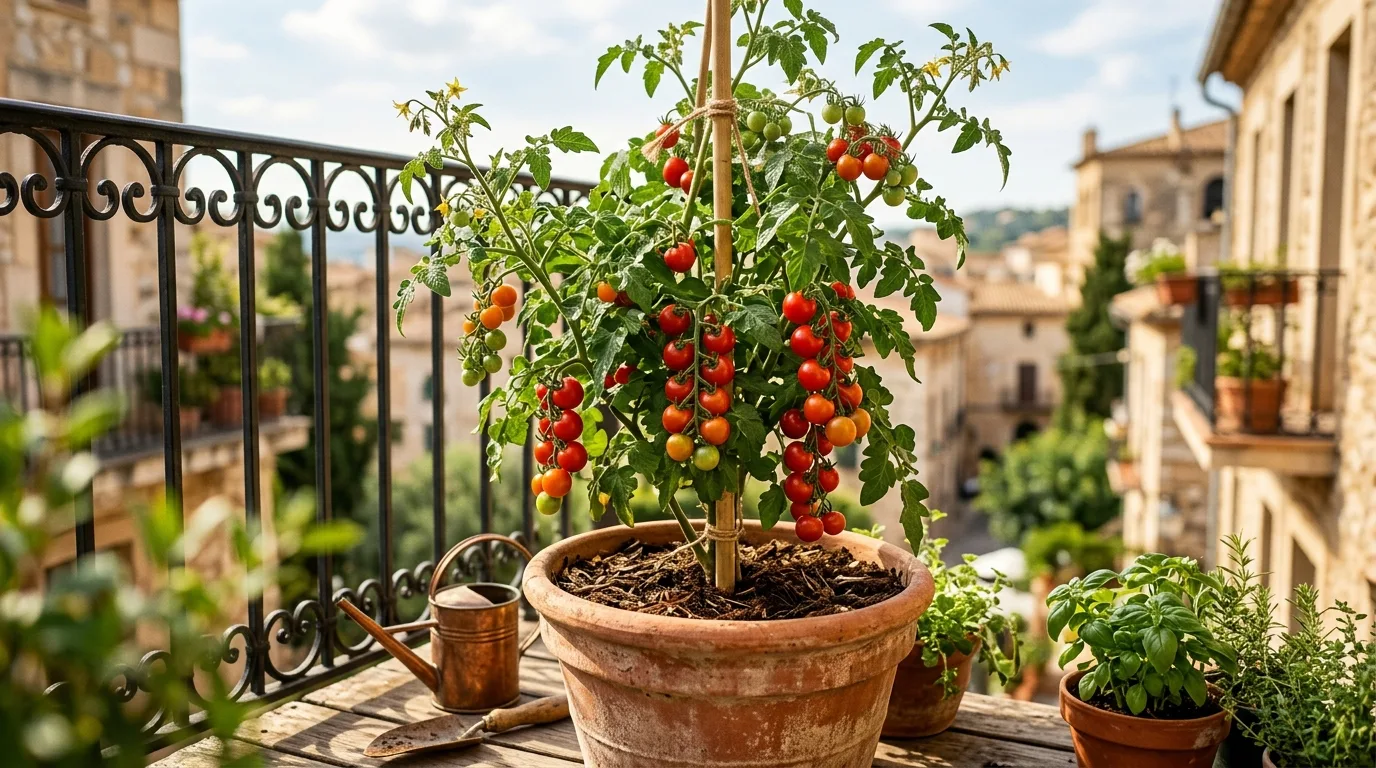
With a big enough pot and steady water, a tomato on the deck crops as well as one in the ground.
Tomatoes are one of the best crops for containers. A single plant in a large pot, in full sun and with steady water, can fill the salad bowl all summer on a deck, patio or balcony. People tend to go wrong in two ways: the pot is too small, and it is allowed to dry out. This guide gives pot sizes in litres, the right mix, a watering and feeding routine, the best compact varieties and a troubleshooting table.
The short version
- Pot: at least 40 litres for a full-size plant, 20 to 30 litres for a dwarf.
- Mix: fresh premium potting mix with some compost.
- Water: daily in summer, checked with a finger 5 cm deep.
- Feed: weekly with a potassium-rich tomato fertiliser once flowering starts.
- Sun: at least six hours of direct light, with a stake in at planting.
🌱 Plant profile: Tomato, with sowing times for your region, companion plants and common pests.
How big a pot, in litres
Choose the biggest pot you can manage. A tomato's roots spread widely, and a larger pot holds a bigger store of water between drinks, which is what keeps potted plants steady. Our plant data recommends a pot at least 40 cm wide and deep for a full-size plant, which holds about 40 litres. Check the litre rating on the pot or the mix bag, as pots of similar look can differ in volume.
| Plant type | Minimum pot | Better | Examples |
|---|---|---|---|
| Dwarf and trailing | 20 litres (about 30 cm wide) | 30 litres | Tumbling Tom, Patio Prize |
| Bush (determinate) | 30 litres | 40 litres | Roma |
| Cherry vine (indeterminate) | 40 litres | 50 to 60 litres | Sweet 100, Tommy Toe, Sungold |
| Large-fruited vine | 40 litres | 60 litres or more | Money Maker, Brandywine, Cherokee Purple |
Grow one plant per pot, because two plants compete for water and nutrients. Make sure there are drainage holes, and lift the pot on feet or bricks so water can get out.
Potting mix and pot material
Fill the pot with fresh premium potting mix. Garden soil packs down in a container and drains poorly. Blend in some compost or worm castings for slow-release nutrients, and leave 3 to 5 cm below the rim so water stays in the pot when you water. Start with new mix each season, because used mix is low in nutrients and can hold disease from the last crop.
| Pot type | What to expect |
|---|---|
| Plastic or glazed | Holds water well and is light to move. Dark pots absorb heat, which helps in cool regions but can overheat roots on a hot day. |
| Terracotta | Attractive but the walls draw moisture out of the mix, so choose a large size and water often. |
| Fabric grow bag | Healthy roots, but the mix dries fastest of all. Go one size up and expect to water twice on hot days. |
| Self-watering pot | The reservoir evens out moisture, making it the easiest option for steady watering. |
| Half barrel or large tub | Holds plenty of mix and moisture and suits a vine tomato, but is heavy once filled. |
Planting and position
Choose the sunniest, most sheltered spot you have, because tomatoes want at least six hours of direct sun and dislike strong wind. A north-facing wall reflects warmth and lets you plant a little earlier in cooler regions. Set the stake or cage in the pot at planting, then plant the seedling deep with the stem buried up to the first leaves, so extra roots form along it. Water in and mulch the surface with pea straw to slow evaporation. Plant out only when frosts are over, and see the planting table in our growing guide for the months in your region. In the colder south a glasshouse or tunnel house extends the season by weeks.
Watering
Watering decides how well potted tomatoes do. A pot has only a small reserve, and the swing between dry and soaked mix is what splits fruit and brings on blossom end rot. Each morning, push a finger 5 cm into the mix and water until it runs from the base if it feels dry. In summer that usually means every day, and on a hot, windy deck a small pot or a fabric bag can need a second drink in the evening. Water the mix, not the leaves, because wet foliage invites blight.
| Weather | How often to check and water |
|---|---|
| Cool spring days | Check daily and water every two to three days, when the top 5 cm is dry. |
| Warm days, 25 to 30 °C | Water daily, ideally in the morning. |
| Hot, windy days | Water daily and check again in the afternoon. Small pots and fabric bags may need a second drink. |
| After rain | Check anyway, because a thick canopy can shed rain and leave the mix dry beneath. |
Feeding
Regular watering washes nutrients out of a pot, so potted tomatoes need more feeding than those in the ground. Use a potassium-rich tomato fertiliser at the label rate.
| Stage | Feeding |
|---|---|
| At planting | Compost or worm castings in the mix, plus a slow-release fertiliser at the label rate if you like. |
| First flowers to heavy fruiting | A potassium-rich liquid tomato fertiliser every week. |
| Last four weeks | Ease off, because the plant is finishing the fruit it has set. |
Pale lower leaves usually mean too little nitrogen, while a dark, leafy plant that is not setting fruit has had too much. Our fertilising guide has more detail.
The best tomatoes for pots
Compact determinate and trailing types need the least support and stay tidy. Tall vines also grow well in a large pot with a strong stake. The tomato varieties guide has the full list.
| Variety | Habit | Pot and support | Notes |
|---|---|---|---|
| Tumbling Tom | Determinate, trailing | 20 to 30 litres, hanging basket or tall pot | A trailing dwarf with cascades of sweet fruit. Tui Garden lists it for hanging baskets. |
| Patio Prize | Determinate, compact | 30 litres, little or no stake | A compact slicer bred for containers. |
| Roma | Determinate bush | 30 litres or more, cage | Ripens in one flush, so it suits a pot for sauce. |
| Sweet 100 | Indeterminate cherry | 40 litres or more, tall stake | A heavy cropper with long trusses. Pinch out side shoots. |
| Tommy Toe | Indeterminate cherry | 40 litres or more, tall stake | Productive and forgiving, and thrives in a large tub. |
Support, pruning and pollination
Vines need a stake of about 1.8 m, with the stem tied loosely every 25 cm or so and the side shoots pinched out to leave two or three stems (see how to prune tomatoes). Bush types need a short stake or small cage and should not be pruned. On a sheltered deck, give the flower trusses a gentle tap to help pollination, and keep picking ripe fruit to encourage more. Our staking guide covers each support in detail, and trellis and support is useful for wind-exposed decks.
Troubleshooting potted tomatoes
| Symptom | Likely cause | What to do |
|---|---|---|
| Flowers drop without fruit | Heat above about 30 °C, or too much nitrogen | Move the pot into afternoon shade, keep water even and ease off nitrogen. See flowers but no fruit. |
| Fruit splits | Uneven watering | Water at a steady rate and mulch. See why tomatoes split. |
| Dark patch at the base of fruit | Uneven watering limits calcium reaching the fruit | Keep the mix evenly moist. See blossom end rot. |
| Yellowing, stunted growth and cupped leaves | Tomato/potato psyllid | Check leaf undersides. See tomato/potato psyllid, and cover the pot with fine mesh. |
| Leaves curl upward | Heat, wind or heavy pruning | Usually temporary. See why tomato leaves curl. |
| Plant wilts at midday but recovers at night | Heat, with the mix still moist | Check the mix first. If it is moist, the plant is coping with heat, so shade the pot and water in the morning. |
| Lower leaves yellow | Normal ageing, or a nitrogen shortage | Remove old leaves close to the soil. If yellowing climbs the plant, feed it. |
| Spots on leaves | Fungal disease such as blight | Remove affected leaves and water the mix, not the leaves. See blight. |
| Small, slow plant | Pot too small or roots too cold | Move up to a larger pot, and keep the pot in a warm, sunny spot in spring. |
Deck and balcony tips
A 40 litre pot of wet mix can weigh more than 20 kg, so check what your balcony and building rules allow. Wind is the other limit, because it dries pots quickly and snaps tall stems, so tie plants well and use a windbreak. Stand pots on trays so water does not drip onto the neighbours. For more ideas see the balcony vegetable garden guide and the container vegetable gardening guide.
Frequently asked questions
What size pot do tomatoes need?
At least 40 litres for a full-size plant, and bigger is better. Dwarf and bush types such as Tumbling Tom and Patio Prize can manage 20 to 30 litres. Small pots dry out too quickly and push the plant into dropping flowers, splitting fruit and blossom end rot.
What is the best tomato to grow in a pot?
Patio Prize, Tumbling Tom and Roma are the easiest in containers because they stay compact. Tommy Toe, Sweet 100 and other vines also work in a large pot if you give them a strong stake and pinch out the side shoots.
How often should I water tomatoes in pots?
Push a finger 5 cm into the mix each morning and water when it feels dry at that depth. In summer that is usually every day. Even watering matters more than the amount, because swings between dry and wet split the fruit.
Do tomatoes in pots need feeding?
Yes, more often than garden plants, because regular watering washes nutrients out of the mix. Feed weekly with a potassium-rich tomato fertiliser once the first flowers open.
Can I grow tomatoes on a deck or balcony?
Yes, if the spot gets at least six hours of direct sun. A large pot, a compact variety, steady water and weekly feeding give a heavy crop in a small space, and a north-facing wall adds warmth in the south.
Does tomato/potato psyllid affect potted tomatoes?
Yes. The psyllid attacks tomatoes wherever they grow, so check the undersides of leaves weekly from late spring. A pot is easy to cover with a fine mesh over a frame, which keeps the insects off.
Can I reuse potting mix for tomatoes?
It is safer not to. Used mix has lost its nutrients and can carry disease from the last crop. Use fresh potting mix each season, and spread the old mix on the garden.
See also: How to Grow Tomatoes and Why Tomatoes Split
Plant profile
The tomato profile has sowing times for your region, companion plants and common pests.