
Unusual and Exotic Fruit to Grow
Updated June 2026
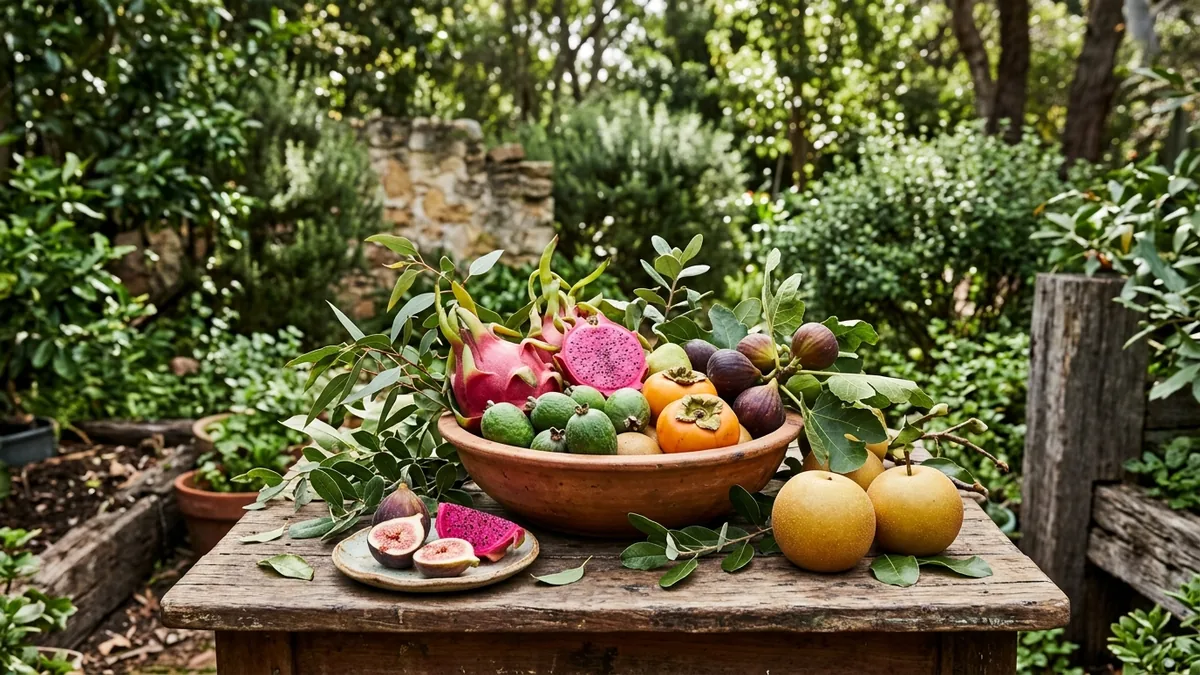
Half the fun of a home orchard is growing fruit you never see in the shops. The trick is matching each tree to your climate, because New Zealand stretches from the subtropical north to the cold south. Get the match right and these unusual fruits crop beautifully. Get it wrong and a tree can sulk for years.
What are chill hours?
Many deciduous fruit trees need a stretch of cold to fruit. Chill hours count the hours below about 7C over winter, the cold a tree needs to break dormancy and flower and fruit well the following season. The warm north, places like Northland and Auckland, gets relatively few chill hours, so gardeners there should choose low-chill varieties. The cooler south, Otago, Southland and especially Central Otago, racks up plenty of chill hours and suits the high-chill types that would never crop up north. The Planting Season app includes a Fruit Tree Varieties and Chill module that estimates the chill your area receives and suggests varieties to match.
Eight unusual fruits to try
Feijoa
The classic Kiwi backyard fruit. Feijoa is hardy across most of New Zealand, copes with low chill, and ripens in autumn with almost no fuss. It crops heavily, makes a tidy evergreen hedge, and a single tree often sets a little fruit, though a second variety nearby lifts the crop. If you grow only one unusual fruit, make it this one.
Dragon fruit (pitaya)
A striking climbing cactus that needs no chill at all. It wants a warm, frost-free spot and a sturdy frame to scramble over, so it is best kept to the warm north or a sheltered, sunny microclimate further south. The reward is otherworldly flowers and bright fruit.
Donut or Saturn peach
A flat, sweet peach that is deciduous and needs winter chill like any peach. In the warm north choose low-chill selections bred for warmer districts, otherwise the tree will flower poorly. In cooler regions standard chill types are fine.
Nashi or Asian pear
A crisp, round, juicy pear that needs a decent dose of winter chill, so it does best in the cooler regions. Where the chill is there, nashi are easy, productive and very popular fresh off the tree.
Persimmon
Comes in astringent types that must be soft-ripe and non-astringent types you can eat firm. Persimmons are adaptable, ask only for modest chill, and turn on a stunning display of glowing autumn fruit that hangs on after the leaves drop.
Fig
One of the easiest exotics. Figs are low chill and thrive in a warm, sheltered spot, especially against a warm wall that holds heat. They also grow well in large pots, which lets gardeners in cooler areas move them to the warmest corner.
Papaya or pawpaw
A subtropical, frost-tender fruit that needs no chill but plenty of warmth, so it is realistic only in the warm north or a very sheltered frost-free pocket. The upside is speed, as papaya grows fast from seed and can fruit within a year or two in the right spot.
Mulberry
Very hardy and adaptable, mulberry grows across most of New Zealand, copes with low chill, and produces heavy crops of soft sweet berries. Give it room, because a happy mulberry becomes a generous spreading tree.
Match fruit to your climate
The Planting Season app has a Fruit Tree Varieties and Chill module that estimates your chill hours and suggests low or high-chill varieties that will actually fruit where you live.
Open the app →FAQ
What are chill hours?
Chill hours are the number of hours below about 7C a deciduous fruit tree needs over winter to break dormancy and fruit well the next season. If a tree does not get enough, it can flower poorly and crop badly. The warm north gets fewer chill hours, the cooler south gets many more.
Can I grow stone fruit in the warm north?
Yes, if you choose low-chill varieties bred for warmer districts. Standard high-chill peaches and nashi will struggle in Northland and Auckland, but low-chill selections of flat peaches and some plums fruit reliably in the warm north.
What fruit grows with no winter cold?
Subtropical and tropical fruit need no winter chill. Dragon fruit, papaya, fig and feijoa all set fruit without a cold spell, though dragon fruit and papaya also need a warm, frost-free position, so they suit the warm north best.
Is feijoa easy to grow?
Very. Feijoa is hardy across most of New Zealand, copes with low chill, and crops heavily in autumn with little fuss. It even doubles as a hedge, which is why it is such a beloved backyard fruit here.
Do I need two trees for fruit?
It depends on the fruit. Many feijoas and some other types crop better with a second variety nearby for cross-pollination, even where one tree will set a little fruit on its own. Papaya often needs both a male and female plant. Always check the variety label before you buy.
Related guides
See also: how to grow pawpaw and how to grow feijoa.