
Walking Onions: How to Grow Egyptian and Tree Onions
Updated November 2026
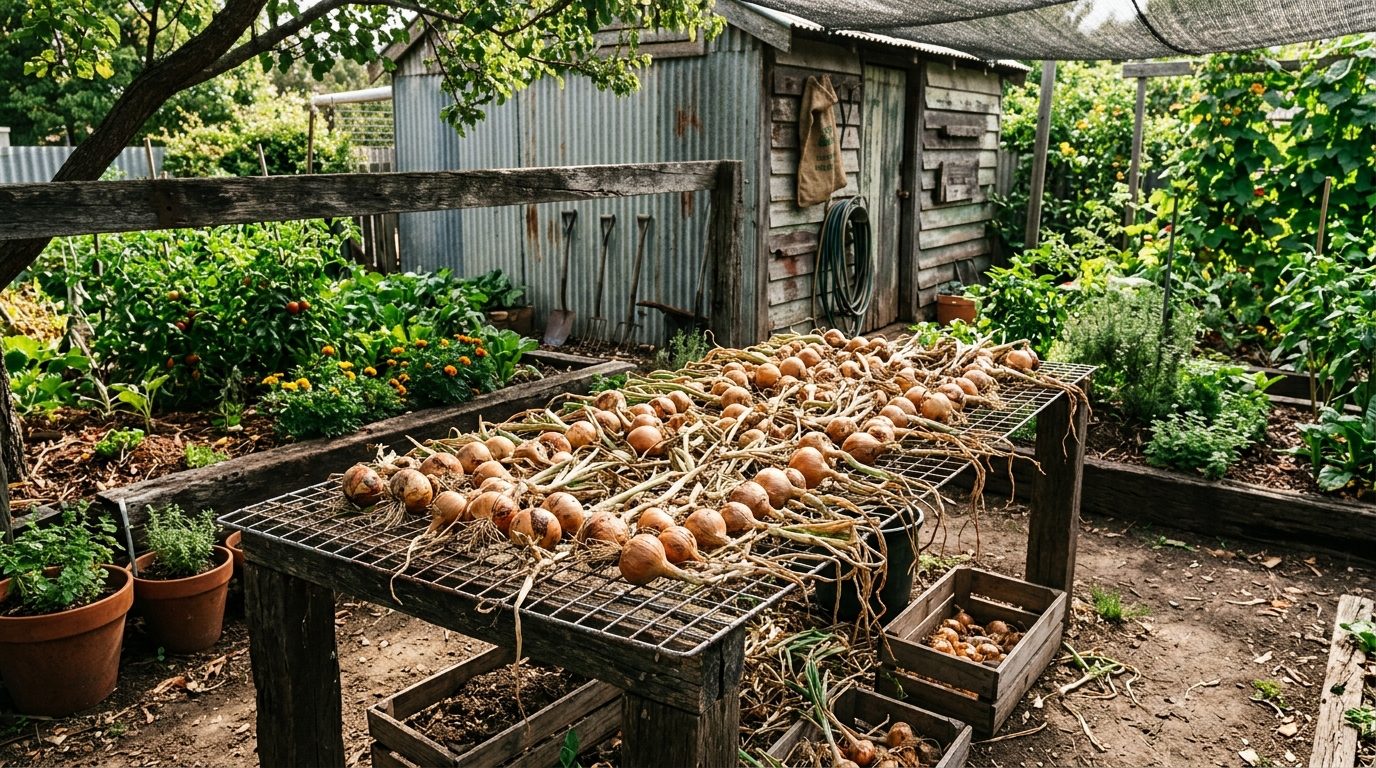
A perennial onion that plants itself, with green tops, small bulbs and topsets to pick.
A walking onion is a hardy perennial onion that carries a bunch of little bulbils on top of its flower stalk instead of seed. The stalk topples over, the bulbils root, and the clump shuffles along a little each year. Plant them once in a New Zealand garden and you can cut spring onion style leaves from them for years.
Names you will see
The same plant (Allium x proliferum) turns up under several labels: walking onion, Egyptian walking onion, tree onion, top-set onion and winter onion. Korukai lists it as Egyptian walking onions, also called tree onions, top onions, winter onions and perennial onions. It is not grown from seed. You plant bulbils from the top of the stalk, or divisions of an established clump. Plants grown from seed are what you want for the annual bulb onion, covered in our onion guide.
How the walking works
In spring the flower stalk shoots up. Where a flower would be, a ball of small bulbs forms, and now and then a smaller stalk pushes out of the top of that ball, giving the tiered look behind the name tree onion. By midsummer the weight pulls the stalk to the ground, and each bulbil that touches soil sends out a root. Over a few seasons a clump will have moved a hand span or more from where it began.
If you want the patch to stay put, cut the topsets while they are still upright. If you like the idea of a self-managing plot, leave a few to fall.
Which regions suit them
Frost does not trouble an established walking onion, so every region we cover will do, from Northland to Central Otago. Our frost dates page runs from a frost-free year in Auckland and Northland to a frost-free season of roughly 140 days in Central Otago, and the plant copes at both ends. Wet clay in a mild, rainy winter is the likelier problem than cold, so drainage matters most in Northland, Auckland and the Bay of Plenty. Walking onions are not in our sowing data, so the timing below is based on climate and soil rather than a set month.
| Where you garden | Plant bulbils or divisions | Local tip |
|---|---|---|
| Northland, Auckland, Waikato and Bay of Plenty | April to winter | Raise the bed a little if your soil sits wet through July. |
| Wellington, Nelson and Marlborough | Autumn, or early spring | Windy sites suit the stalks poorly, so plant in the lee of a fence. |
| Canterbury and the Central North Island | Autumn, as soon as stock arrives | Mulch new plantings through the first winter frosts. |
| Otago, Southland and Central Otago | Early autumn, or spring once the hardest frosts are over | Get bulbils in early enough to root before the ground freezes. |
Korukai says to plant bulbils between mid April and mid September, depending on climate, and soon after they arrive because they can perish in storage. Do not borrow the sowing months for bulb onions or spring onions. Those are seed crops with their own windows, and a perennial grown from bulbils follows different rules. For local detail, see the Auckland, Canterbury, Otago and Southland and Central Otago hubs.
Getting them in the ground
- Find a spot with full sun and soil that drains. A raised bed helps on heavy ground.
- Fork through compost or well-rotted manure first, then rake it flat.
- Press each bulbil in point upward so only 1 to 2 cm of soil covers it. Korukai spaces them about 17 cm apart, and 15 to 20 cm is a fair range.
- Scatter a thin mulch of straw, leaves or seaweed over the top.
- Lay netting over the bed for the first few weeks. Blackbirds and sparrows tug at new bulbils.
- Keep the soil damp until green tips show, which can take a few weeks for the smallest ones.
Garden centres sometimes sell a potted clump or loose bulbs instead. Plant those at the depth they were growing, 20 to 30 cm apart.
Looking after the patch
- Water in dry spells through spring and summer. Established plants are tough, but leaves stay tender with steady moisture.
- Feed with a spring layer of compost. Rich feeding is unnecessary.
- Weed carefully in year one, because small plants lose out to grass.
- Expect dieback. Leaves may brown off after a hot January or a hard frost. Scratch at the base before you give up, as green shoots usually return.
- Watch for damp weather problems such as rust and downy mildew, which onion relatives share. Water at soil level and leave room between plants.
What to pick and when
Nothing says you must wait for a single harvest day. Over a year a clump gives you four different things.
- Leaves. Snip them once plants reach about 20 cm, the way you would cut chives, and leave enough for regrowth.
- Whole young plants. Pull the smaller ones like spring onions, which also relieves crowding.
- Topsets. Korukai says harvest generally falls between early January and mid March. Pick them when firm and about marble sized. They taste sharp, so pickle them, roast them whole or chop them where a small onion is called for.
- The base bulb. It cooks like a shallot, but digging it removes that plant, so lift only what you can spare.
Keep some topsets back for next season in a paper bag somewhere cool and dry, and plant them within a few weeks. Our guide to when to harvest onions covers curing and storing the bulbs.
Splitting a crowded clump
After two or three years the middle of a clump gets congested. Lift it in autumn, tease the bulbs apart, and put the biggest back with some room between them. The outer pieces make the strongest new plants, and surplus divisions are the usual currency at school fairs and seed swaps.
Keeping them in a pot
A tub on the deck is the tidiest way to grow them. Choose a pot about 30 cm across with holes in the base, fill it with free-draining potting mix, set three to five bulbils 2 cm deep and park it in full sun. Water through spring. Our spring onions in pots page has general container advice.
Buying bulbils in New Zealand
Specialist heirloom sellers carry them, and supply is thin. Korukai sells a bag of 10 bulbils, and when we looked the page showed them out of stock until March and April 2027, with a waiting list. Other small sellers list them now and then, so check in late summer and autumn, or ask at a seed swap or community garden. A neighbour's spare clump is often the easiest start.
Close relatives in the garden
In the kitchen walking onions sit somewhere between spring onions and shallots. For seed-grown crops, see our spring onion guide, the spring onion profile and the onion profile.
Questions
What is a walking onion?
It is a perennial onion (Allium x proliferum) that grows a ball of tiny bulbs on its flower stalk. The stalk bends to the ground and the bulbs take root, so the clump slowly relocates.
What month should I plant walking onions in NZ?
Plant from April through the cooler months in mild regions, and in early autumn, or spring after the hardest frosts, in Otago, Southland and Central Otago. Get bulbils in the ground soon after they arrive.
Are the green leaves and bulbils both edible?
Yes. The leaves are used like spring onion, the topsets are pickled, roasted or chopped, and the base bulb cooks like a shallot. Digging the base removes that plant.
How can I keep a patch from wandering?
Cut the topsets before the stalks fall over, or grow the clump in a tub or an edged bed.
Will they return each year?
They should. The plants regrow from the base and from bulbils that fell and rooted, so one planting can go on for years. Divide congested clumps in autumn.
Which NZ seller stocks them?
Korukai lists a bag of 10 bulbils, though the page showed them out of stock until March and April 2027. Smaller heirloom sellers and seed swaps are other sources.
Sources
- Tree onion (Allium x proliferum), overview with references (Wikipedia)
- Korukai: Egyptian walking onions (planting and harvest advice)
Plant profile
The spring onion profile has sowing times for your region, companion plants and common pests.