Why Pumpkins Rot on the Vine
Updated July 2026
Three different problems get called pumpkin rot. The fix depends entirely on which one you have.
Few garden letdowns match watching a promising pumpkin soften and collapse on the vine. The good news is that pumpkin rot is nearly always one of three specific problems, each with its own tell and its own fix, and none of them means your patch is doomed.
1. The baby pumpkins that never grow
The tell: fruit stalls at golf-ball to tennis-ball size, yellows from the flower end, shrivels and drops. If this happens to most of your early fruit, pollination failed. Pumpkins carry separate male and female flowers, and the female (the one with the tiny fruit behind it) needs a good dusting of pollen on the one morning it opens. No bees, rainy mornings or a vine producing only male flowers early on all lead to unfertilised fruit that the plant discards.
The fix: hand pollination
Go out in the morning, pick a freshly opened male flower (straight stem, no bulge behind it), strip its petals and press the pollen onto the centre of an open female flower. One male can do two or three females. Planting flowers nearby and never spraying in the morning keeps the bees on the job for you. Early-season all-male flushes are normal; females follow within a couple of weeks.
2. The dark sunken patch on the flower end
The tell: a growing fruit develops a dark, leathery, sunken patch at the blossom end, which may spread and invite mould. That is blossom end rot, the same calcium-delivery problem tomatoes get. The soil rarely lacks calcium; uneven watering just stops the fruit receiving it during rapid growth.
The fix: steady water
Deep, regular watering under a thick mulch evens out the supply, and the next fruit forms clean. Cut affected patches off young fruit and eat the rest, or remove badly hit fruit so the vine redirects its energy.
3. The mature fruit rotting from underneath
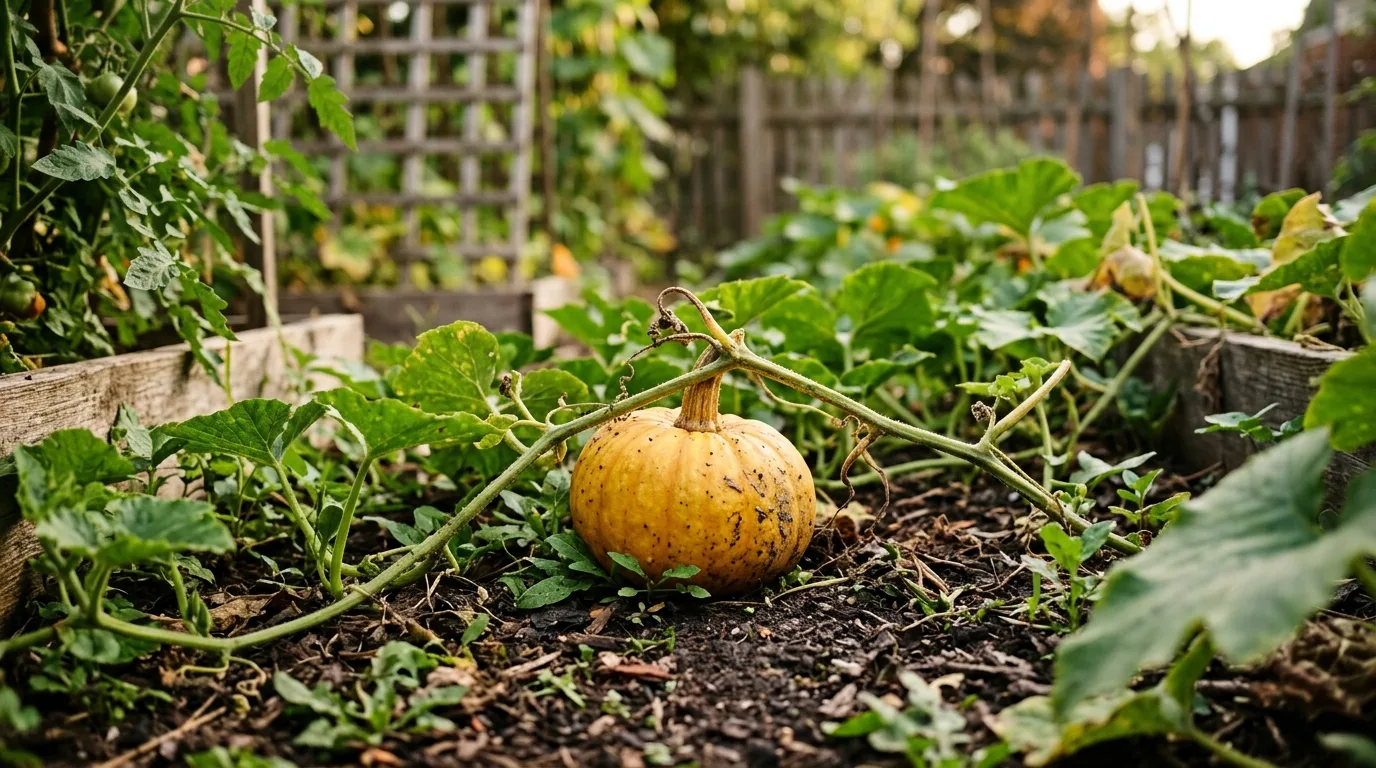
The tell: a well-grown pumpkin softens where it touches the ground, especially in a wet spell or on heavy mulch holding moisture against the skin. Fruit sitting on soggy soil for weeks simply rots from contact.
The fix: get it off the ground
Slide a board, tile, brick or upturned pot saucer under each developing fruit so air moves beneath it. Water the soil at the base of the plant rather than over the patch, and keep the vine itself healthy, because a mildew-weakened vine ripens fruit slowly and leaves it sitting longer in the danger zone.
Harvest before the weather wins
A pumpkin is ready when the stem dries and cracks, the skin resists a fingernail, and it sounds hollow when tapped. Once autumn rain sets in, ripe fruit left lying in the patch is on borrowed time, so cut it with a good handle of stem and cure it somewhere dry and airy.
Catch problems before they cost you a crop
Track every bed in the Planting Season app, log what is going wrong, and get region-specific reminders so the same problem does not bite twice.
Open the App →Frequently Asked Questions
Why do my baby pumpkins turn yellow and fall off?
They were never pollinated. A female flower needs pollen delivered the single morning it opens, and without it the small fruit behind the flower yellows, shrivels and drops. Hand pollinating with a fresh male flower fixes it immediately.
What is the black sunken patch on the bottom of my pumpkin?
On the flower end of a growing fruit, that is blossom end rot, a calcium-delivery problem caused by uneven watering. Steady deep watering under mulch prevents it on the fruit that follows.
How do I stop pumpkins rotting where they touch the ground?
Put a board, tile or brick under each developing fruit so air circulates beneath it, and water the soil at the plant base rather than wetting the whole patch. Ground contact plus sustained moisture is what rots healthy mature fruit.
Should I remove rotting pumpkins from the vine?
Yes, promptly. A rotting fruit drains the plant, attracts pests and spreads mould spores. Cut it off, and the vine will put its energy into the remaining fruit and new female flowers.
Why does my pumpkin vine only make male flowers?
That is normal early behaviour. Pumpkins open batches of male flowers first to advertise to bees, and female flowers with the tiny fruit behind them follow a week or two later. If females still fail to set, hand pollinate on the morning they open.
See also: How to Grow Pumpkin and Tomato Flowers but No Fruit
Get next month's planting calendar, free
One email a month with exactly what to plant in your region, plus seasonal tips and harvest reminders. No spam, and you can unsubscribe any time.