
Beneficial Insects in New Zealand Gardens
Updated November 2026
Who is eating your aphids, how to spot their young, and how to keep them around.
Look closely at a sheltered patch of silverbeet or a rose bud in a New Zealand garden and you will usually find hunters at work: ladybirds, a native brown lacewing, hoverfly larvae, spiders and wasps too small to notice. They eat aphids, mites, whitefly and caterpillars for free, but only if you recognise them and leave them be. This page shows who they are, what their eggs and grubs look like, what to plant, how to make an insect hotel and which sprays to avoid.
Short answer: assume the odd-looking grub on an aphid-covered leaf is a friend. Plant small flowers, keep a little untidy cover, put out some water and spray rarely. An insect hotel is a nice extra for solitary bees but will not rescue a garden with no flowers.
Who is on your side
| Garden ally | Dinner | How to spot it |
|---|---|---|
| Ladybirds, grown and young | Aphids, mealybug, scale and mites; the yellow ladybird grazes powdery mildew | Glossy little domes; the young are charcoal and bristly with bright flecks |
| Native brown lacewing and green lacewings | Their larvae take aphids, thrips, mites and tiny caterpillars; grown lacewings sip nectar | Delicate veined wings; the larvae look like minute grey-brown crocodiles with pincers |
| Hoverflies | Larvae clear aphid colonies; adults feed at flowers | Wasp-coloured flies that hang motionless in the air; larvae are soft, legless and slug-like |
| Parasitic wasps | Develop inside aphids, whitefly and caterpillars | Specks you will rarely see; puffed-up tan aphids are the giveaway |
| Predatory mites | Spider mite and thrips | Too tiny to see without a lens |
| Praying mantis | Whatever it can grab, pests and friends alike | Slim and leaf-coloured with folded forelegs |
| Ground beetles and spiders | Slugs, grubs, caterpillars and soil dwellers | Dark beetles that scatter when you lift a plank or pot |
Native and introduced helpers in New Zealand
Our helpers are a blend. Plant & Food Research, working with the Ministry for Primary Industries, has shown that aphids feed native brown lacewing and hoverfly larvae, native ground beetles, spiders, parasitic wasps and ladybirds. In outdoor lettuce trials the native brown lacewing proved an especially capable aphid hunter because its small larvae can squeeze deep into the plant. Two native hoverflies turn up regularly on brassicas, Melangyna novaezelandiae and Melanostoma fasciatum.
Most of the ladybirds you meet came from overseas, including the 11-spotted ladybird (Coccinella undecimpunctata), and they earn their keep anyway. Landcare Research Manaaki Whenua says many of our colourful ladybirds feed on aphids, mealybugs, scale insects, mites and powdery mildew. Wasps released for biological control, such as Cotesia species, quietly parasitise cabbage caterpillars, which is one reason a brassica patch may look tidier than you expect (see white butterfly).
The mantis on your tomato trellis is most likely the introduced South African species, since our native mantis is now scarce. Whichever you find, let it be and do not relocate it.
Spotting eggs and grubs before you squash them
- Ladybird grubs: charcoal, tapered and bristly, with orange or yellow dots. One grub can out-eat several adult beetles.
- Ladybird eggs: a little cluster of yellow ovals standing upright on the leaf, close to an aphid colony.
- Lacewing eggs: a pale green grain balanced on a thread-thin stalk, often in small groups. What hatches is a grey-brown hunter with big jaws.
- Hoverfly grubs: glassy green or brown, narrow at the head end, creeping among aphids. The eggs are minute white flecks.
- Aphid mummies: bloated, papery tan or bronze aphids that no longer move. A wasp is developing inside or has already left through a neat round hole. Put the sprayer away.
- Mantis egg cases: hard, foamy lumps on a twig or fence. Leave them be.
Pests the allies keep in check
- Aphids are the main course for ladybirds, lacewings, hoverflies and wasps.
- Whitefly attracts parasitic wasps and lacewings, especially in a glasshouse.
- Spider mite is eaten by predatory mites and ladybirds.
- Scale and mealybug are taken by specialist ladybirds and tiny wasps.
- Caterpillars, including the white butterfly, face wasps, beetles and birds.
Planting and managing for helpers
Grown hoverflies, lacewings and wasps need nectar and pollen before they lay eggs, which means your flower border is part of your pest control. Their young are the ones that do the eating.
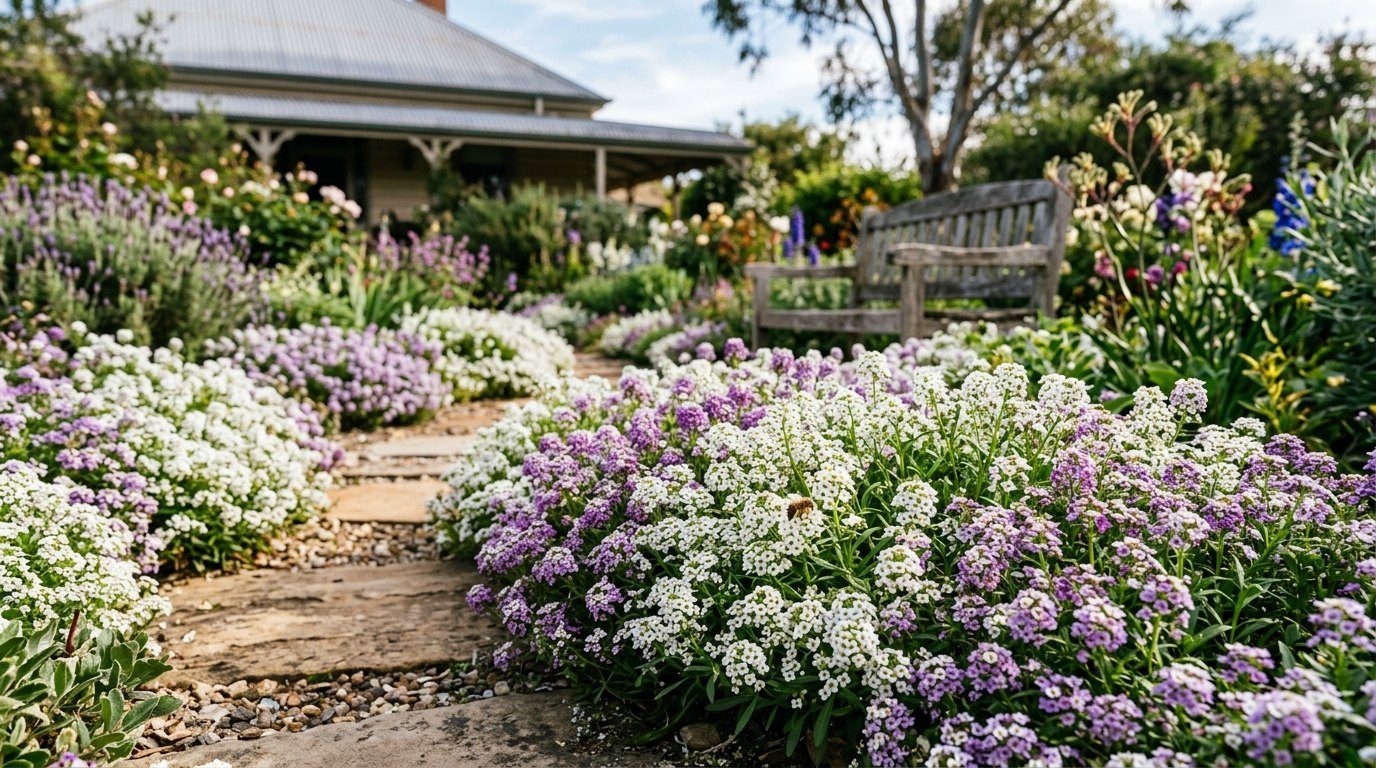
- Choose small, open flowers. Sweet alyssum (alyssum guide), coriander and dill allowed to bolt, buckwheat, phacelia, calendula and marigold give tiny mouthparts easy access.
- Cover the calendar. From a cool spring to a mild autumn, make sure something is blooming, because a flowerless fortnight sends the helpers elsewhere.
- Let a few aphids be. A modest colony is what draws predators in and keeps them. Clear every one and the hunters leave hungry.
- Add water. Float a saucer of pebbles in a sunny corner so insects can drink without drowning, and top it up through summer.
- Keep a rough corner. Leaf litter, a rotting log, long grass and a bit of bare soil shelter ground beetles, spiders and overwintering ladybirds.
The companion planting guide shows which flowers sit well next to which crops.
Making an insect hotel
An insect hotel is a dry, sheltered stack of nesting spots. Solitary bees and wasps are the usual tenants. They do not form hives or defend a nest, so they suit a family garden. Ladybirds and lacewings may also tuck into the dry gaps for winter.
What to put in it
- Drilled timber: offcuts of untreated hardwood with holes from 2 to 10 mm wide, 10 to 15 cm deep, drilled into the side grain. Sand the rims smooth. Avoid treated pine.
- Hollow canes and stems: bamboo or reed lengths about 15 to 20 cm long, blocked at the back so each tube is a dead end.
- Dry packing: bark, pine cones and rolled cardboard at the back for ladybirds and lacewings.
- A box with a roof: a small timber frame with a roof that overhangs so rain stays off the tubes.
Where it goes
- Fasten it about a metre up on a post or wall so it does not sway.
- Point it north or north-east for the morning sun, out of the southerly and westerly weather that blows across most of the country.
- Keep it close to flowers and water.
Upkeep and limits
- Leave full tubes alone. Once the young have flown, usually after summer, swap or clean them.
- Renew hollow stems every year or two, since old ones harbour mould and parasites that can destroy the next brood.
- Do not paint or treat the timber.
A hotel is not pest control. Bees and wasps fill most of the holes, not ladybirds, and in a bare, flowerless section it will stay empty. Crowded hotels can also breed parasites and earwigs. Flowers, cover and restraint with sprays achieve much more, so treat the hotel as a bonus for pollination and for watching wildlife.
Sprays and the damage they do
The worst offenders are broad-spectrum insecticides, which kill nearly everything that crawls or flies, helpers included. Some products labelled organic or natural are in this group, so read the label rather than the front of the pack.
- Hold off until you need to. Check first for ladybird grubs, lacewing eggs and aphid mummies. If they are there, the pest numbers often fall within a week or two.
- Use a registered product exactly as the label says. Follow the pest, plant, rate, bee warnings and pre-harvest wait.
- Apply in the evening when bees and hoverflies have stopped flying, and keep it off open flowers.
- Treat the problem shoot only and leave the rest of the plant and garden alone.
- Start with something gentle. A jet from the hose dislodges aphids and picking off big caterpillars costs nothing.
The one household mix we mention anywhere on this site is milk spray for powdery mildew, 1 part milk to 9 parts water, which does not harm insects. For everything else, browse the pests and diseases section or the pest management guide.
Questions
Which helpful insects should I look for in a New Zealand garden?
Ladybirds and their grubs, the native brown lacewing, hoverflies and tiny parasitic wasps do the most against aphids, while spiders, ground beetles and predatory mites handle other pests.
How can I recognise a lacewing egg?
It is a pale green grain on the end of a hair-fine stalk, usually stuck to a leaf near aphids. The hatchling is a small grey-brown hunter with large jaws.
What size holes does an insect hotel need?
Drill 2 to 10 mm holes about 10 to 15 cm deep in untreated hardwood and add canes closed at one end. Swap the hollow stems every year or two.
Are the ladybirds I see in NZ gardens friends or pests?
Friends, nearly always. They eat aphids, mealybug, scale or mildew, and their charcoal grubs are the hungriest stage.
Will spraying hurt beneficial insects?
Broad-spectrum insecticides will, even some marketed as organic. Spray only when truly needed, use a registered product to the label, and do it in the evening away from open flowers.
What should I plant to bring helpers in?
Sweet alyssum, flowering coriander and dill, buckwheat, phacelia, calendula and marigold. Small open blooms suit hoverflies and wasps best.