Black spot: identify, prevent, control
Updated October 2026
Worst in wet, mild springs from bud burst in September through to December, in every region from Northland to Southland.
In New Zealand, black spot is the everyday name for three different fungal diseases. On apples it is apple scab (Venturia inaequalis), on pears it is pear scab (Venturia pirina) and on roses it is rose black spot (Diplocarpon rosae). Each one is spread by rain splash in spring, and each can strip leaves and spoil fruit in a wet year, so the same habits of clean-up and early protection work for all three.
Venturia inaequalis, Venturia pirina, Diplocarpon rosae
How to identify it
- On apple and pear leaves, the first sign in spring is small olive-green to dark, velvety spots about 3 mm across, often on the underside of young leaves.
- The spots spread and darken, leaves yellow and fall early, and badly affected trees can be half bare by midsummer.
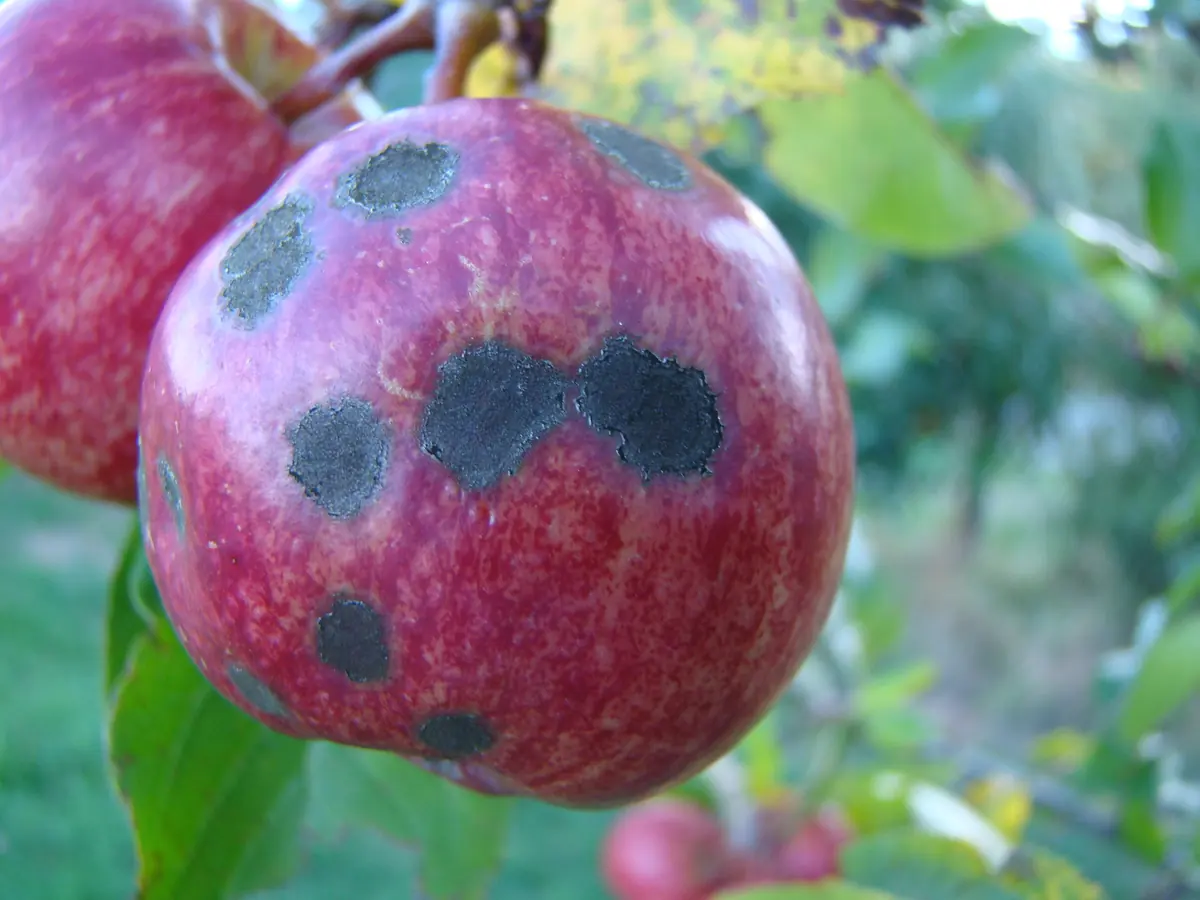
- On fruit, apple and pear scab makes dark, corky, roughly round spots; young fruit infected early may become misshapen or crack as it grows.
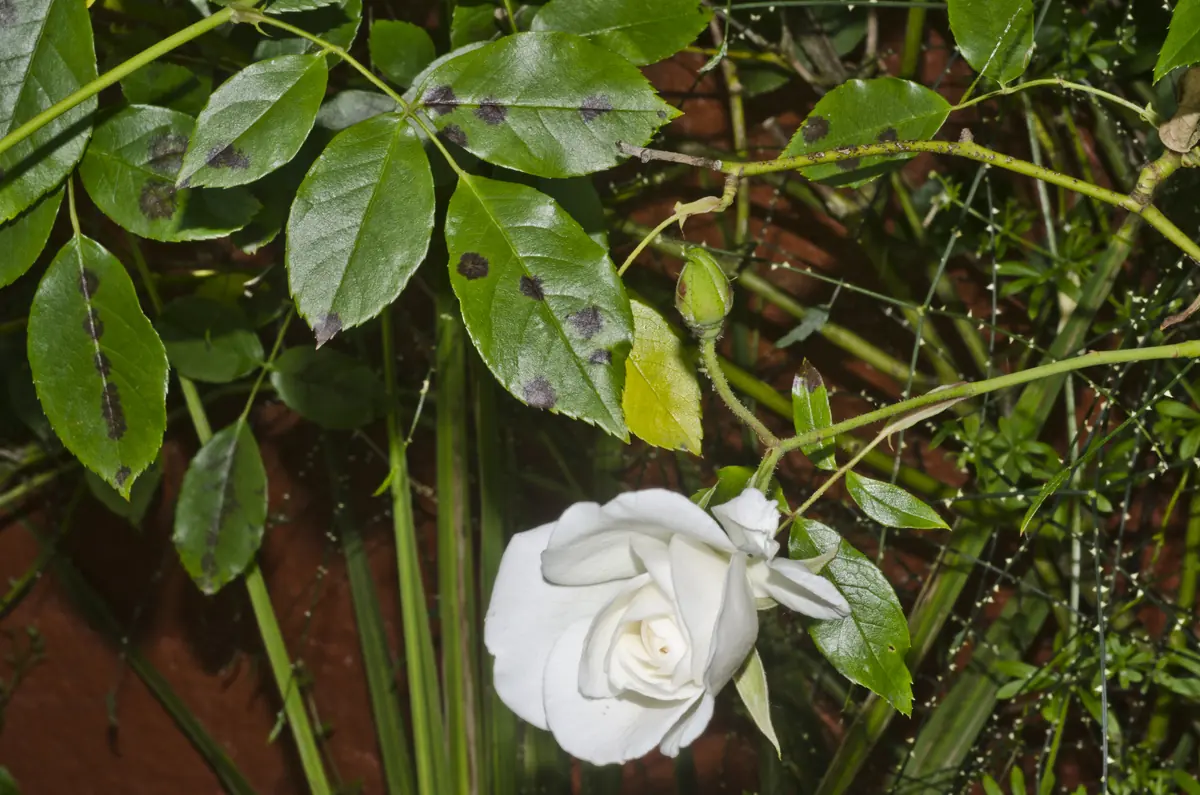
- On roses, you see round black spots with feathery, fringed edges on the upper leaf surface, the leaf around them turns yellow and the leaf drops.
- Grapes have their own black spot, which is anthracnose: grey spots with dark red rims on leaves and sunken dark spots on shoots and berries.
- Each fungus stays on its own host, so black spot on your roses will not spread to your apple tree, and the reverse is also true.
What it is often confused with
Anthracnose
Grape black spot is the anthracnose fungus Elsinoe ampelina, not a scab. It makes sunken spots with raised edges on canes and berries, and the centres of leaf spots often fall out to leave holes.
Sooty mould
Sooty mould is a black film that wipes off with a damp cloth and sits on honeydew from sap-sucking insects. Scab and rose black spot are inside the leaf or fruit skin and do not rub off.
Leaf spot
General leaf spots are usually brown with pale or purple margins and stay small. Rose black spot has a fringed, feathery edge and causes heavy yellowing and leaf fall.
When and where it is worst
Black spot is common in every New Zealand region, but it is worst where spring is wet and mild: Northland, Auckland, Waikato, the Bay of Plenty, Taranaki and the West Coast. Drier Central Otago, inland Canterbury and much of Hawke's Bay and Marlborough see less of it, though a wet spring brings it out there too.
The apple and pear scab fungi spend winter in fallen leaves. From bud burst in September, spores are shot into the air whenever the old leaves get wet, and new leaves are infected when they stay wet for several hours. Rose black spot overwinters on fallen leaves and stem lesions and spreads by rain and sprinkler splash from spring right through to autumn.
Plants it affects
These plants in our library list it as a problem to watch for.
How to prevent it
- Rake up and bin or bury fallen apple, pear and rose leaves in autumn and winter, because that is where the fungus spends the winter.
- Plant resistant varieties where you can; many Asian pears resist pear scab, some modern apples and shrub roses resist scab or black spot, and Granny Smith is one of the most susceptible apples.
- Prune trees and roses to an open shape so leaves dry quickly after rain, and space plants so air moves freely between them.
- Water at the base in the morning, not over the leaves in the evening, so foliage is not wet for long periods.
- Mulch under roses and fruit trees so rain does not splash spores from the soil and old leaves up onto new growth.
Organic control, step by step
- Pick off and bin spotted rose leaves and the first scabby apple or pear leaves as soon as you see them, which slows the spread.
- In winter, after leaf fall, spray apples, pears and roses with lime sulphur to clean up spores on the wood, and again at bud movement in August or September on pipfruit if the label allows.
- From bud burst, protect apple and pear leaves with copper sprays before rain, repeating every 10 to 14 days through wet spells until fruit has set.
- On roses, spray potassium bicarbonate with a little horticultural oil every 7 to 14 days through the growing season, which certified organic growers can use.
- Wettable sulphur sprays also protect roses and pipfruit, but do not use sulphur in hot weather above about 30 °C or within two weeks of an oil spray.
Conventional control
- Copper oxychloride or other copper fungicides are registered for black spot on pipfruit and roses in New Zealand home gardens; use them as a protectant from bud burst and before rain.
- Myclobutanil is sold for home use against black spot on apples and roses and has some curative action if applied within a few days of an infection period.
- Lime sulphur is registered as a dormant and bud-movement spray on pipfruit and roses, but it can russet apples and pears and scorch soft growth if used later in the season.
- Alternate fungicide groups rather than relying on one product all season, so the fungus is less likely to become resistant.
- Always read the label, check that your crop and black spot are listed, and keep to the withholding period before you pick fruit.
Frequently asked questions
Can I eat apples with black spot?
Yes. Scab spots are only skin deep and the fruit is safe to eat, though it may not store as well because cracks let rots in. Peel or cut out the spotted areas if you prefer.
Why does my rose get black spot every year?
The fungus survives the winter on fallen leaves and on lesions in the stems, so it is ready to reinfect new growth each spring. Clearing old leaves, pruning out spotted canes in winter and choosing resistant roses make the biggest difference.
Is black spot on roses the same as on apples?
No. They are different fungi that only attack their own hosts, so spores from your roses will not infect your apple trees. The prevention steps are similar because both spread by rain splash.
When should I spray apples for black spot in New Zealand?
Start at bud burst in September and keep leaves protected through wet weather until early summer. The most important sprays are the ones just before rain in the weeks after bud burst.
Related problems
Sources: Te Ara, The Encyclopedia of New Zealand, Apples and pears: black spot; Kiwicare, Apple scab; Yates New Zealand, lime sulphur concentrate; Manaaki Whenua, Biota of New Zealand: Elsinoe ampelina. Identification and control follow these sources. Always read the product label before use.