
Flea beetle: identify, prevent, control
Updated October 2026
Worst on young seedlings in warm, dry weather from October to March, especially in the North Island and in dry eastern districts.
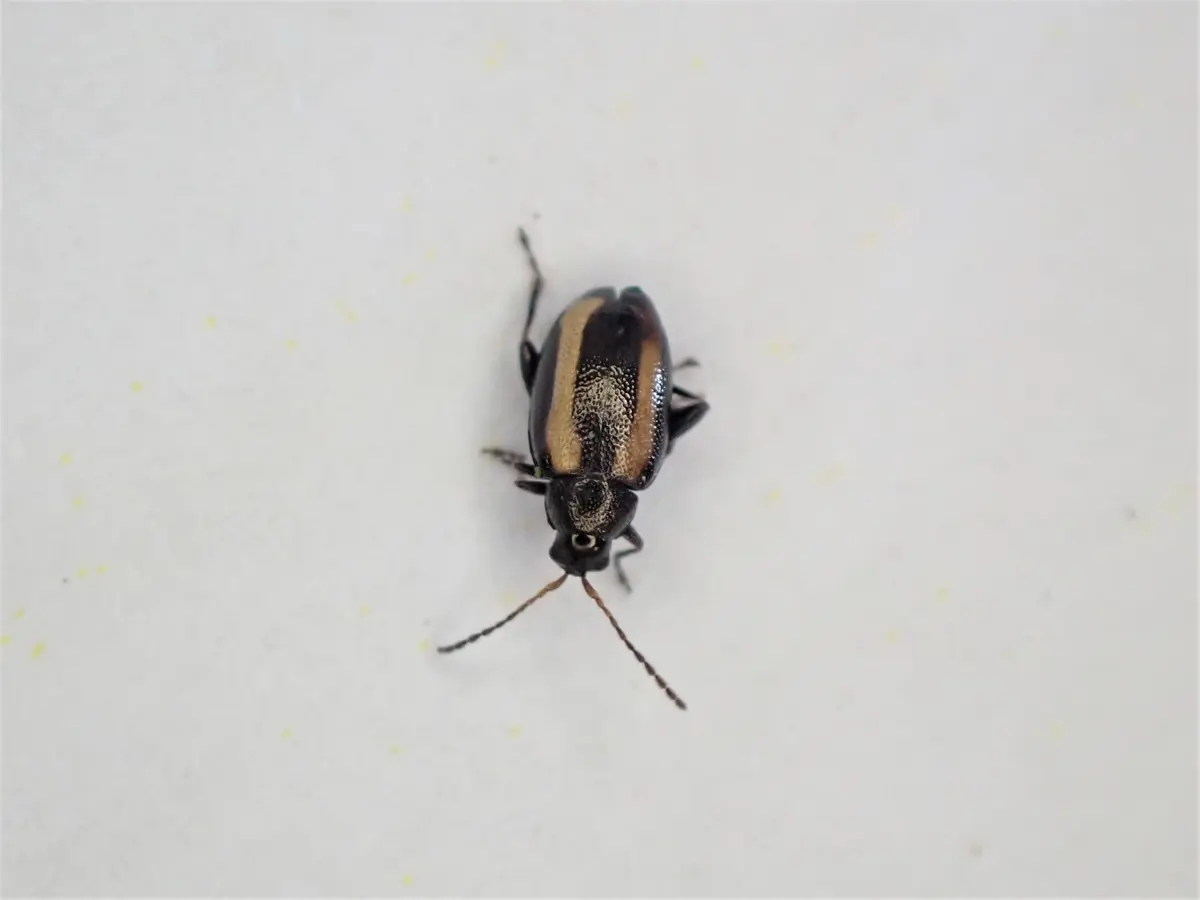
Flea beetles are tiny shiny beetles, 2 to 3 mm long, that leap like fleas when disturbed. In New Zealand the striped turnip flea beetle, Phyllotreta undulata, is the one most gardeners meet on radish, turnip, swede, daikon, horseradish and other brassicas. Older plants shrug off the damage, but a heavy attack on seedlings can kill them or set them back by weeks.
Phyllotreta undulata and other Phyllotreta species
.jpg)
How to identify it
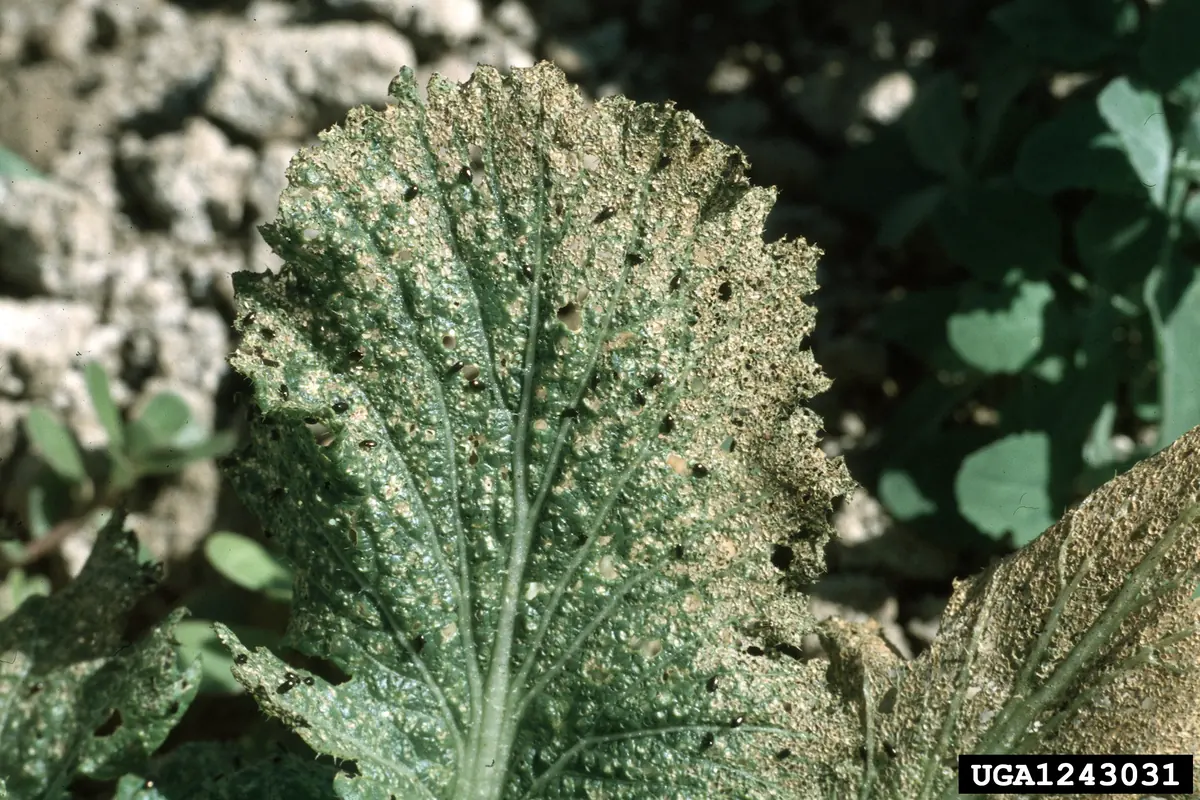
- The first sign is lots of tiny round holes, 1 to 3 mm across, peppered over the leaves of seedlings, as if they had been hit with shot.
- Some holes do not go right through, leaving small pale pits or windows in the leaf surface.
- When you brush past the plants, tiny dark beetles jump away quickly, which is the easiest way to confirm them.
- Up close, the striped turnip flea beetle is black with a wavy pale yellow stripe down each wing case and enlarged back legs for jumping.
- Badly affected seedlings wilt, the leaves turn brown and papery around the holes, and seedlings may die before they get their true leaves.
- The larvae feed on roots in the soil, but in home gardens this root feeding rarely causes noticeable harm.
What it is often confused with
Slugs
Slugs make larger, ragged holes and eat leaf edges, usually overnight, and leave silvery slime trails. Flea beetle holes are small, round and evenly scattered.
Diamondback moth
Diamondback moth caterpillars make small windows and holes too, but you will find small green caterpillars that wriggle backwards and drop on silk threads when touched.
White butterfly
White butterfly caterpillars chew large, irregular holes and leave green droppings. Flea beetle damage is a fine peppering of small holes with no droppings.
When and where it is worst
Flea beetles are found throughout New Zealand, with the striped turnip flea beetle recorded from Auckland, Coromandel, Gisborne, the Wairarapa and beyond. They are worst where spring and summer are warm and dry, including Northland, Auckland, the Bay of Plenty, Hawke's Bay, Gisborne, Nelson, Marlborough and Canterbury.
Adults spend the winter in leaf litter and hedges and become active as the weather warms in spring. The most damage happens from October to March, especially in hot, dry spells when seedlings are growing slowly. Plants growing fast in moist soil quickly outgrow the damage.
Plants it attacks
These plants in our library list it as a problem to watch for.
How to prevent it
- Cover seed rows and transplants with fine insect mesh or crop cover straight after sowing, and seal the edges with soil so beetles cannot get in.
- Sow radish and turnips in late summer, autumn and early spring when flea beetle numbers are lower.
- Keep seedlings growing quickly with regular watering and a fertile, compost-rich soil, because fast-growing plants outgrow the damage.
- Rotate brassicas and clear away crop remains and brassica weeds such as wild turnip and shepherd's purse.
- Transplant sturdy seedlings rather than direct sowing in midsummer, so plants are past the most vulnerable stage.
Organic control, step by step
- Water seedlings well in dry weather and lightly mist the leaves, as flea beetles dislike moist conditions.
- Catch beetles on a yellow sticky trap or a board smeared with something sticky, held just above the plants while you brush through the leaves.
- Use a hand vacuum to suck beetles off seedlings early in the morning when they are slow.
- Spray natural pyrethrum in the evening on badly affected seedlings, if the label covers chewing insects on your vegetable, as it breaks down quickly in sunlight.
Conventional control
- Few New Zealand home garden insecticides list flea beetle by name, so check the label before you buy; mesh and quick growth usually give better results than spraying.
- Pyrethrins products (natural pyrethrum) are registered for home use on vegetables and act quickly on contact; apply in the evening to protect bees.
- Some home garden tau-fluvalinate sprays are sold for caterpillars and other insects on vegetables; use one only if the label you buy lists your crop and flea beetle.
- Always read the label, check that your crop and the pest are listed, and keep to the withholding period before you harvest.
Frequently asked questions
Will flea beetles kill my radishes?
Seedlings with only a few leaves can be killed by a heavy attack, but once plants have several true leaves they usually survive. Radish roots are still fine to eat even if the leaves are holey.
Why do flea beetles attack in hot weather?
They are most active in warm, dry, sunny conditions, and seedlings grow slowly when stressed by heat and drought. Regular watering and some shade cloth in midsummer tip the balance back toward your plants.
Is insect mesh worth it for flea beetles?
Yes, it is the most reliable control. Use mesh fine enough to stop tiny beetles, put it on at sowing and keep the edges sealed, and it will also keep out white butterfly and diamondback moth.
Do flea beetles attack other vegetables?
The beetles on radish and turnip in New Zealand feed mainly on brassicas, including rocket, mustard and cress. Other flea beetle species can feed on potatoes, eggplant and beet, but they are less of a problem in New Zealand gardens.
Related problems
Sources: Manaaki Whenua, Biota of New Zealand: Phyllotreta undulata; New Zealand Organisms Register, Phyllotreta undulata; Kiwicare, Organic Insect Control technical sheet; Yates New Zealand, Mavrik Insect and Mite Spray. Identification and control follow these sources. Always read the product label before use.