
Twenty chicken breeds and four ducks, filtered by what you actually want: eggs, meat, a dual-purpose all-rounder, a calm family pet, or a bird that copes with your climate.
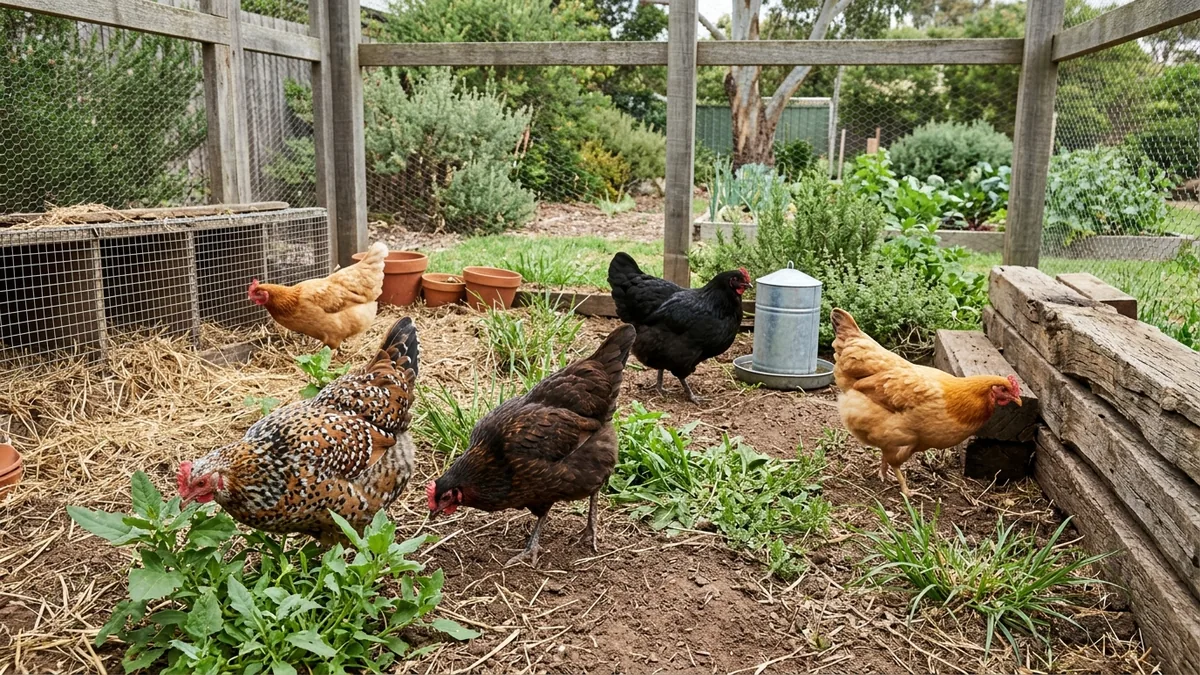
Every breed is a trade-off. The fastest way to a flock you are happy with is to decide what matters most, then shortlist from there. Most backyard keepers want one of these five things.
Most eggs for your feed. Lean Mediterranean and hybrid layers like Leghorns and Brown Shavers lead, but they live shorter, busier lives.
Fast growth and a good carcass. Heavy breeds and crosses suit this, though most home flocks pick dual-purpose instead.
A fair number of eggs plus a decent table bird. Australorps, Sussex, Wyandottes and Plymouth Rocks are the classic all-rounders.
Calm, friendly, good with kids. Silkies, Orpingtons, Pekins and Brahmas are gentle and tolerate handling well.
Birds that shrug off your weather. Heavy, well-feathered breeds handle cool, damp winters as long as the coop stays dry.
Filter by purpose, temperament and climate. Egg numbers are realistic first-to-second-year ranges. Every breed lays less as it ages. Nothing is saved, and it works offline.
| Breed | Purpose | Eggs/year | Egg colour | Temperament | Climate notes |
|---|
Australorp. Hardy, friendly, lays well and forgives mistakes. Brown Shaver and Sussex are close behind.
Brown Shaver or Leghorn for sheer numbers. Australorp if you want eggs plus a longer-lived, calmer bird.
Orpington, Wyandotte and Brahma. Heavy, well-feathered birds with small combs that resist frostbite.
Silkie and Pekin (bantam). Small, docile and happy to be held. Orpingtons are a larger gentle option.
Wyandotte and Sussex. Hardy, dense feathering that copes well as long as the coop stays dry.
Easter Egger and Araucana for blue and green, Olive Egger for olive. A pretty egg basket without losing many eggs.
Once your birds arrive, the free Planting Season app and its Poultry and Flock tracker let you log each bird, its breed, and the eggs it lays, so you learn what actually performs in your yard rather than relying on averages. It tracks chickens, ducks and quail together.
Australorps, Brown Shavers, Orpingtons and Sussex are all forgiving first birds. They are calm, hardy and lay well. Brown Shavers are the most productive layers but live shorter lives, while Australorps are friendly dual-purpose birds well suited to the New Zealand climate.
Brown Shavers (a hybrid like the ISA Brown) and Leghorns lead for sheer numbers, roughly 280 to 320 eggs a year in their first year or two. Australorps are not far behind at about 250 to 300. Egg numbers fall in later years for every breed, so do not expect peak laying forever.
No. Hens lay eggs with or without a rooster. You only need a rooster if you want fertilised eggs to hatch chicks. Many councils restrict or ban roosters because of the noise, so most backyard flocks are hens only.
Araucanas and Easter Eggers lay blue or green eggs, Olive Eggers lay olive-green, and Marans lay dark brown. Most everyday layers like Brown Shavers lay brown, while Leghorns lay white. Egg colour does not change the taste or nutrition.
Most heavy breeds like Orpingtons, Wyandottes and Australorps handle cool, damp New Zealand winters well as long as the coop stays dry and draught-free. Leghorns and lighter breeds cope better with the warmer, drier north. Dryness matters more than cold for every breed.
Ducks are about as easy as chickens and lay more reliably through winter, but they need water to dunk their heads and they make mud. Khaki Campbells and Indian Runners are top layers, Pekins are friendly and good for meat, and Muscovies are quiet and hardy.
Log each bird and its eggs in the free Poultry module and learn what really lays in your yard.