
When Does Spring Start in NZ? Season Dates for 2027
Updated November 2026
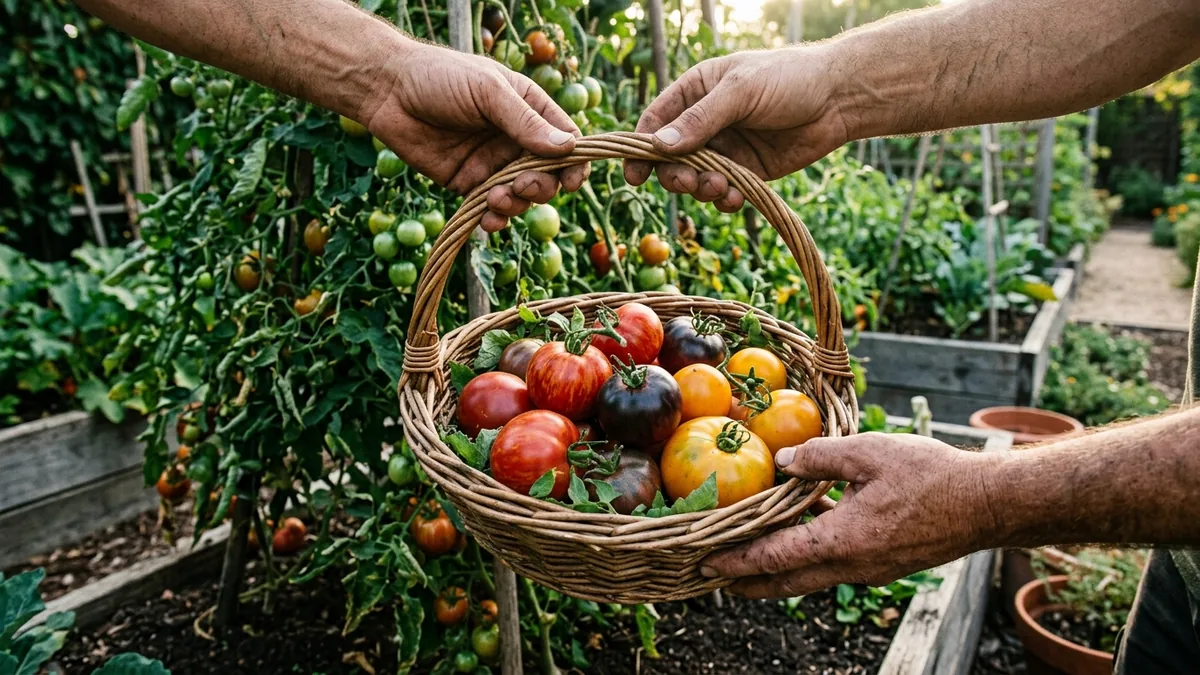
Meteorological and astronomical seasons, the 2027 equinox and solstice times in NZ time, and what to plant as each season begins.
In New Zealand, spring is most often counted from 1 September, when the meteorological season begins and the weather forecasters switch their seasonal summaries. The astronomical start is the September equinox, which falls on 23 September in 2027 (6:02 pm NZST). Whichever you follow, your own last frost date matters far more to the garden than the date on the calendar.
People in Aotearoa argue about this every year, and with good reason. A calendar printed in a shop window says spring starts around 22 or 23 September. The weather presenter says it began on 1 September. Both statements are accurate, because there are two separate definitions of a season, and New Zealand has no single set of dates that everyone agrees to use. This page lays out the two systems, gives the 2027 equinox and solstice moments in New Zealand time with the arithmetic shown, and then turns to the question that matters in the vegetable patch, which is what to sow and plant as each season begins.
Two ways to define a season
The meteorological definition divides the year into four blocks of three whole months. Spring is September to November, summer is December to February, autumn is March to May, and winter is June to August. Climate scientists prefer it because every season then has a consistent length and the figures for average temperature and rainfall can be compared fairly from one year to the next. NIWA principal scientist Chris Brandolino told RNZ that New Zealand uses this meteorological definition for its seasonal summaries and outlooks, although he said he personally follows the sun-based definition.
The astronomical definition is tied to the sun. Each season starts at an equinox or a solstice, so the dates move a little each year. In the southern hemisphere the September equinox starts spring, the December solstice starts summer, the March equinox starts autumn and the June solstice starts winter. That is the reverse of the northern hemisphere, so an overseas article that says spring starts in March does not apply here. We could not find any law that fixes one set of season dates for the whole country.
| Season | Meteorological start | Astronomical start |
|---|---|---|
| Spring | 1 September | September equinox (22 or 23 September) |
| Summer | 1 December | December solstice (21 or 22 December) |
| Autumn | 1 March | March equinox (20 or 21 March) |
| Winter | 1 June | June solstice (20 or 21 June) |
2027 dates and times in New Zealand time
Our times start from the US Naval Observatory (USNO), which publishes each equinox and solstice to the minute in UTC. We cross-checked them against timeanddate.com, which agrees to within one minute on three of the four. The New Zealand times are our own conversions, and the rule is simple: add 12 hours for New Zealand Standard Time (NZST) and 13 hours for New Zealand Daylight Time (NZDT).
Daylight time matters because it changes which offset applies. According to govt.nz, clocks go back at 3 am on Sunday 4 April 2027, ending NZDT, and go forward again at 2 am on Sunday 26 September 2027. So the March and December events fall in NZDT, while the June and September events fall in NZST.
| Event (season it starts) | UTC | Offset | New Zealand time |
|---|---|---|---|
| March equinox (autumn) | 20 March 2027, 20:25 | NZDT, plus 13 | 21 March, 9:25 am |
| June solstice (winter) | 21 June 2027, 14:11 | NZST, plus 12 | 22 June, 2:11 am |
| September equinox (spring) | 23 September 2027, 06:02 | NZST, plus 12 | 23 September, 6:02 pm |
| December solstice (summer) | 22 December 2027, 02:42 | NZDT, plus 13 | 22 December, 3:42 pm |
Notice where the local date differs from the UTC date. The March equinox is on 20 March in UTC, but it arrives on the morning of 21 March in New Zealand. The June solstice is on 21 June in UTC, but at 2:11 am on 22 June here. The September and December events fall on the same date in both, which is easy to check by adding the offset to the UTC time. The spring equinox is the one most gardeners care about, and in 2027 it arrives on the evening of Thursday 23 September, three days before the clocks change.
Why the equinox date wanders
A calendar year is 365 days, but the interval from one September equinox to the next is about 365.24 days. If nothing corrected for the difference, the equinox would arrive about six hours later every year, and a leap day pulls it back. The USNO gives the 2028 September equinox as 11:45 UTC on 22 September, which is 11:45 pm NZST that day. So spring starts a day earlier by the calendar in 2028 than it does in 2027, because 2028 is a leap year. The long-run pattern is that the September equinox lands on 22 or 23 September.
Do the seasons match what the garden does?
Not closely. At the equinox, day and night are close to equal in length, but the soil is still catching up with the sun. Ground temperature lags behind day length by weeks, which is why the coolest weather of the year usually comes in July, after the shortest day, and why the early days of spring can still bring frost. A tender seedling does not care what the calendar says, only what the night temperature does.
That is why we suggest you plan by frost, not by season. Look up the typical last frost for your area on our frost dates page, check which climate band you are in on the planting zones page, and work backwards from the last frost using when to start seeds. If frost is still a risk when your seedlings are ready, protecting plants from frost explains the options. Not sure which regional calendar is yours? The region finder will sort it out.
Hardy crops such as peas shrug off light frost, so they can go in early. Tender crops such as tomatoes wait until the frost risk is gone. The live Planting Season data lists tomatoes in Auckland for Aug to Dec, in Canterbury for Sep to Dec and in Central Otago for Oct to Dec. Those windows begin at different times because the frosts end at different times, and not because the equinox is different.
What to plant as each season begins
The What to Plant Now hub links to every regional calendar. Use the first of the season as a prompt to open yours, not as a signal to sow everything on the day.
Spring (1 September)
September is when the garden wakes up across the country. Peas are listed for Auckland for Mar to May and Aug to Sep, for Canterbury for Aug to Nov and for Central Otago for Sep to Nov, so the start of spring is the start of the cool-season sowing in the south and the second pea window in the north. Northland and Auckland have the earliest warm start, and the data lists tomatoes in both for Aug to Dec. Colder regions, such as Central Otago and Otago and Southland, wait until October or later for tomatoes. Read the Auckland calendar, the Canterbury calendar and the Central Otago calendar for the rest, and the pea growing guide for spacing and support.
Summer (1 December)
By December the frost risk is behind most regions, and warm-season planting is open from Northland to Central Otago. Tomatoes are still listed in December for every region, from Northland to Central Otago, so if you missed the earlier window there is still time. The tomato growing guide covers staking, feeding and spacing. Once the crops are in, the pest calendar shows what to watch for.
Autumn (1 March)
Autumn is the cool-season planting window in the north of the country. Peas are listed for Wellington for Mar to May and Aug to Sep and for Nelson for Mar to May and Aug to Sep, so autumn is the sowing window there. Further south, Canterbury and Otago do not list autumn peas, because winter arrives early. The Wellington calendar and the Nelson calendar give the full month lists.
Winter (1 June)
June is a planning month for most of New Zealand. Our data for peas in Auckland is Mar to May and Aug to Sep, which leaves a gap in June and July. Winter is the time to order seed, repair beds and read up on frost protection. The plan my garden tool helps you lay out the spring planting, and the Waikato and Bay of Plenty calendar and the Central North Island calendar show how the cooler North Island regions differ.
Which date should you use?
Use the meteorological dates, 1 March, 1 June, 1 September and 1 December, when you want to compare weather with the forecasters. Use the equinox and solstice times when you want the sun's moment, such as the exact start of astronomical spring on 23 September 2027. Use neither for planting. Use your last frost date, the first-frost date in autumn and your regional calendar. Those are the figures that decide whether a seedling survives, and they are why a Central Otago gardener and a Northland gardener can both be right while sowing the same crop a month or two apart.
Questions
When does spring start in New Zealand?
Most New Zealand weather summaries count spring from 1 September, when the meteorological season begins. The astronomical start is the September equinox, which is on 23 September in 2027, at 6:02 pm NZST.
What time is the spring equinox in New Zealand in 2027?
It is at 06:02 UTC on 23 September 2027 (US Naval Observatory). New Zealand is on NZST, UTC plus 12, until the clocks change on 26 September, so the time here is 6:02 pm on 23 September.
When does daylight saving start in New Zealand in 2027?
According to govt.nz, daylight saving ends on Sunday 4 April 2027 and begins on Sunday 26 September 2027. The September equinox falls three days before the change.
Is there an official start date for spring in New Zealand?
New Zealand forecasters and NIWA use the meteorological seasons for their summaries, with spring starting on 1 September, but we could not find a law that fixes one date. Some people prefer the equinox, so you will see both.
When does summer start in New Zealand in 2027?
Meteorological summer starts on 1 December. The astronomical start is the December solstice at 02:42 UTC on 22 December 2027, which is 3:42 pm NZDT on the same date.
Should I plant tomatoes when spring starts?
Not necessarily. Tomatoes are tender, so wait for your last frost to pass. The data lists tomatoes in Auckland from August to December, but Central Otago only from October to December. Check your regional calendar and frost dates.