
How Long Do Chicken Eggs Take to Hatch? Incubation Day by Day in NZ
Twenty-one days from setting to hatch, with the settings that matter and a calculator for your dates
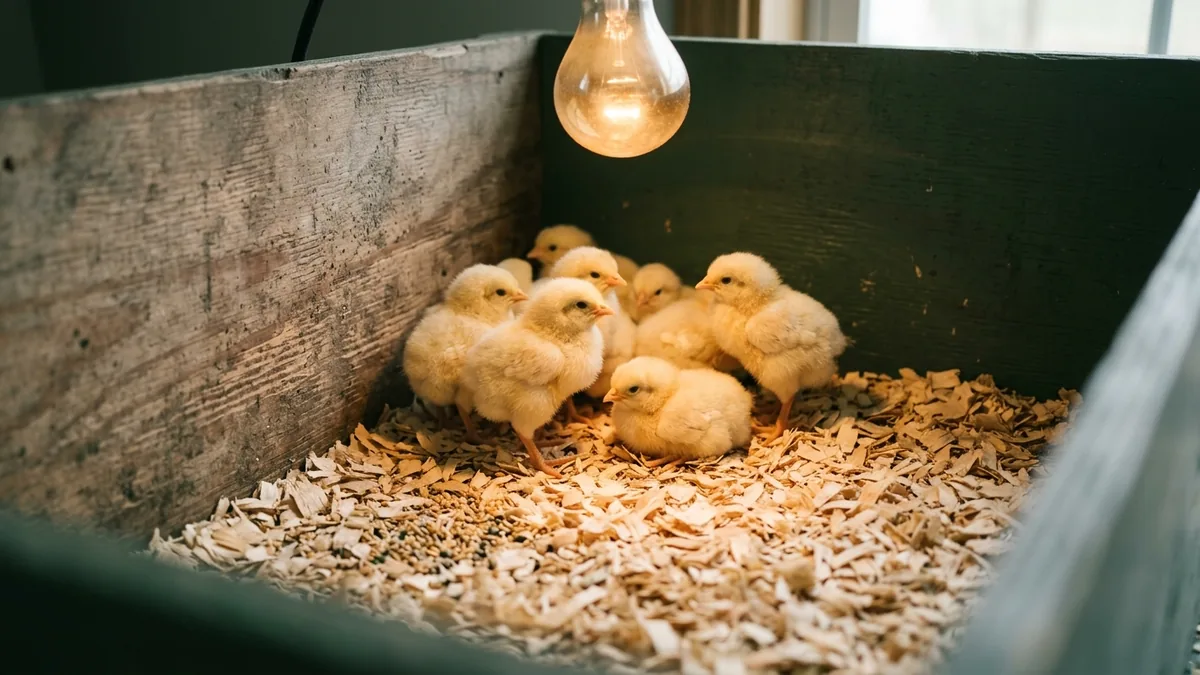
A chicken egg hatches after 21 days in an incubator, provided it stays at the right temperature, is turned regularly and has enough humidity. For most New Zealand backyard keepers the first batch goes wrong for one of three reasons: a thermometer that reads a degree out, eggs held too long before setting, or an incubator in a room that swings with the weather. This guide follows the schedule published by university extension services and shows what is happening inside the egg on each day.
The short answer
- Incubation period: 21 days. Count day 1 as the day after the eggs go in.
- Temperature: 37.8°C in a forced-air incubator with a fan, and 38.9°C measured at the top of the eggs in a still-air incubator.
- Humidity: about 58 to 60 percent relative humidity until the last three days, then 65 percent or more.
- Turning: at least 4 to 6 times a day, stopping on day 18.
- Candling: days 7, 14 and 18.
Hatch date calculator
Choose the bird and the day you set the eggs. The calculator lists the candling days, the day to stop turning and the expected hatch date. Candling days are the chicken schedule of day 7 and day 14 scaled to the incubation length of the species you pick, and the stop-turning day comes from the Mississippi State table below. Dates follow your device's calendar and nothing is saved.
Before you set the eggs
Choose clean, well-shaped eggs of average size from healthy, mature hens. Cracked, thin-shelled or badly misshapen eggs lose moisture unevenly and rarely hatch. Mississippi State Extension advises against washing hatching eggs or wiping them with a damp cloth, because that removes the protective coating on the shell.
Collect eggs often, at least three times a day, and five times a day when the temperature climbs above 29°C. Store them small end down somewhere cool, ideally around 13°C with high humidity, and set them within seven days. Let them reach room temperature before they go in, because moving them straight from a cool store to 37.8°C leaves condensation on the shell. A cold New Zealand room can pull an incubator off its setting overnight, so choose an indoor spot away from windows and outside doors, and give it a few hours to settle before the eggs go in.
Incubator settings
| Setting | Forced-air incubator | Still-air incubator |
|---|---|---|
| Temperature | 37.8°C | 38.9°C, measured at the top of the eggs |
| Relative humidity, days 1 to 18 | About 58 to 60 percent | About 58 to 60 percent |
| Relative humidity, lockdown | 65 percent or more | 65 percent or more |
| Turning | 4 to 6 times a day until day 18 | By hand 4 to 6 times a day until day 18 |
| Egg position | Large end up, or flat with the large end slightly raised | Same |
Check the thermometer before the first batch. An error of one degree held for 21 days can seriously interfere with development, so compare it against a clinical thermometer in lukewarm water. Never set eggs with the small end upward, and if you turn by hand, mark one side of each egg with an X and the other with an O. In the first week the embryo's blood vessels are delicate, so handle the eggs gently with clean, dry hands.
Day by day: what is happening inside
| Day | What is happening inside the egg |
|---|---|
| 1 | Head, eyes and spinal column begin to form. |
| 2 | Blood vessels form, the heart starts beating and the ears form. |
| 3 | Limb buds appear and the membranes around the embryo begin forming. |
| 4 | Eye pigment begins and the tongue starts to form. |
| 6 | The beak begins forming. |
| 7 | The egg tooth is easy to see, wing and leg segments are distinct and feather tracts appear on the back. |
| 10 | The beak begins to harden. |
| 12 | Down covers the body, the eyes are nearly closed and scales begin on the shanks. |
| 14 | The eyes are closed and the embryo turns its head toward the air cell. |
| 17 | The head tucks under the right wing. |
| 19 | The yolk sac is drawn into the body. |
| 20 | The yolk is fully inside the body and the chick pips into the air cell, then through the shell. |
| 21 | The chick hatches. |
Hatching can run a day early or late. An incubator that runs a little warm tends to produce early chicks and one that runs cool produces late ones, and either way fewer chicks hatch.
Lockdown: days 18 to 21
On day 18 stop turning, open the vents a little more and raise the humidity to 65 percent or more. Then keep the incubator closed. Each time the lid is lifted the humidity drops, and a chick part way out of its shell can dry to the membrane. Chicks pip into the air cell on day 20 and usually hatch on day 21. Leave them in the incubator for several hours to dry and fluff up before they move to the brooder, and use our guide to raising chicks from there.
If the power goes off
The aims are to stop the eggs overheating and to keep fresh air reaching them. Mississippi State Extension says opening the incubator door is the most effective guard against overheating and suffocation, and how far and how long depends on the room temperature, the number of eggs and how far along they are.
Other birds
The same method works for other poultry with different dates. This is the Mississippi State table, with forced-air temperatures converted to degrees Celsius.
| Bird | Days to hatch | Forced-air temperature | Stop turning after day |
|---|---|---|---|
| Chicken | 21 | 37.8°C | 18 |
| Coturnix quail | 17 | 37.8°C | 15 |
| Bobwhite quail | 23 to 24 | 37.8°C | 20 |
| Duck | 28 | 37.8°C | 25 |
| Muscovy duck | 35 to 37 | 37.8°C | 31 |
| Turkey | 28 | 37.2°C | 25 |
| Guinea fowl | 28 | 37.8°C | 25 |
| Goose | 28 to 34 | 37.2°C | 25 |
Our duck keeping guide and quail guide cover the birds after they hatch.
Common questions
How long do chicken eggs take to hatch?
Chicken eggs take 21 days from the day they are set in the incubator. Some chicks hatch a day early or late, so keep the eggs until day 23 or 24 before you give up on them.
What temperature should an egg incubator be set to?
A forced-air incubator should hold 37.8°C and a still-air incubator 38.9°C at the top of the eggs, according to Mississippi State University Extension. If your manual gives a slightly different figure, follow the manual.
When do you stop turning chicken eggs?
Stop on day 18. The chick is moving into hatching position and does not need turning, and the incubator should stay closed until the hatch is over.
How long can eggs be stored before I put them in the incubator?
Within seven days of laying. Hatchability falls quickly after that, and after three weeks of storage almost no eggs hatch.
Why did my eggs not hatch on day 21?
A cool incubator gives late chicks, and infertile or early-dead eggs never hatch. Wait until day 23 or 24, then open the leftover eggs to see how far each developed. That points to temperature, humidity or fertility.
- Mississippi State University Extension, Care and Incubation of Hatching Eggs (Dr Tom W. Smith), for temperature, humidity, turning, storage and the species table.
- eXtension Cooperative Extension, Avian Embryology, for the day-by-day development table.
These are United States university sources. Chicken embryos develop the same way everywhere, but follow your own incubator's manual for its exact settings, because still-air and forced-air models differ.
Keep reading
Candling eggsBroody hensEgg float testRaising chicksChicken breedsChickensChicken healthBackyard eggsStoring eggs