
Warmth, clean water, the right feed and a safe brooder. Get those four right and most chicks thrive. Here is how to take them from fluffy day-olds to laying hens.
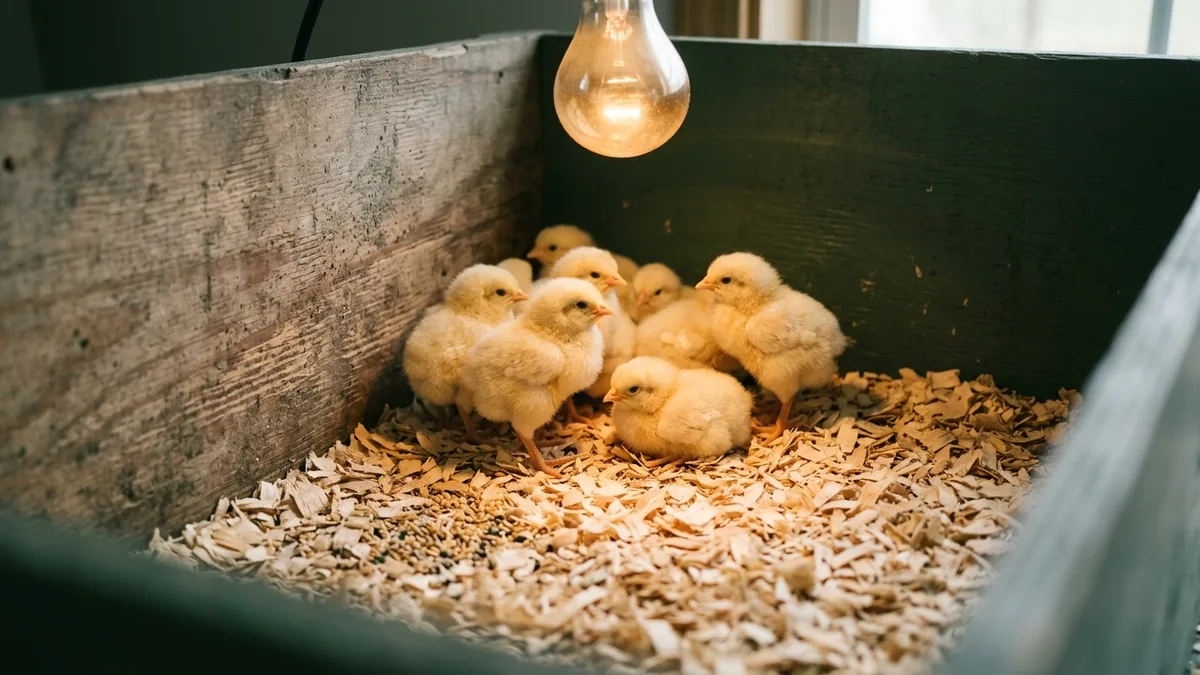
Raising chicks is mostly about getting the first six weeks right. A newly hatched chick cannot keep itself warm, so you take over the job a mother hen would do, providing steady heat, dry bedding, the right starter feed and water it cannot drown in. Do that and the rest is watching them grow.
The biggest thing to learn is to read the chicks, not just the thermometer. Comfortable chicks spread out and chirp softly. Cold chicks huddle and cheep loudly. Hot chicks pant and move to the edges. Their behaviour tells you more than any number, and adjusting heat by that feedback is the single most useful skill you will pick up.
Enter the age of your chicks in weeks to see the target brooder temperature, the behaviour to watch for, and what to do this week. Nothing is saved, and it works offline.
A brooder is just a warm, safe, draught-free space. A large plastic tub, a cardboard box lined for warmth, or a purpose-built brooder all work. Make it big enough that chicks can move between a warm zone and a cooler zone, and tall enough or covered so they cannot hop out as they grow.
Start at about 32 to 35 degrees Celsius under the heat source in the first week, then reduce by roughly 3 degrees each week until the chicks are off heat at around 6 weeks. The schedule is a guide, not a rule, so adjust to your chicks and your weather.
The most important part is to heat only one part of the brooder and leave the rest cooler. Chicks self-regulate by moving toward or away from the heat, exactly as they would scoot in and out from under a hen. If the whole space is warm they have nowhere to cool down, which is as risky as being too cold.
For the first few days, line the brooder with paper towel so chicks learn to eat their starter rather than the bedding and you can check droppings. After that, switch to pine shavings, which are absorbent and dust-light. Avoid cedar shavings, whose oils can irritate chick lungs.
Let the chicks tell you whether the heat is right. Their position in the brooder is the clearest signal.
Chicks huddle in a tight pile under the heat and cheep loudly. Lower the plate or raise the temperature.
Chicks pant, hold their wings out and crowd the far corners away from the heat. Raise the plate or lower the temperature.
Chicks spread evenly around the brooder, moving freely between warm and cool, chirping softly and eating well.
Once chicks are fully feathered, usually around 6 weeks, and night temperatures are mild, they can move to the coop. Acclimatise them first with short supervised trips outside on warm days from about 3 to 4 weeks, returning them to the brooder for warmth.
If you are adding them to an existing flock, quarantine any birds from outside your own flock first to avoid bringing in disease. Then use a see-but-not-touch setup for 1 to 2 weeks, where the groups can see each other through a barrier but cannot fight. Finally integrate at night by placing the young birds on the roost after dark, so they wake up together and the pecking order resets more gently.
| Week | Target temp (C) | Feathering / stage | What to do |
|---|---|---|---|
| Week 1 | 32 to 35 | Fluffy down only | Paper towel bedding, chick starter, shallow water, check daily for pasty butt |
| Week 2 | 29 to 32 | First wing feathers appear | Switch to pine shavings; drop heat about 3 degrees |
| Week 3 | 26 to 29 | Wing and tail feathers growing | Short, supervised warm-day trips outside can begin |
| Week 4 | 23 to 26 | Mostly feathered on body | More outdoor time; ensure a cool zone in the brooder |
| Week 5 | 20 to 23 | Nearly fully feathered | Begin weaning off heat as weather allows |
| Week 6+ | 18 to 20, then off | Fully feathered | Wean off heat; move to a dry coop once nights are mild (about 18 C or warmer) |
The free Planting Season app and its Poultry and Flock tracker let you record each chick, its breed and its progress, then keep tracking once they reach point of lay and start filling the egg basket. It handles chickens, ducks and quail together, and works offline.
Start at about 32 to 35 degrees Celsius under the heat source in week one, then drop roughly 3 degrees a week until the chicks are feathered and weaned off heat around 6 weeks. Always leave a cooler area in the brooder so chicks can move away from the heat and self-regulate. Watch their behaviour as much as the thermometer.
Chicks can take short, supervised trips outside from about 3 to 4 weeks on a warm, calm day, returning to the brooder for warmth. They can move outside permanently once fully feathered, usually around 6 weeks, provided the coop is dry and draught-free and night temperatures are mild. In a cold snap, wait longer or give supplementary heat.
About 6 weeks, reducing the temperature by roughly 3 degrees Celsius each week. A radiant heat plate is safer than a bulb because it cannot start a fire and lets chicks regulate themselves. Wean off heat once the chicks are fully feathered and comfortable at the ambient temperature, generally around 18 degrees Celsius or warmer.
Feed a chick starter crumble with about 18 to 20 percent protein from day one, with constant access to fresh, shallow water. Choose medicated or unmedicated starter depending on whether the chicks are vaccinated against coccidiosis. Stay on starter to about 6 weeks, then move to grower feed. Avoid treats while they are very young.
No. Layer feed contains about 3.5 to 4 percent calcium for eggshells, which can damage the developing kidneys of a growing chick. Feed chick starter to about 6 weeks, then grower or pullet feed, and only switch to layer feed at point of lay, around 18 weeks or the first egg.
Pasty butt is when droppings stick and block the vent, often from chilling or stress. Keep the brooder at the right temperature, not too hot or cold, provide fresh water and proper chick starter, and check chicks daily in the first week. If you see a blockage, gently soften and clean it off with a little warm water and dry the chick before returning it to the heat.
Most hens reach point of lay between about 18 and 24 weeks, depending on breed and the time of year. Light hybrid layers often start earlier, while heavier breeds can take longer. Pullets raised so they reach maturity heading into longer days tend to start sooner than those maturing into autumn and winter.
Wait until the young birds are a similar size, then use a see-but-not-touch setup for 1 to 2 weeks so the birds get used to each other through a barrier. Quarantine any birds from outside your flock first. When you do mix them, do it at night by placing the newcomers on the roost so they wake up together, and watch for serious bullying.
Track each chick as it grows and keep logging once the eggs arrive, all in the free Poultry module.