
Companion Plants for Potatoes in NZ: What to Grow Beside Spuds
Updated November 2026
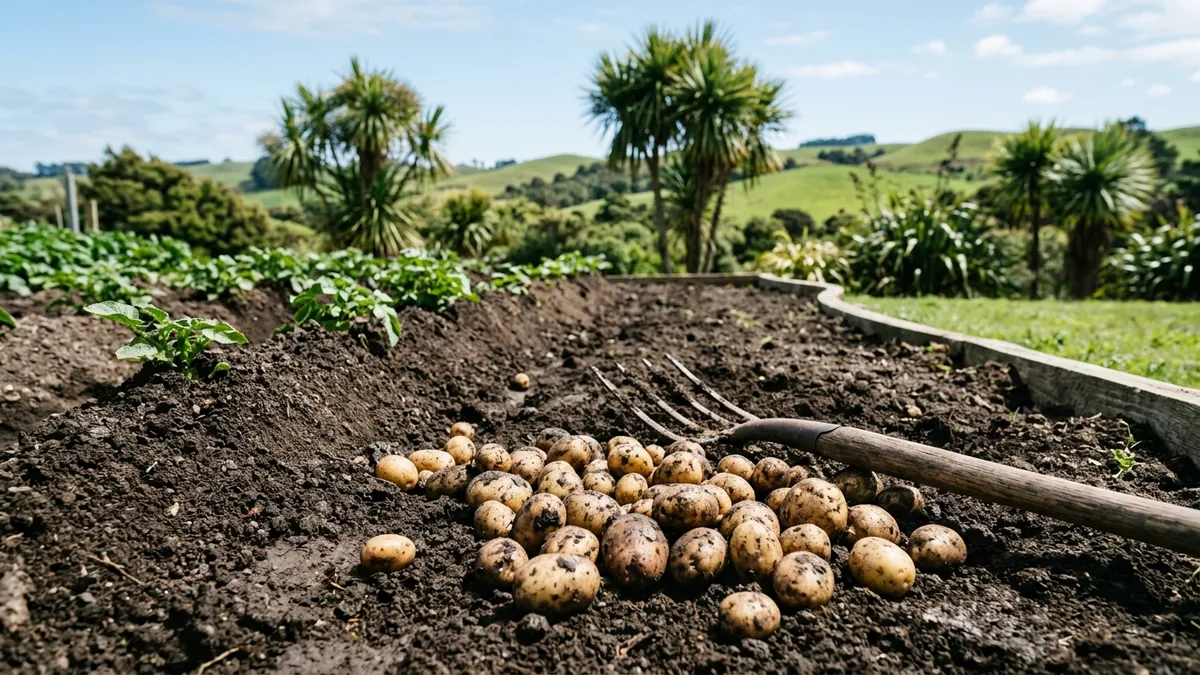
The companion plants for potatoes in our data are beans, broad beans, sweetcorn, marigold, nasturtium, lovage and horseradish. Tomato, capsicum and eggplant are the clearest plants to keep apart, along with pumpkin, courgette, squash, cucumber, melons, sunflower, turnip, swede and asparagus.
The one clash with solid evidence is between potato and its nightshade relatives. The other keep-apart plants are traditional, and some are about space and digging rather than disease. Each pairing is labelled Proven, Promising or Tradition below.
Each pairing is labelled Proven (someone measured it and it held), Promising (the results are real but mixed, or they come from another crop) or Tradition (we searched for a trial and found none). A tradition is not a mistake, and where one is cheap and harmless we say so.
Plant with potatoes
| Plant | Evidence | Why, and what we found |
|---|---|---|
| Beans | Tradition | Bush beans fill the edge of a potato bed while the potatoes are small. We found no trial showing a benefit to the potatoes, and beans fix nitrogen mostly for themselves. |
| Broad beans | Tradition | A cool-season crop that finishes around the time potatoes are being hilled. The pairing is about timing and space. |
| Sweetcorn | Tradition | Both enjoy rich soil. We found no trial of a benefit, so use corn for the layout. |
| Marigold | Promising | French marigolds suppress root-knot nematodes as a dense stand grown before the crop (University of Florida IFAS Extension), and the flowers feed hoverflies. Potatoes were not the subject of that work. |
| Nasturtium | Tradition | A spreading flower for the bed edge. The claim that it lures pests from potatoes has no trial that we found. |
| Lovage | Tradition | A tall perennial herb that our data lists as a companion. It is large and long-lived, so give it a corner away from the digging. We found no trial. |
| Horseradish | Tradition | Traditionally planted at the corners of a potato patch. We found no trial. It spreads from root pieces and is hard to remove, so use a large pot. |
Keep apart from potatoes
| Plant | Evidence | Why, and what we found |
|---|---|---|
| Tomato, capsicum and eggplant | Proven | All are in the nightshade family, and potato and tomato share late blight (UMass Extension). They also share the tomato potato psyllid in New Zealand (Lincoln University and Plant & Food Research). Volunteer potatoes carry both from one season to the next. Keep these crops in separate beds. See our tomato and potato blight guide. |
| Pumpkin, courgette, squash and cucumber | Tradition | Our data lists these as poor neighbours. Digging potatoes disturbs nearby vine roots, and both groups are heavy feeders. We found no trial, so separate beds are the easy answer. |
| Melons | Tradition | Watermelon and rockmelon sprawl and compete with hilled potatoes for room. We found no trial of another clash. |
| Sunflower | Tradition | Sunflowers are said to hold back neighbouring plants. We found no trial for potatoes. They are tall, cast shade and take a lot from the soil, so give them their own place. |
| Turnip and swede | Tradition | Our data lists these as poor neighbours. We found no trial. Both want the loose soil that hilling disturbs. |
| Asparagus | Tradition | Asparagus is a permanent bed that dislikes being dug around, and potatoes need digging every year. That is the practical reason to keep them apart. |
A simple bed layout
A bed 1.2 m wide holds two rows of seed potatoes 30 cm apart, our data spacing, with about 60 cm between rows for hilling. Companions go at the ends and edges so hilling does not disturb their roots.
| Position | What goes there | Why |
|---|---|---|
| Two central rows | Seed potatoes, 30 cm apart, about 60 cm between rows | Room to mound soil up the stems. |
| One end | Bush beans or broad beans in the cooler months | A habit that does not need hilling. |
| Far end | A block of sweetcorn | Kept away so it does not shade the potatoes from the north. |
| Bed edge | Marigold and nasturtium | Flowers that bring insects. |
| Corner | Horseradish in a large pot | Stops it spreading. |
| A different bed | Tomato, capsicum, eggplant and the vine crops | Rotate nightshades across beds. |
Rotation before neighbours
For potatoes, the plant beside them matters less than where potatoes grew last year. Give each plant family a new bed every season and remove any volunteer potatoes, because they can carry late blight and the psyllid forward. Our potatoes in containers guide helps if you have little space. See the potato plant page for planting months for your region.
Related pages
- Potato plant page with regional planting months
- How to grow potatoes
- Potatoes in containers
- Tomato and potato blight
- Companion planting guide
- Tomato potato psyllid
Questions
What are good companion plants for potatoes?
Our data lists beans, broad beans, sweetcorn, marigold, nasturtium, lovage and horseradish. We found no trial in potato beds for any of them except the nematode effect of marigold, which is Promising. They are harmless neighbours that use space well.
What should not be planted with potatoes?
Tomato, capsicum and eggplant, which share diseases and the tomato potato psyllid. Pumpkin, courgette, squash, cucumber, melons, sunflower, turnip, swede and asparagus are traditional keep-apart plants with no trial that we found.
Can potatoes grow beside tomatoes?
It is best to avoid it. They share late blight and the tomato potato psyllid. Keep them in separate beds and rotate.
Can I plant beans with potatoes?
Yes, our data lists beans as a companion. Keep them to the bed edge so hilling does not damage their roots.
How far apart should potatoes be?
Our plant data gives 30 cm between plants. Leave about 60 cm between rows for hilling.