
Cucumber Varieties, Gherkins and Types of Cucumber Plants for New Zealand
Updated November 2026
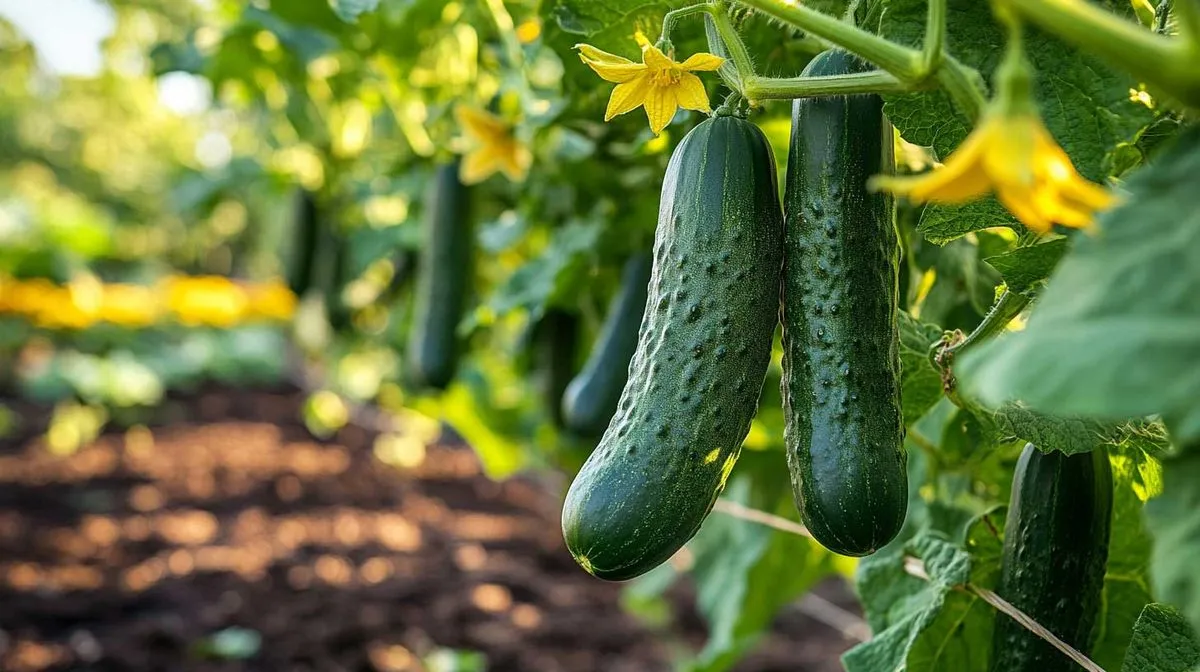
Lebanese, apple, gherkin and slicing types from NZ seed sellers, with days to pick and sowing months by region
Cucumbers sold to New Zealand gardeners fall into a handful of types: slicing (telegraph), Lebanese, apple, lemon, burpless and gherkin. The cucamelon looks similar on a trellis but belongs to a different plant. A gherkin is nothing more exotic than a small cucumber that is picked at 5 to 8 cm and put in a jar. Because our summers are short, the number of days a variety needs matters at least as much as its shape.
For a lunchbox crop, a Lebanese or mini variety is the best fit. Long telegraph types give smooth, straight fruit, apple and lemon types are round curiosities, and a gherkin is the one to grow for pickling. Expect roughly 45 to 70 days from sowing, and sow only after the cold nights have passed.
What the types are
Nearly all of these are the same species, Cucumis sativus. What changes is the fruit, so sort them by how you want to eat them and not by name alone.
Telegraph and slicing
This is the long, slim, dark fruit from the greengrocer, often 25 to 35 cm and thin skinned enough to skip peeling. The vines are strong climbers and prefer a support, which our trellis guide sets out. Long telegraph hybrids are the ones most often given a glasshouse or tunnel in New Zealand, whereas plain slicers such as Spacemaster and Marketer are happier outdoors.
Lebanese and mini
Short, tender and with small seeds, a Lebanese cucumber is usually 10 to 15 cm and eaten whole. Egmont lists Lebanese Manny F1 at about 15 cm and 60 days. Mini types such as Mini Me and Iznik Mini suit a big pot on a sunny deck.
Apple and lemon
Crystal Apple is a pale, apple-sized heirloom with crisp, juicy flesh, and a lemon cucumber is round and yellow. They make a salad look different, and children tend to enjoy picking them. Take them young, before the skin hardens.
Burpless
The word burpless on a packet marks a mild, thin-skinned variety. The vine behaves like any other climber, so choose it on taste.
Gherkins and pickling types
Pickling cucumbers have firm flesh and short, knobbly fruit that holds its crunch in brine. Kings lists Homemade Pickles and Cornichon de Paris, and Egmont lists Gherkin Eureka F1. The West Indian gherkin is another species altogether, Cucumis anguria, so read the Latin name before you buy. Brining and jarring are covered in our pickling guide.
The cucamelon
Called mouse melon in some gardens, Melothria scabra is not a cucumber. Its grape-sized fruit look like tiny watermelons and taste of cucumber with a little lime. The vines are thin and wiry, and the plants are slow away from seed, so they want an early start and a warm spot.
Once you have settled on a type, the main cucumber guide deals with the day to day growing, and the cucumber plant page holds the planner entry.
Varieties from New Zealand seed companies
Two New Zealand sellers supplied the rows below. The Kings Seeds listing gives names and some types, and the Egmont Seeds product pages give days to harvest.
| Variety | Type | Days to pick (seller) | Habit | Best use | Notes |
|---|---|---|---|---|---|
| Lebanese Manny F1 | Lebanese | 60 | Not stated | Everyday salads | Egmont: about 15 cm, parthenocarpic, so fruit sets without a bee. |
| Mini Me | Mini | 60 | Not stated | Lunchboxes, snacking | Egmont lists 60 days. |
| Iznik Mini F1 | Mini | 60 | Not stated | Lunchboxes, snacking | Egmont lists 60 days. |
| Quick Snack F1 | Snacking | 45 | Not stated | Snacking | Egmont lists 45 days, the shortest on this page. |
| Spacemaster | Slicing | Not stated | Not stated | Salads | Stocked by Kings and by Egmont. |
| Marketer | Slicing | Not stated | Not stated | Salads | Stocked by Egmont. |
| Crystal Apple | Apple | Not stated | Not stated | Salads, fun picking | Kings calls it a heirloom slicer with sweet, crisp, juicy flesh, apple-sized. |
| Lebanese; Telegraph F1 | Lebanese; telegraph | Not stated | Not stated | Salads | Kings lists both, with no detail on the listing page. |
| Homemade Pickles | Pickling, gherkin | Not stated | Not stated | Jars | Kings: heirloom, medium green, crisp flesh, bred for pickling. |
| Eureka F1 | Gherkin (bottling) | 70 | Not stated | Jars | Egmont: sow in spring and summer. |
| Cornichon de Paris | Gherkin | Not stated | Not stated | Jars | Kings carries it with its cucumbers. |
Kings Seeds carries thirteen cucumbers but gives only a blanket figure on its listing: seed takes 6 to 10 days to come up, and fruit takes around 50 to 70 days after planting out. Without a figure per variety, the table says not stated instead of making one up. Egmont gives 45 to 70 days on its own pages and 60 to 80 days for cucumbers as a group in its culture guide. Our planner uses 60 days, and a cold night adds to every one of them.
Sowing months by region
Type does not move the sowing date. The live planner data for every New Zealand region is below.
| Region | Sowing months |
|---|---|
| Northland | Oct to Jan |
| Auckland | Oct to Jan |
| Waikato & Bay of Plenty | Oct to Jan |
| Central North Island | Nov to Dec |
| Wellington & Lower North Island | Nov to Jan |
| Nelson & Marlborough | Nov to Jan |
| Canterbury | Nov to Dec |
| Otago & Southland | Dec |
| Central Otago | Dec |
The window opens late and shuts early, particularly in the south. If you live in Canterbury or further south, the table is short for good reason, and a glasshouse, tunnel or a pot against a warm north wall buys you weeks. Start with your regional page, such as Northland, Auckland, Wellington or Canterbury.
A single frost finishes a cucumber, so plant out only once your last frost is well behind you. The frost dates page shows when that is for your area.
Climbing, trailing and pots
On the ground, most cucumbers sprawl across a square metre or more. Up a trellis they take far less room, the fruit hangs straight and the leaves dry quickly after rain, which helps against mildew. Leave around 50 cm between plants. Mini and compact Lebanese types are the sensible choice for containers, and cucumbers in a pot gives the container size and feeding routine.
Irregular watering is one of the main causes of bitter fruit, as why cucumbers go bitter explains.
Picking a type for your situation
- Cool region or short summer: favour the variety showing the fewest days, such as Quick Snack F1 at 45, and grow it under cover.
- Deck or courtyard: a mini or compact Lebanese in a large pot.
- Daily salads: Lebanese or a plain slicer, cut young and often.
- Kids and curiosity: Crystal Apple or a lemon cucumber.
- Preserving: a gherkin, cut small every day or two.
Harvest and trouble
Cut fruit often with a clean knife and leave a stub of stem. A cucumber left to swell and turn yellow signals to the plant that it has finished, and new fruit slows. Late summer brings powdery mildew, and the one home mix we mention is milk spray at 1 part milk to 9 parts water, used early.
Questions
What types of cucumber can I grow in New Zealand?
The usual choices are slicing or telegraph, Lebanese, apple, lemon, burpless and gherkin. All are one species. The cucamelon is a separate plant that merely resembles them on a trellis.
What is a gherkin?
It is a small cucumber that is picked at 5 to 8 cm and pickled whole. Egmont Seeds lists Gherkin Eureka F1 as a bottling type that takes 70 days. The West Indian gherkin belongs to another species.
Which cucumbers suit a short summer?
Choose by the days on the seed listing. Egmont shows Quick Snack F1 at 45 days and Lebanese Manny F1 at 60, and growing under cover helps in the south.
Is a cucamelon a cucumber?
No, Melothria scabra is its own species. The fruit are grape-sized and taste like cucumber with a hint of lime, and the plants are slower from seed.
How long until the first cucumber?
Sellers quote about 45 to 70 days from sowing, and our planner uses 60. Cold nights stretch that, so sow once the soil has warmed.
Sources
- Kings Seeds cucumber listing (types and general days)
- Egmont Seeds Lebanese Manny F1 Hybrid (days and size)
- Egmont Seeds Gherkin Eureka F1 Hybrid
Plant profile
The cucumber profile has sowing times for your region, companion plants and common pests.