
How to Grow Dragon Fruit in New Zealand
Updated June 2026
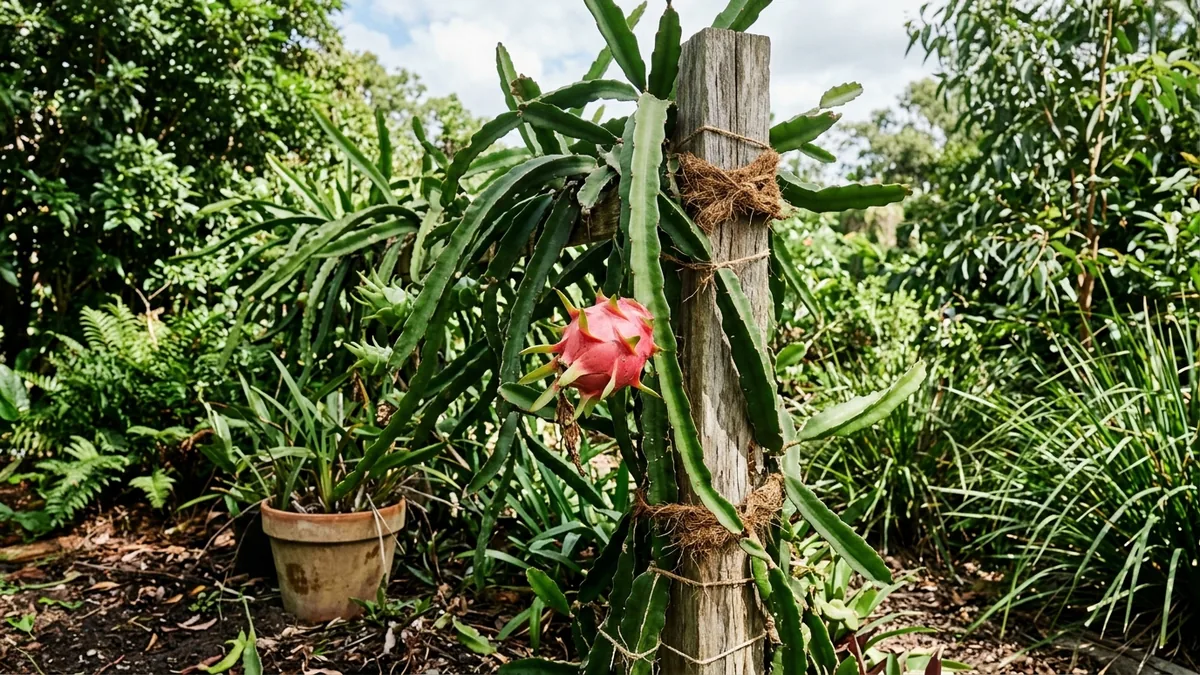
The frost-tender climbing cactus you grow in the warm north, or in a pot you carry under cover everywhere else
Dragon fruit, also called pitaya, is a climbing cactus from the genus Hylocereus and Selenicereus. It is grown for its dramatic, scaly, sweet-tart fruit and its huge night-opening flowers. It is a tropical and subtropical plant with no winter chill requirement, but it is frost-tender, which is the one thing that shapes how you grow it in New Zealand.
In the warmest frost-free parts of the North Island you can grow it in the ground against a hot, sheltered wall. Across most of the country it is best grown in a large pot that you move into a frost-free glasshouse, conservatory or indoors for winter. Either way it needs a very sturdy support to climb, plenty of summer heat, and in some cases a second variety or a hand pollination to set fruit.
Is Dragon Fruit Right for Your Climate?
New Zealand sits a long way south of dragon fruit's tropical home, so honesty matters here. Choose your nearest climate below and the tool shows you whether to grow in the ground, in a pot, or under cover, plus which varieties suit and how to handle pollination.
Climate and Position
Dragon fruit wants as much heat and sun as you can give it. A north-facing spot against a warm wall, fence or glasshouse, sheltered from wind and from frost, is ideal. It is a cactus, so it will not tolerate cold, soggy soil or hard frost. In the warm far north it can live in the ground year round in such a spot. In cooler regions, plan from the start to grow it in a pot you can shift, because even a light frost will damage the soft growing tips, and a hard frost can kill the plant.
Because it is a cactus, dragon fruit has no winter chill requirement at all. The limit in New Zealand is not a lack of cold, it is a lack of warmth, so the goal is to keep it frost-free through winter and give it enough summer heat to flower and ripen fruit.
Planting
Dragon fruit is almost always grown from a cutting rather than seed, because cuttings fruit far sooner and come true to variety. Take or buy a firm length of stem, let the cut end callus and dry for a few days, then plant it shallowly in free-draining mix with a sturdy support right beside it. Plant cuttings in late spring and through summer, once the soil and air are warm and frost has passed, so the cutting roots quickly rather than rotting in the cold.
For a pot, use a wide, heavy container of at least 40 to 50 litres filled with a free-draining cactus or citrus mix, and set a strong support in the pot at planting time. In the ground in the warm north, plant into a free-draining, sunny bed improved with compost and grit, raised if your soil is heavy. Keep a fresh cutting on the dry side until you see new growth, which tells you it has rooted.
Watering and Feeding
As a cactus, dragon fruit prefers a soak and then a dry-out rather than constant moisture. Through the warm growing season water deeply when the top of the mix has dried, then let it drain fully, and never leave it standing in a saucer of water. Over winter, especially under cover, cut watering right back, because cold and wet together cause rot.
Feed lightly through spring and summer with a balanced fertiliser, easing off the nitrogen and favouring potassium as flowering approaches to encourage fruit rather than soft leafy growth. A mulch of compost over the root zone in the ground feeds gently and keeps the roots cool. Stop feeding over winter while growth slows.
Pruning and Support
The support is the single most important piece of growing dragon fruit. This is a heavy, water-filled climbing cactus that wants to scramble up a post and then cascade over the top, where it flowers and fruits. Build a strong timber post or pipe about 1.5 to 2 metres tall, set firmly in the ground or in the pot, with a frame, crosspiece or old tyre at the top for the stems to hang from. Build it stronger than you think you need, because it must hold a large, heavy plant for many years.
Train a single main stem up the post, tying it in as it grows, and pinch out side shoots until it reaches the top. Once it tops the support, let it branch and hang over, as the fruit comes on these mature, drooping stems. After fruiting, thin out crowded, old or damaged stems to keep air moving and light reaching the plant. Cuttings taken from prunings can be used to start new plants.
Pollination
Dragon fruit flowers are spectacular and open for a single night, which makes pollination the make-or-break detail. Self-fertile varieties such as American Beauty and Halley's Comet can set fruit on their own and are the easiest choice for a home grower. Many white-flesh Vietnamese types are self-sterile or fruit far better with a second, different variety flowering nearby.
Because the flowers open at night and close by morning, and night pollinators are unreliable in cooler New Zealand conditions, many growers hand pollinate. In the evening when the flower is open, use a soft, dry brush to move pollen from the stamens onto the central stigma, and between two different varieties if you have them. This simple step turns a flower that would otherwise drop into a fruit.
Harvest and Storage
Fruit follows about a month after a pollinated flower. The fruit is ripe when the skin has fully coloured up, the little wings or scales begin to wither at the tips, and the fruit gives slightly to a gentle squeeze. Cut it from the stem with secateurs rather than pulling. A plant grown from a cutting may flower in its first to second year once it tops the support, while seed-grown plants take several years longer.
Ripe dragon fruit keeps for around a week in the fridge. Eat it fresh, scooped from the skin, or add it to fruit salads and smoothies. It does not store long term as fresh fruit, so for a glut the flesh can be frozen in chunks for smoothies. For ideas on keeping other unusual fruit, see the preserving guide.
Pests and Problems
Dragon fruit is fairly trouble-free in New Zealand, where the bigger issues are climate rather than pests. The most common problems are cold damage to soft growing tips, and rot from cold, wet roots over winter, both solved by keeping the plant warm, sheltered and on the dry side in the cold months. Sunscald can mark stems suddenly exposed to fierce sun, so harden plants to full sun gradually.
Slugs and snails can chew on tender new growth and flowers, and mealybugs or scale can appear, especially on plants grown under cover, so check the stems and treat early. Birds may peck ripe fruit outdoors, so net or bag developing fruit if that becomes a problem. The main reason for no fruit, though, is poor pollination rather than any pest.
Varieties for New Zealand
Choose a self-fertile variety for the simplest path to fruit, and add a second type only if you want to grow a self-sterile Vietnamese white or to improve fruit set. All of these are grown from cuttings.
| Variety | Flesh | Pollination | Best for |
|---|---|---|---|
| American Beauty | Red, sweet | Self-fertile | Easiest first plant, reliable fruit on its own |
| Halley's Comet | Red | Self-fertile | Dependable home cropper, no partner needed |
| Physical Graffiti | Purple-red, very sweet | Sets best with a partner | Flavour, grown alongside a second variety |
| Vietnamese White (Jaina) | White | Often needs a second variety, hand pollinate | Vigorous growth, the classic supermarket type |
| Yellow Dragon (Selenicereus megalanthus) | White, in a yellow skin, very sweet | Best with a partner, hand pollinate | The sweetest fruit, slower and for patient growers |
Region and Season Notes
New Zealand runs on southern-hemisphere seasons, so the calendar for dragon fruit is built around warmth rather than chill. Plant cuttings in late spring and summer when the soil and air have warmed and all frost has passed, and avoid planting in autumn or winter when cold and wet will rot a fresh cutting.
- Warm far north (Northland, coastal Auckland, Bay of Plenty): the only places you can realistically grow it in the ground, in a hot, sheltered, frost-free position. A large pot still gives you more control.
- Central and lower North Island, top of the South Island: grow in a large pot and overwinter under cover in a frost-free glasshouse, conservatory or indoors.
- Cool and cold regions, most of the South Island: a pot plant kept frost-free under glass or indoors all winter, brought out for the warmest months. Treat it as a glasshouse or conservatory plant.
For frost dates and summer heat tuned to your exact spot, use Find My Region or open the Planting Season app.
Track your dragon fruit from cutting to first flower
The Planting Season app carries variety notes, chill-hours and warmth data for fruit across all 9 New Zealand regions, so you know whether to plant in the ground or keep a pot to carry under cover. Log your plants, set reminders for the move indoors, and watch your harvest add up.
Open the App →Frequently Asked Questions
Can you grow dragon fruit outdoors in New Zealand?
Only in the warmest, frost-free parts of the North Island. Coastal Northland, sheltered coastal Auckland and the warmest pockets of the Bay of Plenty can grow dragon fruit in the ground in a hot, sheltered, frost-free position against a warm wall. Everywhere else dragon fruit should be grown in a large pot and moved into a frost-free glasshouse, conservatory or indoors for winter, because it is a tropical climbing cactus that is damaged by frost.
Does dragon fruit need a chill period over winter?
No. Dragon fruit is a tropical and subtropical climbing cactus, not a deciduous fruit tree, so it has no winter chill requirement at all. Instead of cold, it needs warmth and protection from frost. In cool parts of New Zealand the limiting factor is keeping it warm enough through winter and giving it enough summer heat to flower and ripen fruit, not giving it cold.
Do you need two dragon fruit plants for pollination?
It depends on the variety. Self-fertile types such as American Beauty and Halley's Comet can set fruit on their own and are the easiest choice. Many white-flesh Vietnamese types, such as Vietnamese White and Vietnamese Jaina, are self-sterile or set far better with a second, different variety nearby. Because the flowers open for a single night, growers often hand pollinate with a soft brush in the evening to guarantee fruit set.
How long until a dragon fruit plant fruits?
A plant grown from a cutting can flower in its first to second year once the stems reach the top of the support and hang over, while plants grown from seed take several years longer. Good warmth, a tall sturdy support and the plant reaching a mature size all bring fruiting forward. In cooler New Zealand conditions, where the growing season is shorter, it usually takes a little longer than in the tropics.
What kind of support does dragon fruit need?
A very sturdy one. Dragon fruit is a heavy climbing cactus that wants to scramble up a post and then cascade over the top, where it flowers and fruits. A strong timber post or pipe about 1.5 to 2 metres tall, set firmly, with a frame or old tyre at the top for the stems to hang from, works well. The support must hold a large, heavy, water-filled plant for many years, so build it stronger than you think you need.
Why does my dragon fruit flower but not set fruit?
Usually it is a pollination problem. The flowers open for one night only, and if you grow a self-sterile variety with no second variety nearby, or there are no night pollinators about, the flowers drop without setting fruit. The fix is to grow a self-fertile variety, add a second compatible variety, or hand pollinate in the evening by moving pollen between flowers with a soft brush. Cold or very wet weather at flowering can also cause flowers to drop.
Can dragon fruit be grown in a pot?
Yes, and for most of New Zealand a large pot is the recommended way to grow it. Use a wide, heavy container of at least 40 to 50 litres with free-draining cactus or citrus mix, add a sturdy support in the pot, and stand it in the hottest, sunniest spot in summer. The big advantage of a pot is that you can move the whole plant into a frost-free glasshouse, conservatory or indoors before the first frost.
When should I plant dragon fruit in New Zealand?
Plant dragon fruit cuttings in late spring and through summer, once the soil and air have warmed up and all frost has passed. Cuttings root fastest in the warmth of the growing season. Avoid planting in autumn or winter, when cold, wet conditions can rot a fresh cutting before it establishes. Let a fresh cutting callus for a few days before planting, and keep it on the dry side until it roots.
See also: Unusual Fruit to Grow in New Zealand and Preserving the Harvest