How to Grow Hazelnuts in New Zealand
Updated September 2026
A compact nut tree for cool winters, planted in pairs

Hazelnuts are the easiest nut to fit into a home garden. The tree grows 3 to 5 metres tall, it can be kept as a multi stemmed bush or trained to a single trunk, and it starts cropping in about four years. The nuts ripen in autumn inside frilly green husks.
The one rule you cannot skip is pollination. A single hazelnut tree will flower well and set almost nothing, because it cannot pollinate itself. Plant at least two compatible varieties and the rest is straightforward.
Where Hazelnuts Grow in New Zealand
Hazelnuts need a long, cold winter to set nuts, so they grow best in the cooler south and central districts: Canterbury, Otago and Southland, Central Otago, Nelson and Marlborough, and the Central North Island. They also grow in Auckland, Waikato and the Bay of Plenty, and Wellington and the lower North Island. The tiny flowers open in the middle of winter and handle frost well.
Northland is not suited, because it does not get enough winter chill for the trees to set a crop. In every other region, plant bare root trees in winter, June to August. Choose your region below for local planting months.
Varieties to Look For
Hazelnuts are sold as croppers and pollinators. Ask the nursery which varieties pollinate each other, because not every pair is compatible.
Whiteheart
A New Zealand selection with a small, round, well flavoured kernel that blanches cleanly. A reliable home garden cropper.
Alexandra
Another New Zealand selection, with large nuts that fall free of the husk when ripe, which makes harvesting easier.
Barcelona
An old, widely planted variety with large nuts. Grow it with a compatible pollinator.
Merveille de Bollwiller
A vigorous tree with large nuts, often planted as a pollinator for other varieties.
Planting
Plant bare root hazelnuts in winter, June to August. They want full sun or light shade and fertile, free draining soil with a pH of about 6 to 7. Shelter from strong wind helps, because the catkins shed their pollen in winter weather.
- Space trees about 4 metres apart, and plant the different varieties close together so the wind carries pollen between them.
- Soak bare roots for an hour, plant at the nursery depth, and firm the soil gently around the roots.
- Water in well and mulch, keeping mulch off the stems.
- Decide early whether you want a bush or a single trunk. A single trunk makes it easier to gather nuts from the ground; a bush crops sooner.
Care and Pollination
Pollination. Hazelnuts are wind pollinated and self incompatible, so a tree needs pollen from a different, compatible variety. In winter each tree carries long yellow male catkins and tiny red female flowers. The pollinator's catkins must shed pollen while the cropping variety's red flowers are open, which is why nurseries sell them in matched pairs.
Suckers. Hazelnuts send up suckers from the base all year. Pull or cut them off at ground level in summer and winter, unless you are growing a bush and want a replacement stem.
Watering and feeding. Water young trees through dry summers. Feed with compost or a balanced fertiliser in late winter.
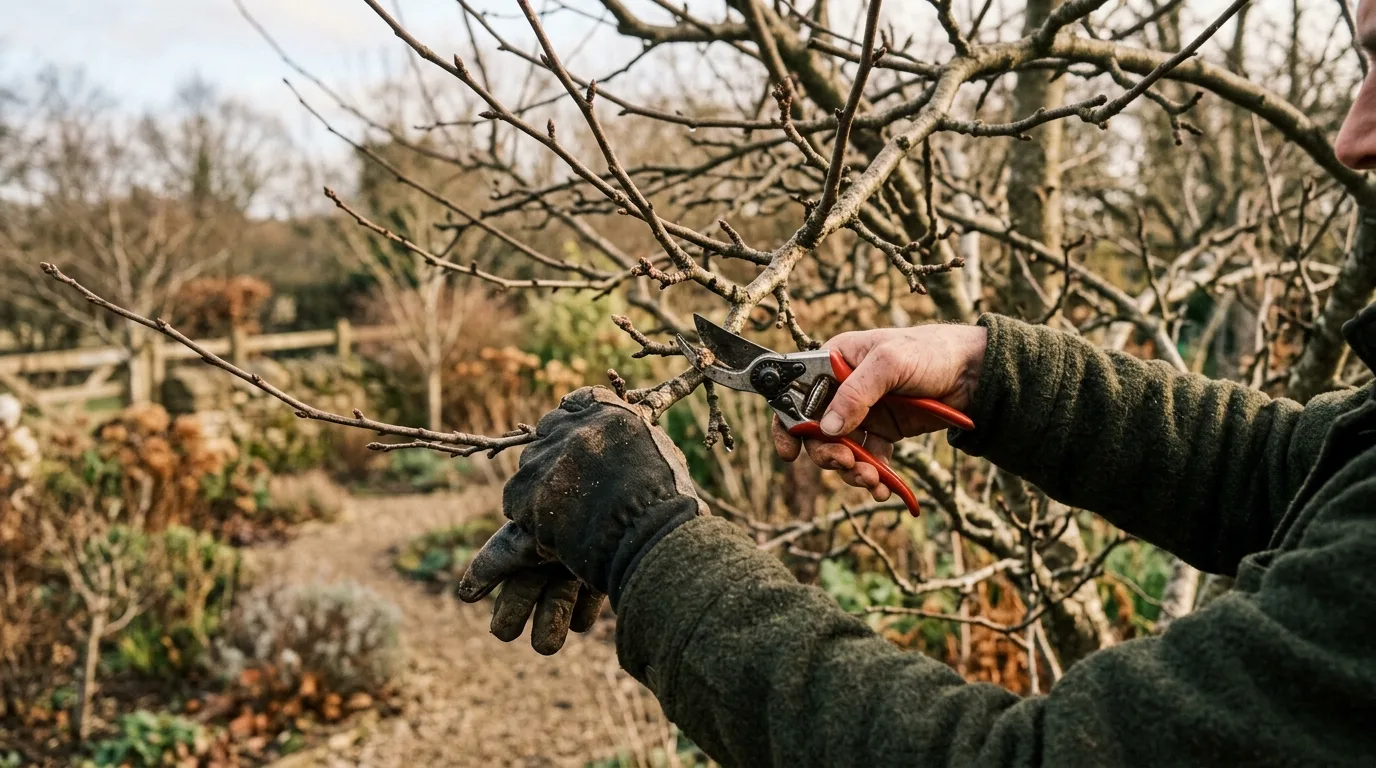
Pruning. Prune in winter while the tree is dormant. Nuts form on the previous season's growth, so aim for a steady supply of new shoots: remove dead, crossing and crowded wood and open up the centre to light. See our guide to pruning fruit trees.
Pests and Diseases
- Birds: The main thief. Net small trees as the nuts fill in late summer.
- Possums and rats: Both strip nuts from the tree and from the ground. Collect fallen nuts often and use trunk collars on single trunk trees.
- Aphids: Can gather on new leaves in spring. They rarely harm an established tree.
- Root rot: Hazelnuts in soil that stays wet through winter decline and die back. Drainage is the only fix.
Harvest and Storage
Hazelnuts ripen in autumn. The husks turn brown and the nuts loosen and begin to drop. Rake them up every few days, or pick clusters from the tree once the nuts come away easily. Empty shells that float in a bucket of water had no kernel and can go on the compost.
Spread the nuts in a single layer somewhere dry and airy for a couple of weeks until the kernels are crisp. Kept dry in the shell, hazelnuts store for months. Shelled nuts keep best in the fridge or freezer.
Track Your Hazelnut Trees
Add hazelnuts to your garden in the Planting Season app and get reminders for sucker removal, pruning and harvest.
Open the App →Frequently Asked Questions
Why is my hazelnut tree not producing nuts?
The usual reason is pollination. Hazelnuts cannot pollinate themselves, so a tree needs a compatible variety nearby that sheds pollen while its red female flowers are open in winter. Young trees also take about four years to crop.
How many hazelnut trees do I need?
At least two, of different varieties that pollinate each other. Planting them close together helps the wind carry pollen from one to the other.
Can I grow hazelnuts in Northland?
Hazelnuts are not suited to Northland. They need a long, cold winter to set nuts, and Northland does not get enough chill. They do best in the cooler south and central districts.
When do hazelnuts ripen in New Zealand?
Hazelnuts ripen in autumn, when the husks turn brown and the nuts start to fall. Gather them every few days before birds and rats find them.
See also: Hazelnuts in the Plant Library