
How to Grow Okra in New Zealand
Updated June 2026
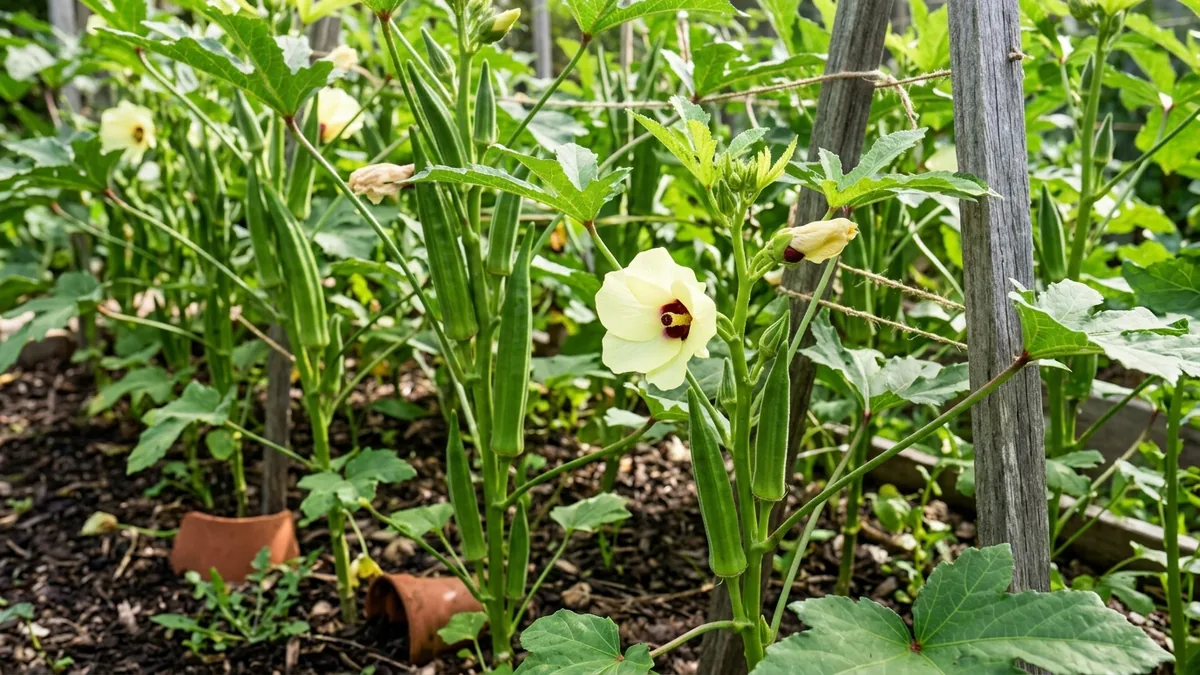
Okra is a true heat lover from the hibiscus family, and in New Zealand it asks for the warmest, most sheltered corner you can find. In the subtropical north it can do well in the open garden. Almost everywhere else it is a glasshouse, polytunnel or big-pot crop. This guide is honest about where okra is easy, where it is hard, and how to give it the best possible run wherever you live.
Grown well, okra rewards you with tender finger-length pods through the warm weeks of summer, plus tall plants topped with pretty hibiscus flowers. The trick is heat. Okra evolved in hot climates and it sulks in cool, damp soil. Once you accept that and treat it as the heat lover it is, the whole crop makes a lot more sense.
Okra climate suitability and sowing selector
Okra is fussy about warmth, so pick your region and see an honest verdict plus the sowing approach that gives you the best chance.
What it looks like as it grows


🌱 Plant profile: Okra, with sowing times for your region, companion plants and common pests.
Position and soil
Choose the hottest, sunniest, most sheltered spot you have. A north-facing position against a wall or fence that soaks up warmth is ideal, as the reflected heat helps okra no end. Okra needs at least six to eight hours of direct sun and hates cold wind, so shelter matters as much as sun.
Soil should be free draining and reasonably fertile. Dig in compost or well-rotted manure before planting to feed the plant and help the soil hold moisture without staying soggy. Okra dislikes cold, wet feet, so raised beds or large pots warm faster and drain better than heavy open ground. Aim for a soil pH around 6.0 to 6.8.
Sowing and planting
Almost everywhere in New Zealand you are best to start okra indoors. Soak seed overnight in warm water to soften the hard coat, then sow about 1 to 2 centimetres deep into small pots of seed mix. Keep them warm, ideally 25 degrees or so, and they should sprout in roughly one to two weeks. A heat mat makes a real difference.
Start seed indoors from August to September in the warm north, a little later further south. Harden the seedlings off carefully, then plant them out only once the soil is genuinely warm and all frost risk has passed, usually November to December. Okra resents root disturbance, so pot on gently and try not to break up the rootball at planting time.
Spacing
Space plants about 40 to 50 centimetres apart, in rows around 60 to 75 centimetres apart. The plants grow tall and a little bushy, so give them room for air to move, which helps keep fungal problems down in humid northern summers. In a pot, one plant per 20 to 30 litre container is about right.
Watering and feeding
Once established, okra likes steady, even moisture but will not tolerate waterlogging. Water deeply when the top few centimetres of soil dry out, and keep it more consistent once the plant starts flowering and setting pods. A mulch helps hold warmth and moisture in the soil. See our watering wisely guide for getting this right through a dry summer.
Okra is a moderate feeder. Too much nitrogen gives lots of leaf and few pods, so go easy. A balanced feed at planting, then a potassium-leaning liquid feed every few weeks once flowering starts, keeps pods coming without pushing soft sappy growth.
Problems and pests
The biggest problem in New Zealand is simply cold. Plants that go out too early, or sit through a cool damp spell, stall and may never recover. Beyond that, watch for aphids on soft new growth and whitefly, especially under glass where they multiply fast. A blast of water, a squash of any clusters, and encouraging ladybirds usually keeps them in check. In humid northern summers, good spacing and airflow help prevent fungal leaf spots. See our New Zealand pest and disease guide for organic control.
Harvest and storage
This is where most people go wrong. Okra pods turn fibrous and woody astonishingly fast. Pick them young, at about 5 to 7 centimetres long, while they still snap cleanly. In warm weather that means checking every day or two, because a pod left an extra day can be too tough to eat. Regular picking also tells the plant to keep producing, so the more you harvest the more you get.
Cut pods with secateurs rather than pulling, and wear long sleeves if your variety has spiny pods, as the fine hairs can irritate skin. Okra is best eaten fresh within a few days. It also freezes well, blanched briefly first, and the pods are a classic ingredient in gumbo and curries, where their natural thickening qualities shine.
Best okra varieties for New Zealand
Clemson Spineless
The standard home-garden okra and the easiest to find. Tender green pods on spineless plants, so kinder on your hands at harvest. Reliable and a good first choice.
Red Burgundy (Burgundy)
Striking deep-red pods on tall ornamental plants, so it earns a spot in the flower border as well as the veg patch. Good flavour, and the colour fades to green when cooked.
Star of David
An heirloom with fat, ribbed pods and a rich flavour. Tends to stay tender at a slightly larger size than most, which gives you a touch more leeway at picking time.
| Variety | Pods | Best for |
|---|---|---|
| Clemson Spineless | Tender green, spineless | The reliable all-rounder and best first choice |
| Red Burgundy | Deep red, ornamental | Looks and flavour, doubles as a feature plant |
| Star of David | Fat, ribbed, heirloom | Flavour and a little more leeway before pods toughen |
New Zealand season note
Across most of the country, okra is a summer-only crop that needs every warm week you can give it. In the warm north, start seed indoors in late winter (August to September), plant out in late spring to early summer, and harvest through the hottest part of summer into autumn. Further south, lean on a glasshouse, polytunnel or a large pot in the sunniest sheltered corner. If you want pages tuned to your exact district, the New Zealand planting calendars and the okra plant page have you covered.
Frequently asked questions
Can you grow okra in New Zealand?
Yes, but okra is a true heat lover and it is genuinely tricky across most of New Zealand. Your best chance is the subtropical north and Auckland, where you start seed indoors in late winter and plant out once the soil is warm. In cooler regions a glasshouse or polytunnel makes it far more reliable. In the cold south, treat it as a glasshouse crop.
What temperature does okra need to germinate?
Okra seed needs warm soil, ideally above 20 to 25 degrees Celsius, to germinate well. Below that the seed often rots before it sprouts. Soak seed overnight before sowing and start it indoors on a warm windowsill or heat mat in most New Zealand regions.
When should I sow okra in New Zealand?
In the warm north, start seed indoors from August to September and plant out once the soil is properly warm, usually November to December. Cooler regions are similar but the plant really needs a glasshouse or the warmest sheltered north-facing spot to crop.
Why are my okra pods tough and woody?
Pods turn fibrous and woody very quickly. Pick them young at 5 to 7 centimetres, every day or two in warm weather. Once a pod is more than about 10 centimetres it is usually too tough to eat. Regular picking also keeps the plant cropping.
How long does okra take to grow?
From transplanting, okra usually takes about 60 to 75 days to start cropping, then keeps producing through the warm part of summer. The plant needs steady warmth the whole time, which is why timing and a sheltered spot matter so much in New Zealand.
Where can I buy okra seed in New Zealand?
Okra is grown from seed rather than seedlings. New Zealand seed retailers such as Kings Seeds and Egmont Seeds carry varieties like Clemson Spineless and Red Burgundy. Order early so you can start seed indoors in late winter.
Can I grow okra in a pot?
Yes, and in cooler regions a large pot is often the best approach. Use a pot of at least 20 to 30 litres, fill it with free draining mix, and stand it in the warmest, most sheltered, sun-soaked spot you have, or inside a glasshouse. A pot warms faster than open ground.
Plant profile
The okra profile has sowing times for your region, companion plants and common pests.