
Updated November 2026
How to Sprout Seeds in a Jar, and the Food Safety Rules That Come With It
Read the official advice first, then follow the jar method step by step.
The official advice on sprouts
New Zealand Food Safety, part of the Ministry for Primary Industries, advises that raw seed sprouts are a risk to eat. Babies and young children, pregnant women and older people, especially those with underlying health conditions, should not eat them raw, and the only way to make sprouts completely safe is to cook them thoroughly. Food Standards Australia New Zealand (FSANZ), which sets food standards for both countries, lists raw seed sprouts as a higher-risk food for vulnerable people and recommends thoroughly cooked sprouts instead. The NSW Food Authority adds that sprouts can carry E. coli, Listeria and Salmonella, and that even the most hygienic home conditions will not make sprouts bacteria-free.
In short, sprouts are safest cooked, and children, pregnant women, older people and anyone with lowered immunity should not eat them raw. Everyone else should know that jar sprouting reduces the risk but cannot remove it. We would rather say that plainly than leave it out.
What you need
- A wide-mouth jar of about 1 litre or 2 litres, with a mesh or sprouting lid, or a piece of clean cloth held on with a band.
- Seed sold for sprouting. Buy seed that a seed company sells for sprouting, and ask whether it has been tested for pathogens.
- Clean water, and a spot out of direct sun, away from raw meat, pets and food preparation.
Never sprout seed sold for sowing in the garden, because it can be treated and is not meant to be eaten. Wash the jar and lid well before each batch. The University of California advises sanitising sprouting containers by following the directions on the bleach container for sanitising kitchen surfaces, then rinsing with clean water.
How to sprout in a jar, step by step
- Rinse the seed. Put a couple of tablespoons of small seed, such as broccoli or radish, in the jar, cover with water, swish and drain. Do this a couple of times.
- Soak. Fill the jar about half full of water and soak the seed for 8 to 12 hours.
- Drain and rinse. Pour off the water and rinse the seed a couple of times.
- Tilt to drain. Rest the jar upside down at about a 45 degree angle so the excess water runs out, for about 30 minutes, then stand it upright somewhere dark or under a towel.
- Rinse twice a day. Each time, rinse and drain a couple of times, then tilt to drain again. Colorado State University Extension reports most seed germinates in about 3 days.
- Finish. When the sprouts are ready, rinse and drain them well and lay them on a clean kitchen towel to dry. Store them in the fridge in a container with a folded paper towel in the bottom to absorb moisture, and eat them soon.
Our plant data lists broccoli sprouts as a crop for any month in every New Zealand region, with germination in about 2 days at 18 to 25°C and harvest at about 7 days.
Cooking and eating sprouts safely
- Cook sprouts thoroughly. Heat them until they are steaming hot all the way through, as in a stir-fry or soup, rather than leaving them crunchy.
- Throw away any sprouts that are dark in colour, slimy or smell musty or sour.
- Keep the finished sprouts cold, and do not leave them out on the bench.
- Mung bean sprouts are the type most often cooked, and they cook well in hot dishes.
Sprouts, microgreens and pea shoots are different
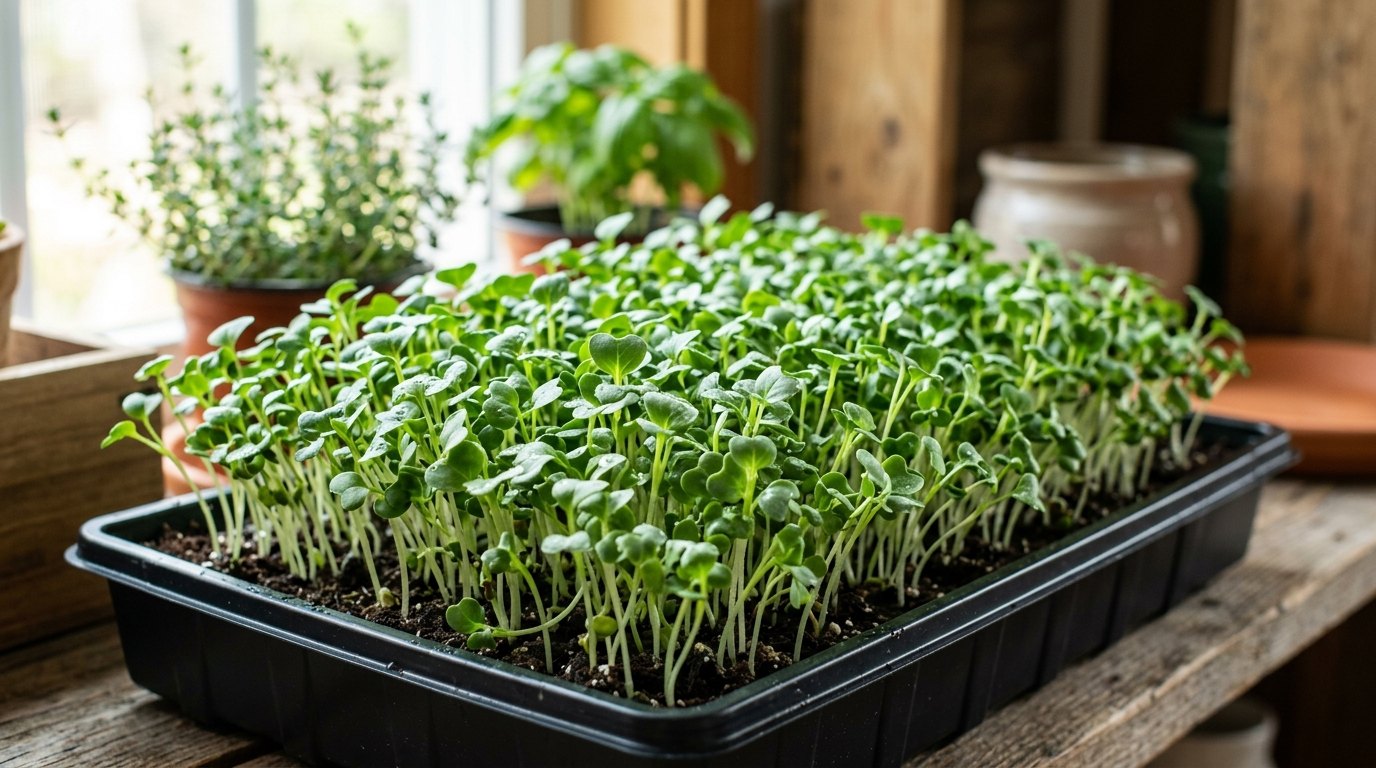
Sprouts are germinated seeds eaten whole, grown in water with no light or soil. Microgreens and pea shoots are grown in light in a tray of soil or mix and cut above the surface, so you do not eat the seed or root. We are not aware of separate official advice for shoots grown that way, so we give the same careful advice: start with seed sold for sprouting or microgreens, wash after cutting, keep them cold, and let vulnerable people eat them cooked. See our microgreens guide.
Common questions
Is it safe to eat sprouts raw?
Raw seed sprouts are a risk to eat, according to New Zealand Food Safety. The only way to make them completely safe is to cook them thoroughly, and home sprouting in clean conditions cannot remove the risk.
Who should not eat raw sprouts?
New Zealand Food Safety names babies and young children, pregnant women and older people, especially those with underlying health conditions. FSANZ recommends thoroughly cooked sprouts for vulnerable people.
How long do seeds take to sprout in a jar?
Most seeds germinate in about 3 days with rinsing twice a day, and broccoli sprouts are ready at about 7 days in our plant data. Seed suppliers give times for each seed.
Why do you rinse sprouts twice a day?
Rinsing keeps the seeds moist without leaving them sitting in water, and draining well lets air reach them. A jar that stays wet and stagnant goes sour or mouldy.
Can I use seed from the garden packet?
Only if the packet says it is sold for sprouting. Seed sold for sowing in the garden can be treated and is not meant to be eaten.
Sources we checked (November 2026): New Zealand Food Safety (MPI), Raw seed sprouts are a risk to eat; FSANZ, Food safety for vulnerable people (page updated 20 March 2026); NSW Food Authority, Sprouts; University of California Agriculture and Natural Resources, Growing Seed Sprouts at Home (ANR Publication 8151); Colorado State University Extension, Growing Sprouts and Microgreens at Home (2024).