Trellis and Support by Crop
Updated June 2026
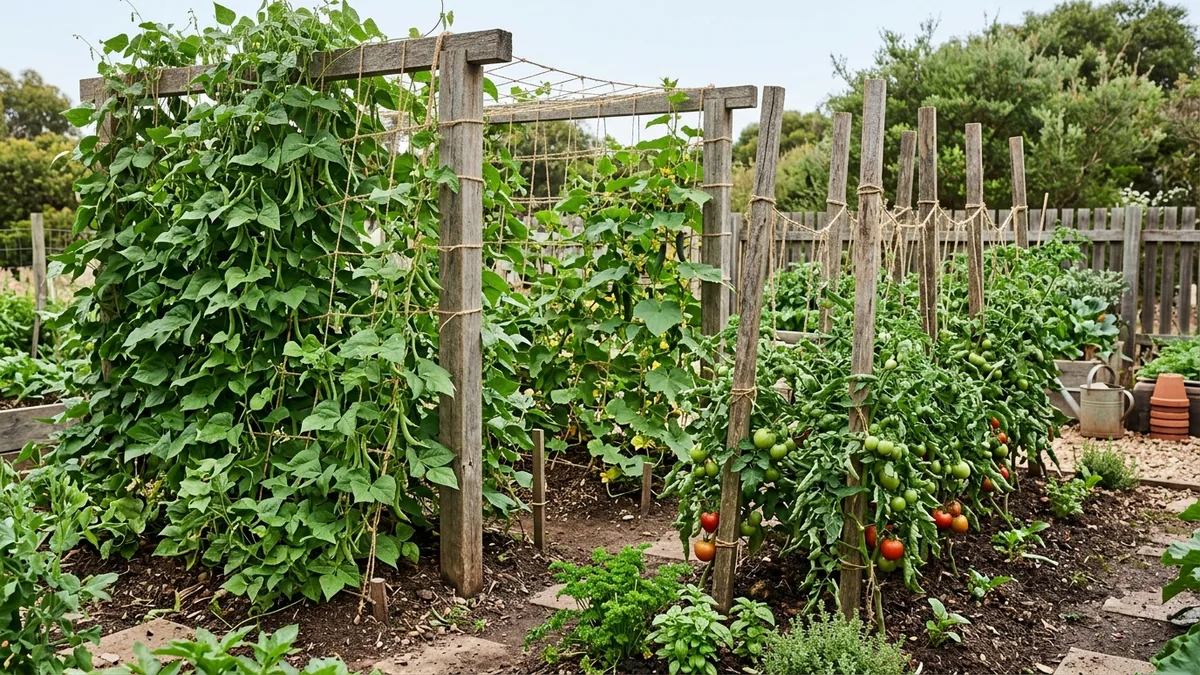
Growing up instead of out earns its keep. Vertical plants get better airflow, which means less fungal disease. They save ground space, the fruit stays off the soil and clean, and picking is far easier when the crop is at eye level. Here is the right support for each crop, plus the materials and spacing to get it right.
Support by crop
Tomatoes
Choose by habit. A single stake works for most plants. A cage suits bushy determinate varieties that carry their own weight. Tall vining tomatoes do best trained up strings or a Florida weave, where twine is run along a row of stems between posts. Tie loosely so the swelling stems are never strangled.
Cucumbers
Cucumbers love to climb. Give them an A-frame or vertical netting and their tendrils will self-climb with very little help. Off the ground the fruit hangs straight and clean and the foliage dries quickly after rain.
Beans
It depends on the type. Climbing or pole beans are vigorous and need real height, so give them poles of 2 metres or more, a teepee of stakes, or strings to run up. Bush beans stay compact and need no support at all.
Peas
Peas only need light support. Pea netting, a panel of mesh, or twiggy pea sticks pushed in alongside the row give the tendrils plenty to grab without any heavy framing.
Squash and pumpkin
These are heavy. A strong arch or trellis can carry the smaller types as long as each fruit is cradled in a sling of mesh or cloth tied to the frame so it does not tear free. Large pumpkins are too heavy for any trellis and are best left to run along the ground.
Melons
Rockmelon and watermelon can climb a strong trellis, but only the small varieties and only if every fruit is slung in a support. Without a sling the stem tears and you lose the fruit, so most gardeners grow the larger melons on the ground.
Peppers, capsicum and chilli
A single short stake is usually enough. It keeps a heavily laden, brittle branch from snapping in wind or under the weight of fruit.
Passionfruit and grapes
These are permanent woody vines and want a permanent structure. Train them along horizontal galvanised wires fixed to a fence or trellis. Passionfruit does especially well on strong mesh against a warm, sunny fence where it can sprawl and ripen.
Which support for which crop
| Crop | Best support | Notes |
|---|---|---|
| Tomatoes | Stake, cage or strings | Cage for determinates, strings or Florida weave for vines; tie loosely |
| Cucumbers | A-frame or vertical netting | Tendrils self-climb; straighter, cleaner fruit |
| Climbing beans | 2m+ poles, teepee or strings | Bush beans need none |
| Peas | Pea netting, mesh or pea sticks | Light support is plenty |
| Squash and pumpkin | Strong arch or trellis (small types only) | Sling each fruit; leave big pumpkins on the ground |
| Melons | Strong trellis (small varieties only) | Each fruit must be slung |
| Peppers and chilli | Single short stake | Stops branches snapping under fruit |
| Passionfruit and grapes | Horizontal wires on a fence or trellis | Permanent woody vines; passionfruit on mesh against a sunny fence |
Materials and spacing
Pick materials to match the load. Hardwood stakes and bamboo handle most annual crops. Galvanised wire strung between posts carries heavy permanent vines. Mesh and netting suit lighter climbers like peas and cucumbers. Always tie stems with soft ties, never wire, which cuts into growing stems. Install supports at planting time so you do not disturb roots later, and give climbers enough height from the start rather than running out of room mid-season.
Planning where each crop sits, and how tall its support needs to be, is much easier in the Bed Planner, where you can lay out beds and check spacing before you plant.
Plan your supports in the app
Map your beds, track each crop and never forget which plant needs staking. The Planting Season app keeps it all in one place.
Open the app →FAQ
Do cucumbers need a trellis?
They do not strictly need one, but they grow far better on a trellis or net. Their tendrils self-climb, airflow improves so there is less fungal disease, the fruit grows straighter and cleaner, and picking is much easier than hunting under sprawling vines.
What is the best support for tomatoes?
It depends on the type. A single stake suits most plants, a cage works well for bushy determinate varieties, and tall vining tomatoes do best on strings or a Florida weave between posts. Whatever you choose, tie the stems loosely so you do not strangle them as they thicken.
Do bush beans need support?
No. Bush or dwarf beans stay compact and stand on their own. Only climbing or pole beans need support, and they need a lot of it, with poles, a teepee or strings at least 2 metres tall.
Can you grow pumpkins on a trellis?
Small varieties yes, big ones no. A strong arch or trellis can carry small squash and pumpkins if each fruit is cradled in a sling of mesh or cloth tied to the frame. Large pumpkins are too heavy and are best left to run along the ground.
When should I install supports?
At planting time. Putting stakes, cages and trellises in early means you do not disturb roots later and the plant climbs the support from the start instead of being wrestled onto it once it is already sprawling.
Related guides
See also: how to grow peas and the Bed Planner.