
Citrus scab: identify, prevent, control
Updated October 2026
Worst in cool, wet springs and autumns on lemons in Auckland, Northland, the Bay of Plenty and other humid citrus districts.
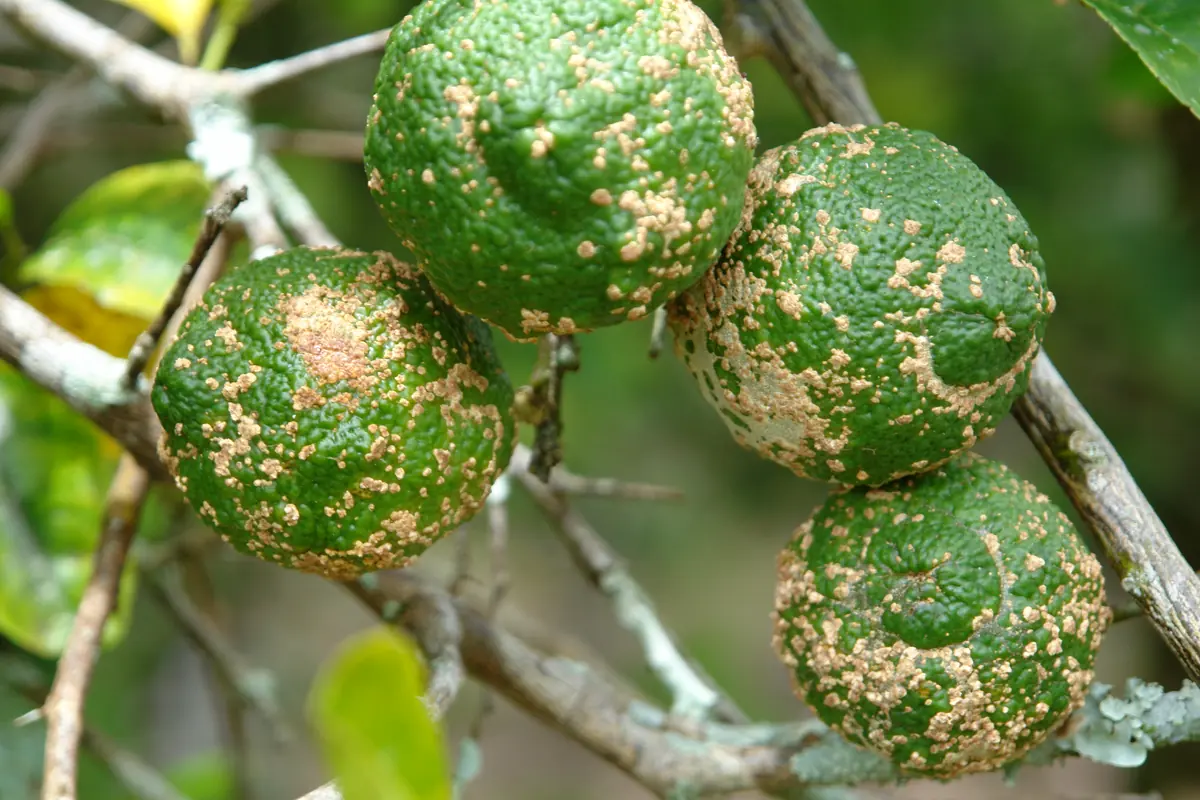
Citrus scab, known in New Zealand as verrucosis or lemon scab, is a fungal disease that raises corky, wart-like scabs on fruit, leaves and young twigs. Lemons are by far the worst affected. The fruit stays edible, but badly scabbed lemons are hard to zest and young leaves can be stunted and twisted.
Elsinoe fawcettii
.jpg)
How to identify it
- On young leaves you first see small, slightly raised, water-soaked spots that become pale, then grow into corky pimples.
- Infected leaves often buckle, pucker or curl, with a raised wart on one side and a matching pit on the other.
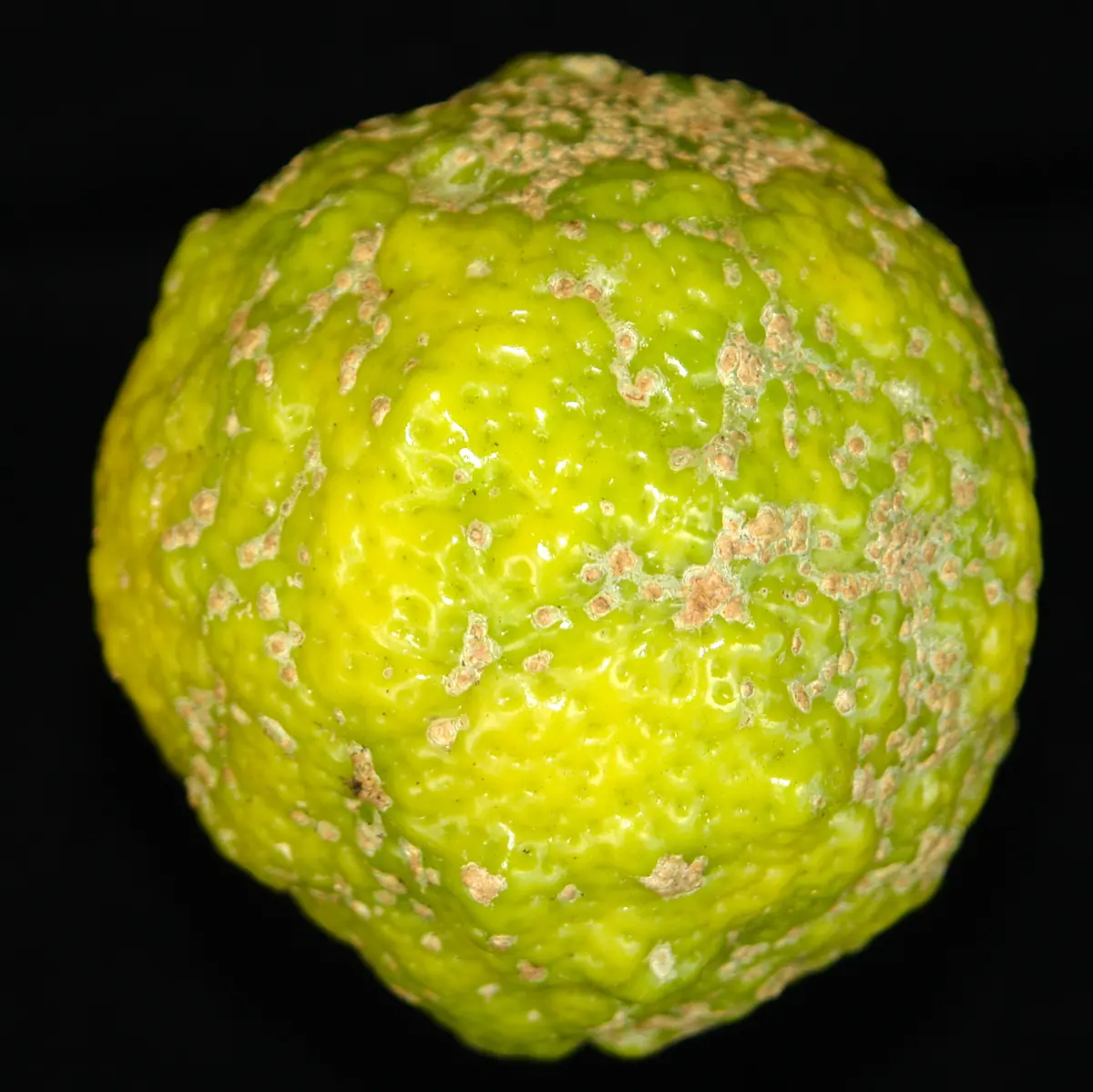
- On fruit, rough, corky, wart-like scabs appear, usually pale grey, buff or pinkish brown, and they can run together into large crusty patches.
- Heavily scabbed young fruit may be misshapen, and some drops early.
- Older scabs on lemons turn whitish or grey and feel like rough cork when you rub them.
.jpg)
What it is often confused with
Melanose
Melanose specks are tiny, dark brown and evenly scattered or streaked, and they do not distort the leaf. Scab warts are larger, paler and corky, and they twist young leaves.
Wind scarring
Wind rub is a flat, silvery scuff on one side of the fruit where it rubbed on a branch. Scab lesions stand up from the skin as distinct warts.
When and where it is worst
Verrucosis is a common problem on backyard lemons through the North Island, especially in Auckland, Northland, the Bay of Plenty, Gisborne and Hawke's Bay, and on sheltered trees in Nelson. Oranges and blood oranges can be affected too, but much less often than lemons.
Spores spread in rain splash and wind-driven rain, and they only infect soft new growth. Young fruit stays susceptible for up to about three months after petal fall, and leaves until they harden. Because lemons flower and set fruit over a long season in New Zealand, scab can build up in cool, wet weather in spring (September to November) and again in autumn (March to May).
Plants it affects
These plants in our library list it as a problem to watch for.
How to prevent it
- Grow lemons in full sun in a spot with good air movement, so leaves and fruit dry quickly after rain.
- Prune to open the centre of the tree and remove badly scabbed twigs and shoots, which carry the fungus over to the next season.
- Water at the base of the tree rather than over the foliage.
- Feed and water the tree evenly through dry spells, because stressed trees produce weaker, longer flushes that are easily infected.
- Remove and bin badly affected fruit and leaves instead of composting them.
Organic control, step by step
- Begin with pruning and good airflow, which reduce how long the foliage stays wet.
- Spray copper before flowering and again at petal fall to protect new leaves and young fruit, since copper is allowed in organic growing.
- Repeat the copper every three to six weeks while fruit is small and the weather is wet, then stop once it is about three months old.
- Products combining copper and sulphur are also sold for home use against scab, and they suit the same timings.
- Add a spreader or sticker if the label allows, because good coverage of new growth matters more than a strong mix.
Conventional control
- Copper oxychloride or copper hydroxide is the standard home garden treatment, applied before flowering and again after petal fall.
- Repeat every three to four weeks in wet weather until the young fruit has firmed up, and cover each new leaf flush as it appears.
- On lemons that flower again in late summer and autumn, protect that crop of developing fruit in the same way.
- Read the label before you buy or spray, check that citrus is listed, and keep to the withholding period before picking.
Frequently asked questions
Can I still use scabby lemons?
Yes. The scabs only affect the skin, so the juice and flesh are fine. Scabby rinds are harder to zest, so pick the cleanest fruit for that.
Is verrucosis the same as citrus scab?
Yes. Verrucosis, lemon scab and citrus scab are names for the same fungal disease, caused here by Elsinoe fawcettii. It is a different problem from melanose, which leaves much smaller, darker specks.
When should I spray my lemon tree for scab?
Spray copper just before flowering and again at petal fall, then every three to four weeks while the fruit is young and the weather is wet. Spraying older, hardened fruit does little, because scab only infects soft new tissue.
Why does only my lemon get scab and not my mandarin?
Lemons, and rough lemon rootstock in particular, are among the most susceptible citrus to this fungus. Sweet oranges and most mandarins are infected far less often, so it is normal for the lemon to be the only tree affected.
Related problems
Sources: Royal New Zealand Institute of Horticulture, Plant Doctor: Citrus verrucosis; Kings Plant Barn, Citrus verrucosis; Yates NZ, Lemon scab. Identification and control follow these sources. Always read the product label before use.