
Early blight: identify, prevent, control
Updated October 2026
Builds from December to March in warm, humid weather with heavy dews, especially in Northland, Auckland, Waikato and the Bay of Plenty.
Early blight is a fungal leaf spot of tomatoes and potatoes caused by Alternaria solani, and it is common in New Zealand gardens every summer. It starts on the older, lower leaves and works upwards, so plants lose leaves, fruit gets sunscald and potato yields drop. Celery has its own early blight, caused by a different fungus, which is covered at the end of the identification notes.
Alternaria solani; on celery, Cercospora apii
.jpg)
How to identify it
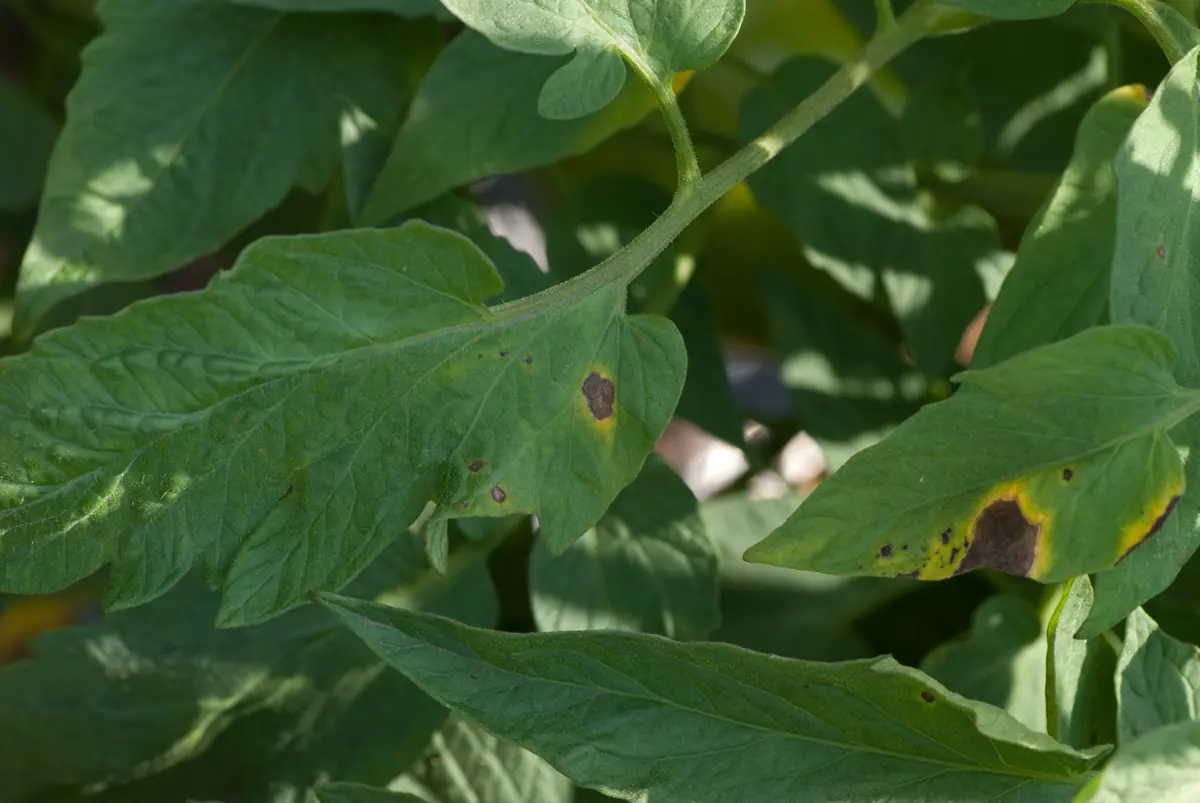
- The first spots appear on the oldest, lowest leaves as small dark brown spots, often with a yellow halo around them.
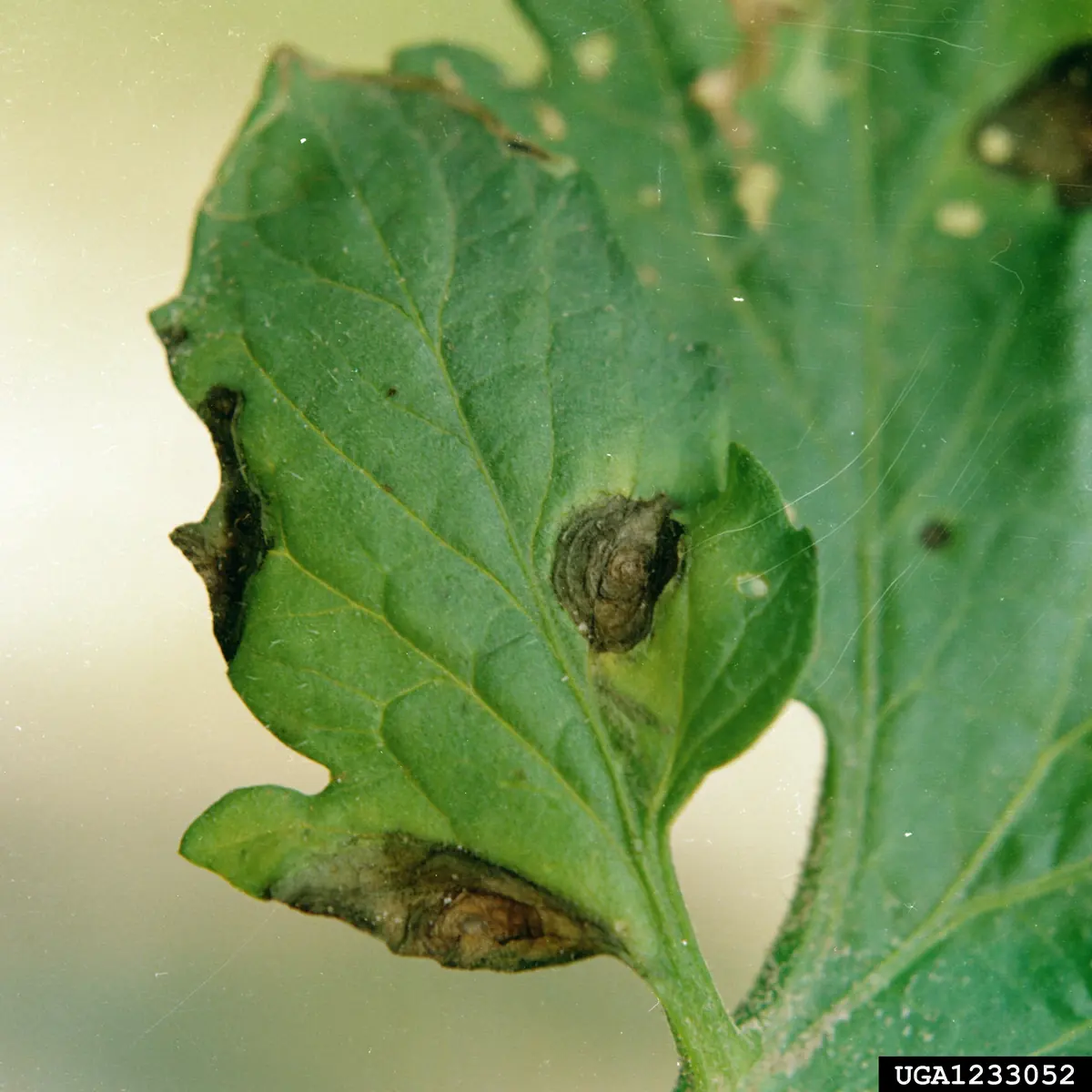
- As the spots grow to 1 cm or more, they develop rings like a target or a cut tree trunk, which you can see clearly against the light.
- Leaves with several spots turn yellow and drop, so the plant loses leaves from the bottom up while the top keeps growing.
- On tomato stems you may see dark, sunken, ringed lesions, and on fruit a dark, leathery sunken patch near the stalk end.
- Potato tubers can develop small, dark, slightly sunken spots with a dry, corky brown rot just under the skin.
- On celery, early blight (Cercospora apii) shows as pale yellow spots that turn ash-grey and papery, with no target rings.

What it is often confused with
Late blight
Late blight makes large, greasy, grey-green to brown patches that spread fast in cool wet weather, often with white fuzz underneath in damp conditions. Early blight spots are smaller, drier and have target rings.
Bacterial spot
Bacterial spot makes many small, dark, greasy spots, usually under 3 mm, without rings. Early blight spots grow much larger and show clear concentric rings.
Leaf spot
Celery late blight (Septoria leaf spot) has small brown spots dotted with tiny black specks. Celery early blight spots are larger, greyer and have no black specks.
When and where it is worst
Early blight is found throughout New Zealand but is worst in the warm, humid north: Northland, Auckland, Waikato, the Bay of Plenty and Gisborne. It also builds up in Hawke's Bay, Nelson and Canterbury gardens in humid summers, especially on plants that are stressed by drought, heavy cropping or low nitrogen.
The fungus survives on old plant debris, volunteer potatoes, nightshade weeds and seed. Spores spread on wind and water splash, and infection needs leaves to stay wet from dew, rain or sprinklers for several hours at temperatures above about 15 °C, so December to March is the main season.
Plants it affects
These plants in our library list it as a problem to watch for.
How to prevent it
- Rotate tomatoes, potatoes, eggplant and capsicum so the same family is not grown in a bed more than once every three years.
- Clear away and bin old tomato and potato plants at the end of the season, and pull out volunteer potatoes and black nightshade.
- Stake and prune tomatoes to keep leaves off the ground and let air move through the plants.
- Mulch the soil and water at the base in the morning so soil does not splash onto leaves and foliage dries quickly.
- Keep plants well fed and watered, because stressed and hungry plants are far more susceptible.
- Start with healthy seed potatoes and disease-free celery seedlings.
Organic control, step by step
- Pick off spotted lower leaves as soon as you see them and bin them.
- Remove the lowest leaves of tomatoes once the first truss has set, so there is a clear gap between leaves and soil.
- Spray copper as a protectant every 7 to 10 days in humid weather, starting when the first spots appear or when warm, wet weather is forecast.
- Side-dress with compost or a balanced organic fertiliser in midsummer so plants keep producing new leaves.
Conventional control
- Copper oxychloride is registered for early and late blight on vegetables in New Zealand home gardens; spray every 7 to 14 days from the first sign of disease.
- Liquid copper (copper ammonium acetate) products list early blight on tomatoes and potatoes and leaf spot on celery; apply as a protectant before wet or humid spells.
- Copper sprays protect new growth but do not cure existing spots, so good coverage of both sides of the leaves matters more than strength.
- Always read the label, check that your crop and early blight are listed, and keep to the withholding period before you harvest.
Frequently asked questions
Can I eat tomatoes from plants with early blight?
Yes. Fruit from affected plants is safe to eat; just cut away any dark, sunken patches. Leaf loss can expose fruit to sunscald, so pick it as it colours.
Is early blight the same as late blight?
No. They are caused by different organisms and behave differently. Early blight is a slower fungus of warm humid weather with ringed spots, while late blight is a water mould that can kill plants within days in cool wet weather.
Can I compost blighted tomato plants?
Only if your compost heap gets properly hot. In most home heaps the fungus survives, so it is safer to bin or bury infected plants away from the vegetable garden.
Why does early blight start at the bottom of the plant?
The oldest leaves are closest to soil splash, stay wet longest and are the most mature, which makes them more susceptible. That is why removing lower leaves and mulching help so much.
Related problems
Sources: Yates New Zealand, Copper Oxychloride Fungicide; Yates New Zealand, Liquid Copper Fungicide Concentrate; Massey University, Hawthorne (1963), A study of the Alternaria leafspot complex on potatoes and tomatoes in the Manawatu. Identification and control follow these sources. Always read the product label before use.