
Late blight: identify, prevent, control
Updated October 2026
Strikes in mild, wet, humid spells from December to April, often in late summer and autumn on outdoor tomatoes, anywhere in New Zealand.
Late blight is the disease behind the Irish potato famine, and it still destroys tomato and potato crops in New Zealand gardens in wet seasons. It is caused by Phytophthora infestans, a water mould that spreads on the wind and can kill whole plants within a week or two. There is no cure once plants are badly infected, so the aim is to protect plants before the weather turns.
Phytophthora infestans
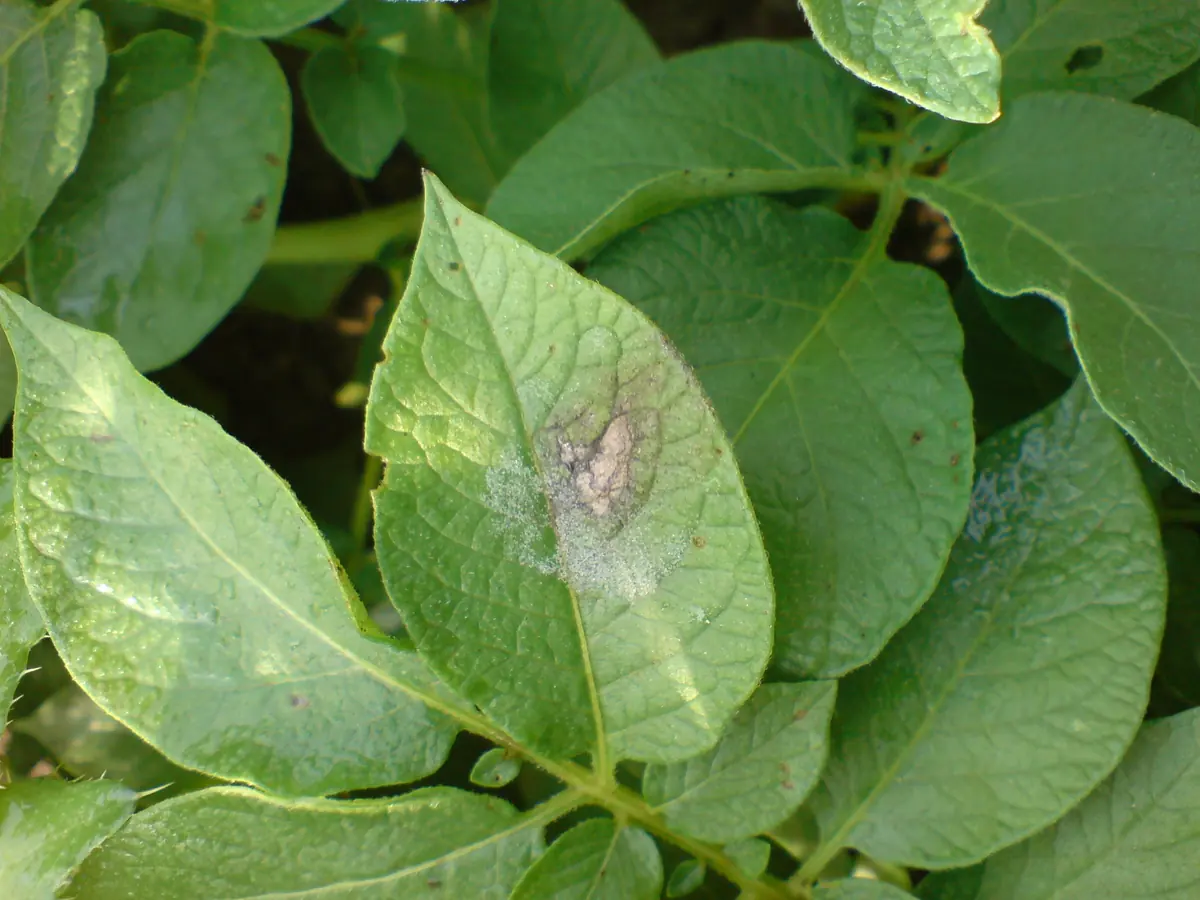

How to identify it
- The first signs are pale green, water-soaked patches on leaves, often at the tips or edges, that quickly turn brown to black.
- In humid weather or early morning you may see a fine white, downy growth around the edge of the patches on the underside of the leaf.
- Dark brown to black streaks appear on stems and leaf stalks, and the tops can collapse within days.
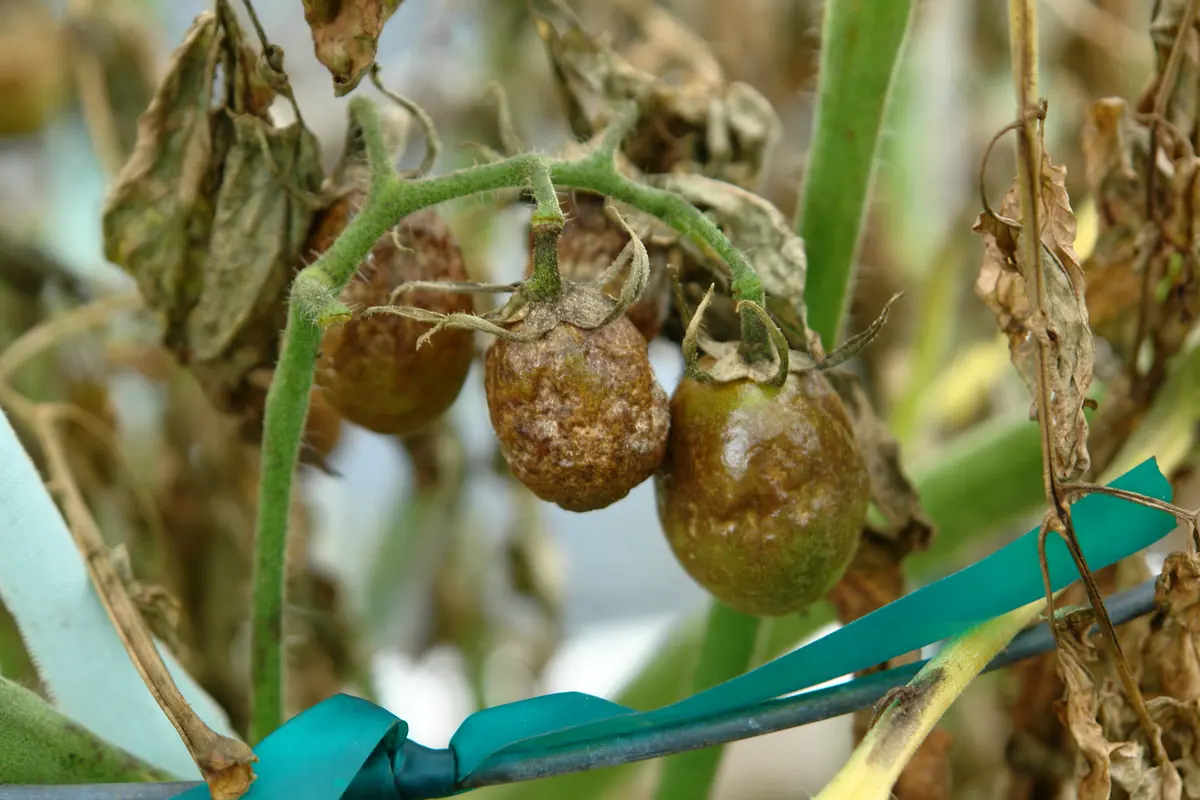
- Tomato fruit develops firm, greasy, brown to bronze marbled patches, usually starting on the upper side of green fruit.
- Potato tubers show sunken, reddish brown patches on the skin with a brown, grainy rot spreading into the flesh, often followed by a smelly soft rot.
.jpg)
What it is often confused with
Early blight
Early blight makes smaller brown spots with target rings and yellow halos on the oldest leaves and spreads slowly. Late blight patches are larger, greasy and dark, can start anywhere on the plant and spread within days.
Botrytis
Grey mould (botrytis) rots leaves, stems and fruit under a fluffy grey coat of spores. Late blight has only a thin white down at the edge of the patches, and the tissue looks dark and greasy.
Tomato potato psyllid
Psyllid damage gives yellow or purple, cupped top leaves and stunted plants, but no black, wet-looking patches. You will find the tiny insects and their sugary white granules on the leaves.
When and where it is worst
Late blight can appear anywhere in New Zealand when the weather is right. It needs mild temperatures of roughly 10 to 24°C with long spells of high humidity or wet leaves, so it is most common in wet summers and in late summer and autumn, from about January to April. Humid districts such as Auckland, Waikato, Bay of Plenty and the West Coast see it most often, but a wet, muggy spell in Canterbury or Otago can bring it too.
The water mould survives between seasons mainly in infected potato tubers, including volunteer potatoes, dumped potatoes and infected seed potatoes. Spores from those plants blow onto nearby gardens, so a single infected potato patch can spread blight across a neighbourhood in a wet week.
Plants it affects
These plants in our library list it as a problem to watch for.
How to prevent it
- Plant certified seed potatoes rather than tubers saved from a blighted crop or bought for eating.
- Dig out volunteer potatoes and never leave old potatoes lying on the ground or in an open compost heap.
- Grow tomatoes under cover, such as a greenhouse or a simple rain shelter, so the leaves stay dry.
- Space and stake plants well, water at the base in the morning, and remove lower leaves to improve air flow.
- Choose tomato and potato varieties described as having some late blight tolerance where you can find them.
- Watch the weather and protect plants before a mild, wet, humid spell rather than waiting for symptoms.
Organic control, step by step
- Check plants every few days in wet weather, and remove any blighted leaves or fruit straight away, bagging them for the rubbish rather than the compost.
- If blight takes hold on potatoes, cut off and bin the tops, then wait two to three weeks before digging so the skins set and spores on the soil surface die off.
- Spray copper as a protectant before and during wet spells, covering both sides of the leaves, keeping in mind that copper is permitted in certified organic growing only within set limits.
- Pull out and bin badly infected tomato plants to protect the rest of your crop and your neighbours.
Conventional control
- Copper oxychloride is registered in New Zealand for late blight on vegetables, used as a preventive spray every 7 to 14 days through mild, wet weather.
- Copper only protects leaves it covers, so respray after heavy rain and as new growth appears.
- Spraying will not save plants that are already badly infected, so start before blight arrives.
- Always read the label, check that your crop is listed, and keep to the withholding period before harvest.
Frequently asked questions
Can I eat potatoes from a crop with late blight?
Tubers that look and feel sound are safe to eat. Sort them carefully, use them first, and throw out any with brown patches or rot, as blighted tubers often rot in storage.
Should I compost blighted plants?
Leaves and stems are best bagged and put in the rubbish, and infected tubers must never go in the compost. Spores and infected tubers in a cool heap can start the disease again next season.
Can I save seed from blighted tomatoes?
Late blight does not normally carry through tomato seed, but only save seed from healthy, ripe fruit. Never save potatoes from a blighted crop for planting.
Is late blight a notifiable disease in New Zealand?
No, it is already established here. If you see unusual symptoms on potatoes that do not match late blight or psyllid damage, MPI asks you to report them on 0800 80 99 66.
Related problems
Sources: Royal New Zealand Institute of Horticulture, Plant Doctor: Unhealthy tomatoes; Yates New Zealand, Copper Oxychloride Fungicide label directions; GBIF, Phytophthora infestans occurrence records in New Zealand. Identification and control follow these sources. Always read the product label before use.