
Sclerotinia: identify, prevent, control
Updated October 2026
Worst in cool, moist weather in autumn, winter and spring, and in dense crops that stay damp, throughout New Zealand.
Sclerotinia is a soil-borne fungus that causes a soft, watery rot with fluffy white mould, often called white mould, Sclerotinia rot or, on lettuce, lettuce drop. It attacks hundreds of plants, including lettuce, celeriac, celery, Jerusalem artichoke, beans, carrots, brassicas and pumpkins. It forms hard black resting bodies, called sclerotia, that survive in soil for years, so a bed that has had it once is likely to have it again.
Sclerotinia sclerotiorum, Sclerotinia minor

How to identify it
- On lettuce, the outer leaves touching the soil wilt and go limp, then the whole head collapses flat onto the ground, which is why it is called lettuce drop.
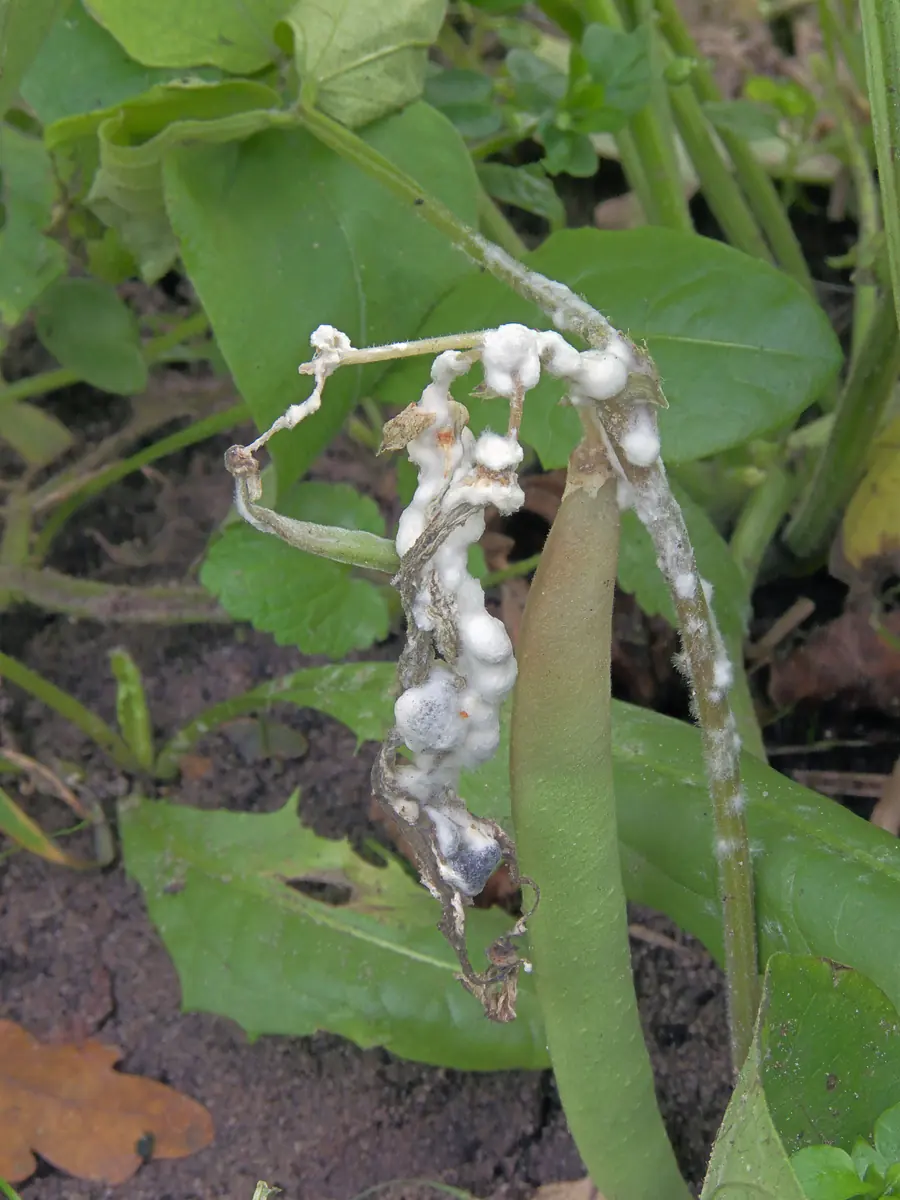
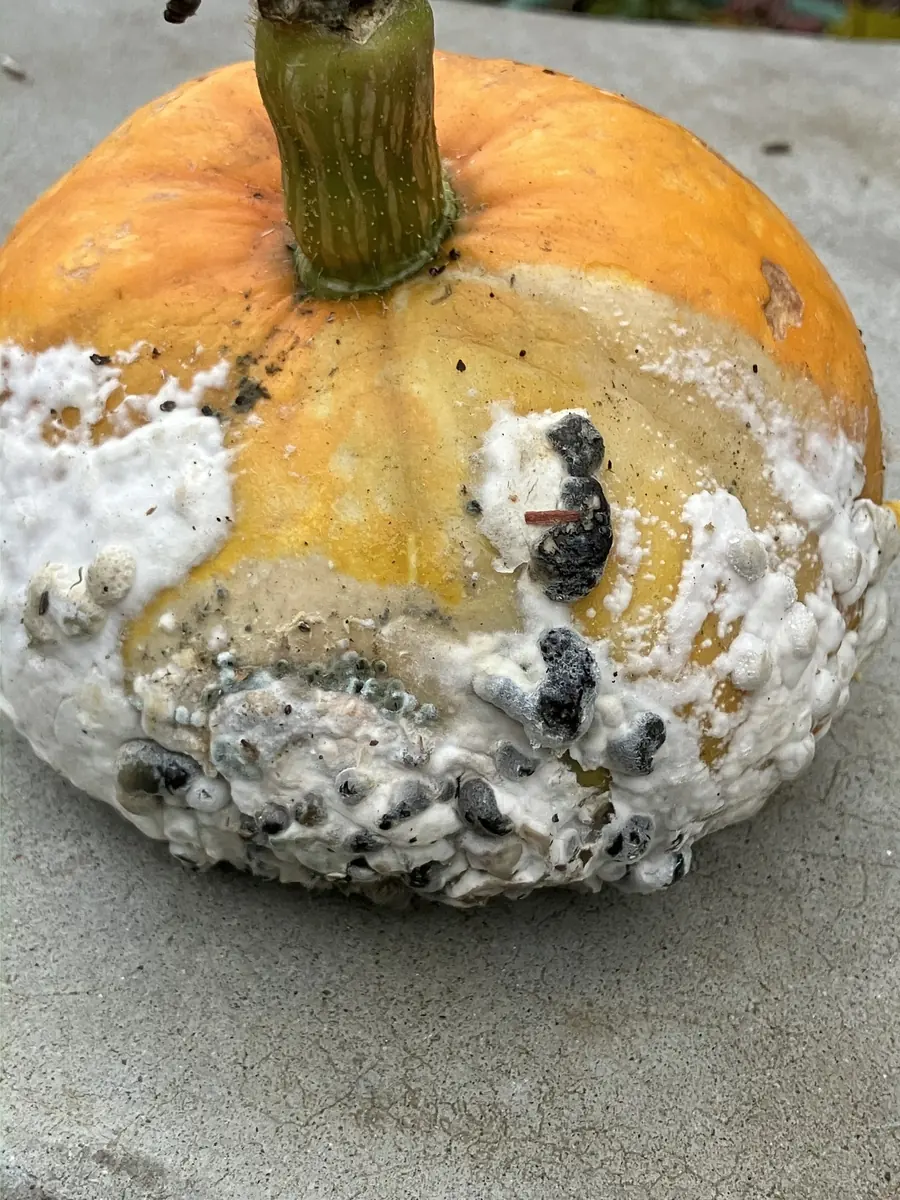
- At the base of the plant you find a soft, wet, brown rot, and in damp conditions a white, cottony mould grows over it.
- Hard black bodies, like rat droppings or small seeds, form in and on the white mould; Sclerotinia minor makes very small ones, while Sclerotinia sclerotiorum makes larger ones up to 1 cm or more.
- On celeriac and celery, a pale, watery rot starts at the crown or leaf bases and spreads up the stalks, with white mould and black sclerotia on the rotted tissue.
- Jerusalem artichoke stems develop pale, bleached lesions near the base with white mould on the outside and black sclerotia inside the hollow stem, and the plant wilts and falls over.
- Stored tubers and roots can rot in the store with the same white mould and black bodies.
What it is often confused with
Botrytis
Grey mould has a grey, dusty, furry growth that puffs spores when you touch it. Sclerotinia mould is pure white and cottony, and it forms hard black sclerotia.
White rot
White rot only affects onions and garlic and its black sclerotia are tiny, like poppy seeds. Sclerotinia attacks many other crops and its sclerotia are usually larger.
Damping off
Damping off rots seedlings at soil level soon after they emerge and has no black sclerotia. Sclerotinia usually strikes larger or maturing plants.
When and where it is worst
Sclerotinia is common throughout New Zealand. Sclerotinia minor is a well-known cause of watery rot in mature lettuce around Auckland, while Sclerotinia sclerotiorum is widespread on vegetables, beans and flowers from Northland to Southland. It is most active in cool, moist weather, roughly 10 to 20 °C, so autumn, winter and spring crops are most at risk, along with summer crops in wet spells.
The sclerotia lie in the soil for several years. In moist conditions they either grow directly into nearby plants or produce small, tan, cup-shaped mushrooms that release spores into the air, which land on dying flowers and damaged leaves and start new infections.
Plants it affects
These plants in our library list it as a problem to watch for.
How to prevent it
- Rotate crops and leave at least three to four years between susceptible crops such as lettuce, celery, celeriac, beans and carrots in the same bed; sweetcorn, onions and grasses are good break crops.
- Space plants well and avoid dense plantings so the soil surface and lower leaves dry out between waterings.
- Water in the morning at the base of plants, and do not overwater in cool weather.
- Grow lettuce on raised beds or slightly mounded rows so the heads sit on drier soil.
- Pull out and bin affected plants before sclerotia form and fall into the soil.
- Keep weeds down, as many common weeds also host Sclerotinia.
Organic control, step by step
- Remove infected plants carefully with the soil around their base, bag them, and put them in the rubbish rather than the compost.
- Remove old, yellowing lower leaves and spent flowers on susceptible crops, as these are where airborne spores often start infections.
- Mulch with a layer of coarse material that dries quickly, which can reduce contact between plants and infested soil.
- Solarise a badly infested bed under clear plastic for six to eight weeks over midsummer to reduce sclerotia in the top layer of soil.
Conventional control
- We could not find a fungicide registered for Sclerotinia on lettuce, celeriac or Jerusalem artichoke in New Zealand home gardens, so control relies on rotation and hygiene.
- Soil fumigants and the fungicides used on commercial crops are not available for home garden use.
- Always read the label of any product you use, check that your crop and disease are listed, and keep to the withholding period before you harvest.
Frequently asked questions
How long does Sclerotinia stay in the soil?
The sclerotia survive for several years, and some can last five years or more in cool, moist soil. Long rotations with non-host crops such as sweetcorn and onions help run them down.
Can I compost plants with Sclerotinia?
No. The sclerotia survive in most home compost heaps and would be spread to every bed you mulch. Bin infected plants instead.
Why did my lettuces collapse overnight?
Lettuce drop rots the stem at soil level, and the head stays upright until the stem gives way, so collapse looks sudden. Check the base for white mould and black sclerotia to confirm it.
Is Sclerotinia the same as white rot?
They are related fungi but white rot only attacks the onion family. Sclerotinia has a huge host range, which makes rotation harder but means onions and garlic are safe break crops.
Related problems
Sources: Manaaki Whenua, Virtual Mycota: Sclerotinia minor; New Zealand Organisms Register, Sclerotinia sclerotiorum. Identification and control follow these sources. Always read the product label before use.