
White rot: identify, prevent, control
Updated October 2026
Active in cool, moist soil, so it shows from late winter to early summer on autumn and winter planted onions and garlic throughout New Zealand.
White rot is a soil-borne fungus that attacks only onions, garlic, shallots, leeks, spring onions and their relatives. It rots the roots and base of the bulb and leaves behind tiny black resting bodies, called sclerotia, that can survive in the soil for 20 years or more. It is a serious disease of New Zealand onion and garlic crops, and in a home garden the most important thing is never to bring it in.
Stromatinia cepivora (Sclerotium cepivorum)

How to identify it
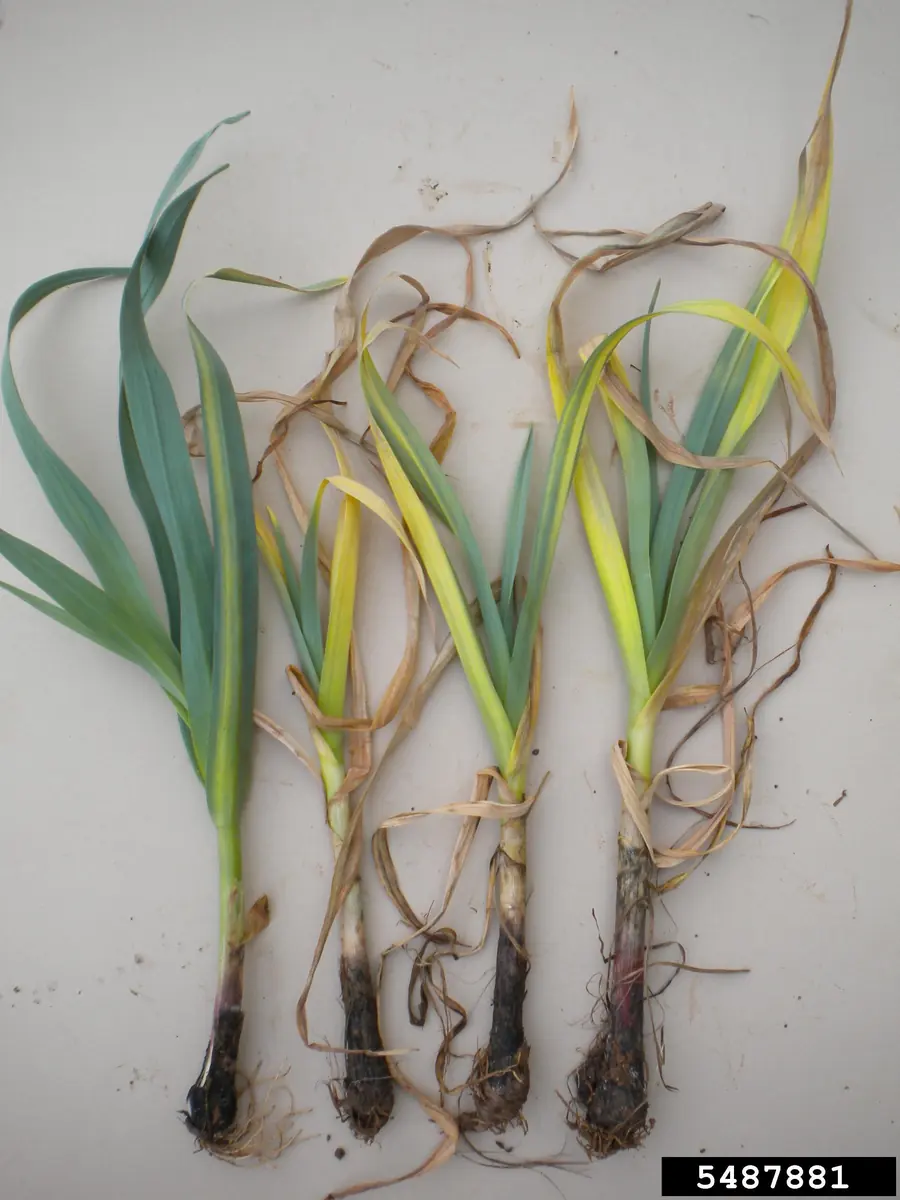
- The first sign is the outer leaves yellowing, wilting and dying back from the tips, usually on a few plants in a patch rather than across the whole bed.
- Affected plants come out of the ground very easily because the roots have rotted away.
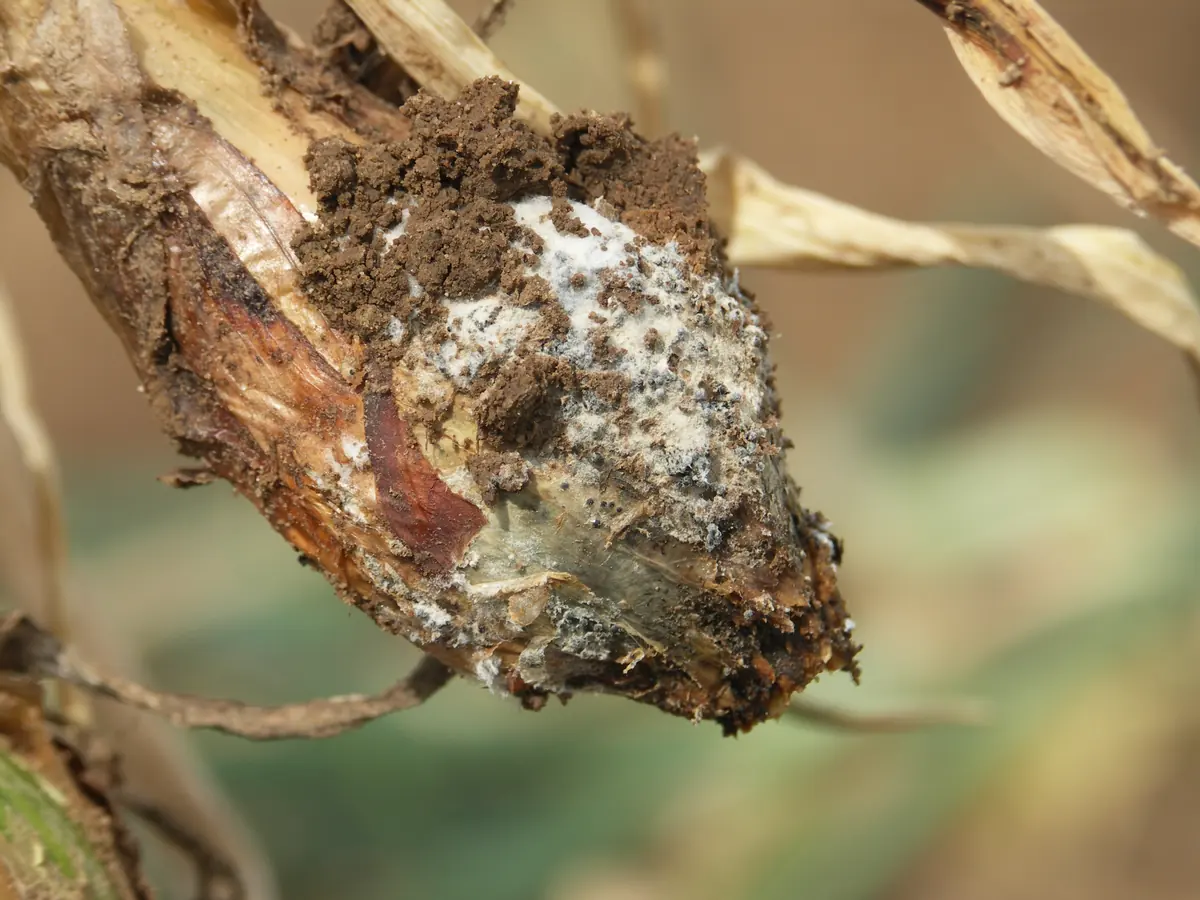
- The base of the bulb and the roots are covered in fluffy white mould, which later becomes a matted white layer.
- Tiny round black bodies, about the size of a poppy seed, form in the white mould and on the bulb base; these are the sclerotia that survive in the soil.
- The bulb base turns soft and watery, and garlic cloves rot from the bottom up.
- Patches of dead plants spread along the row in later seasons as sclerotia are moved in the soil.
_-_Elizabeth_Bush.jpg)
What it is often confused with
Fusarium wilt
Fusarium basal rot also rots the base of onions and garlic, but the mould is pinkish or pale and there are no black seed-like sclerotia. It is worse in warm soil, while white rot prefers cool soil.
Downy mildew
Downy mildew makes pale, oval patches with purple-grey fuzz on the leaves, while the roots and bulb base stay sound. White rot starts below ground.
Thrips
Onion thrips make leaves silvery and flecked, and tops may brown in dry weather, but plants stay firmly rooted and there is no white mould on the bulb.
When and where it is worst
White rot has been known in the Pukekohe onion district since at least 1960, causes losses in commercial onion and garlic crops in epidemic seasons, and turns up in home gardens throughout the country, usually brought in on infected garlic or onion sets or in soil. Once established, it is very hard to get rid of.
The sclerotia lie dormant in soil until onion or garlic roots grow nearby, then germinate and infect. The fungus is most active in cool, moist soil around 10 to 20 °C, which in New Zealand means late winter and spring for most crops. It moves with soil on tools, boots and machinery, in water run-off and on infected planting material, not on the wind.
Plants it affects
These plants in our library list it as a problem to watch for.
How to prevent it
- Buy certified or well-sourced garlic and onion sets, and never plant cloves from a crop that showed any rotting at the base.
- Check the base of every clove or set before planting and discard any with mould or black specks.
- Rotate onion family crops widely, and if white rot has appeared in a bed, do not grow onions, garlic, leeks, shallots or chives there again.
- Clean soil off tools, boots and wheelbarrows before moving from an infested bed to clean ground.
- Do not accept soil, compost or plants from gardens where white rot is known.
- Grow onion family crops in containers or raised beds with fresh mix if your garden soil is already infested.
Organic control, step by step
- Carefully dig out affected plants with the surrounding soil as soon as you see them, bag them and put them in the rubbish, never in the compost.
- Mark the infested patch so you remember not to plant onion family crops there.
- For small beds, solarising moist soil under clear plastic for six to eight weeks in the hottest part of summer can reduce sclerotia in the top layer.
- Grow onions, garlic and leeks in a fresh, separate bed or in large pots of new potting mix.
Conventional control
- No fungicide is registered for white rot in New Zealand home gardens, and treatments used commercially are not available to home gardeners.
- Control in a home garden relies on clean planting material, strict hygiene and keeping onion family crops out of infested soil.
- Always read the label of any product you use, check that your crop is listed, and keep to the withholding period.
Frequently asked questions
How long does white rot stay in the soil?
The sclerotia can survive for 20 years or more without an onion family host, and even a very small number can infect a new crop. Treat an infested bed as unsuitable for onions and garlic for the long term.
Can I eat garlic or onions with white rot?
Bulbs with only slight rot can be eaten straight away once the affected parts are cut off, but they will not store. Never replant cloves from an affected crop.
Does white rot affect other vegetables?
No. It only attacks members of the onion family, so you can still grow other vegetables in an infested bed. Be careful not to move soil from that bed to other parts of the garden.
Where did white rot in my garden come from?
Most often it arrives on infected garlic cloves or onion sets, or in soil on plants and tools. That is why buying clean planting stock matters so much.
Related problems
Sources: Manaaki Whenua, Biota of New Zealand: Stromatinia cepivora; McLean and Stewart, Infection sites of Sclerotium cepivorum on onion roots, New Zealand Plant Protection 53 (2000); Bayer Crop Science New Zealand, White rot. Identification and control follow these sources. Always read the product label before use.