How to Get Rid of Fungus Gnats
Updated June 2026
Fungus gnats are the small dark flies that drift up from a pot when you water it. The adults are harmless. The damage comes from the larvae living in the top few centimetres of damp mix. Get the mix drier, trap the adults and treat the larvae, and a heavy infestation clears in a few weeks.
What fungus gnats are
Fungus gnats are small dark flies, roughly 2 to 4mm long, that breed in moist potting mix. The adults you see flying around are a nuisance but they do not bite and they do not eat your plants. The trouble lies below the surface. The larvae are tiny pale grubs with a dark head, living in the top few centimetres of mix, where they feed on fungi, decaying organic matter and fine plant roots. In small numbers they barely register. In large numbers they can chew enough fine roots to stunt or kill seedlings and cuttings.
Why they appear
Everything fungus gnats need is moisture and organic matter near the surface. They turn up when:
- The mix is kept too wet from overwatering.
- Pots drain poorly or sit in saucers full of water.
- The mix is very rich in undecomposed organic matter.
- New plants arrive already carrying eggs or larvae in their mix.
- Bags of potting mix have been stored open or damp.
Seedlings and cuttings are the most at risk, because they live in constantly moist trays and have only a few fine roots to lose.
How to confirm it is fungus gnats
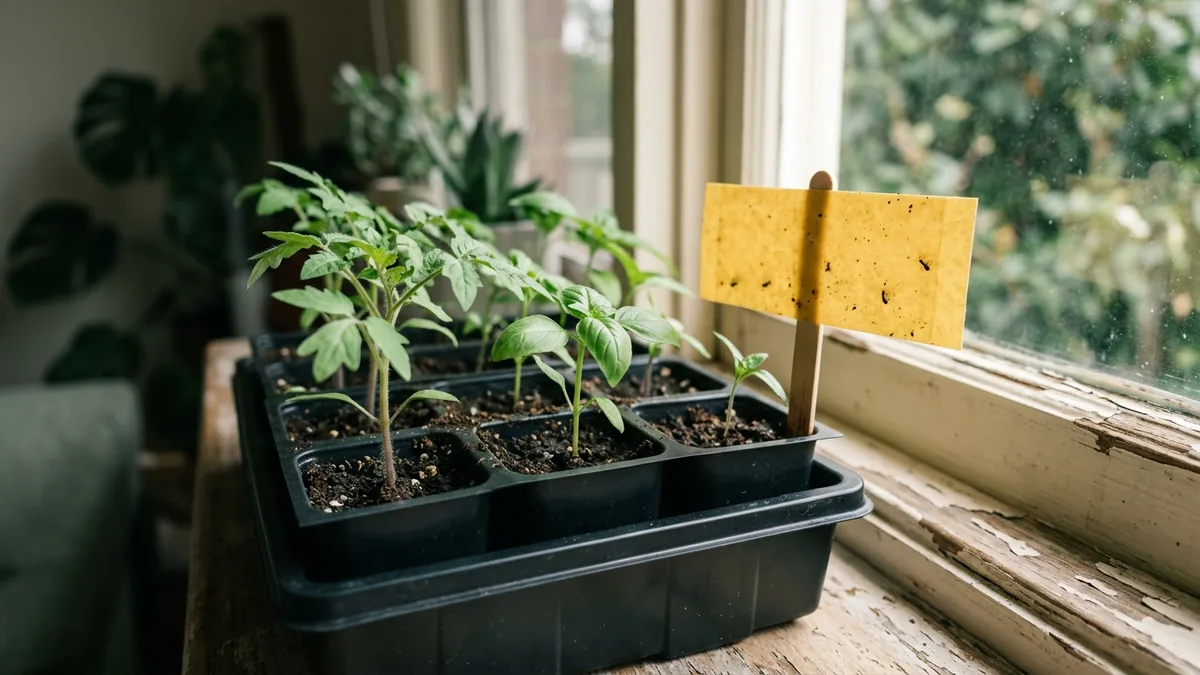
- Yellow sticky traps at soil level. Lay or peg a yellow sticky trap flat over the mix. Adults landing on it within a day or two confirm them and start reducing numbers.
- The potato chunk test. Press a 1cm thick slice of raw potato onto the surface of the mix. After a few days lift it and check the underside for the small pale, dark-headed larvae feeding there.
- Watch the adults lift off. Gently disturb the surface or water the pot. Fungus gnats rise in a loose cloud and tend to walk and run across the mix rather than zip about like fruit flies.
A control plan that works
You are trying to break the life cycle, so combine a few methods and keep them going for a full cycle.
- Let the top 2 to 3cm of mix dry out. This single change does the most. Eggs and young larvae cannot survive in dry surface mix.
- Bottom-water where you can. Water from a tray so the surface stays drier while the roots still drink.
- Yellow sticky traps for the adults. Keep them in place to catch egg-laying females and to track whether numbers are dropping.
- BTi drench for the larvae. A drench of Bacillus thuringiensis subspecies israelensis, sold as mosquito bits or dunks, targets the larvae in the mix and leaves plants and people alone. Repeat through a 3 to 4 week cycle so each new hatch is caught.
- Cap the surface with sand or grit. A 1cm layer of dry sand or fine grit makes it hard for adults to lay and for larvae to reach the surface.
- Diluted hydrogen peroxide as a last resort. A drench of 3% hydrogen peroxide diluted 1 part to 4 parts water can knock back larvae in the mix. Use it sparingly and only when the gentler steps have not been enough.
Prevention
- Water less often and let the surface dry between drinks.
- Use pots with drainage holes and tip out saucers after watering.
- Quarantine new plants for a couple of weeks before they join the rest.
- Store potting mix sealed and dry, not in an open bag in a damp shed.
- Use a fast-draining seed mix for trays so seedlings never sit in sodden mix.
Remember that seedlings are the most vulnerable, so a drier surface and a sand cap on trays pays off most there.
Diagnose it in the app
The Planting Season app has built-in Pest and Plant Doctor tools that walk you through what is bugging your plant and the organic fix.
Open the app →FAQ
What are the tiny flies around my houseplants?
They are almost certainly fungus gnats, small dark flies 2 to 4mm long that live in damp potting mix. The adults are harmless and just annoying. The larvae in the top few centimetres are the problem, feeding on fungi, decaying matter and fine roots.
Why do I keep getting fungus gnats?
They thrive in mix that stays damp. The usual causes are overwatering, poor drainage, very rich organic mixes, saucers left full of water, and new plants brought in already carrying eggs. Until the top of the mix is allowed to dry between waterings they will keep coming back.
Do fungus gnats harm plants?
Adults do not harm plants. The larvae can damage fine roots, which matters most for seedlings and cuttings. Established plants usually shrug them off, but heavy larvae numbers can stunt young plants.
How long does it take to get rid of fungus gnats?
Plan for a 3 to 4 week cycle. You need to break the life cycle, so let the surface dry out, trap the adults and treat the larvae with BTi, then repeat through that period so newly hatched generations are caught too.
Does cinnamon work on fungus gnats?
Cinnamon sprinkled on the mix has a mild anti-fungal effect that can slow the fungi the larvae feed on. It is not a cure on its own. Treat it as a small helper alongside drying the mix, sticky traps and BTi.
Related guides
See also: our NZ pest and disease guide and how to grow tomato.