
Spinach vs Silverbeet: Is Silverbeet Spinach?
Updated November 2026
How true spinach, silverbeet, perpetual spinach and rainbow chard differ, which varieties New Zealand seed companies sell and what to grow in summer.
Ask for spinach at a Kiwi fruit and veg shop and the bunch you are handed is usually silverbeet. The real thing, English spinach, is a separate plant with small tender leaves that goes to seed at the first hint of warmth. Perpetual spinach, a leaf beet, falls somewhere in the middle. Below you will find how the three differ, which varieties the New Zealand seed companies stock and what to grow when summer shuts spinach down.
Is silverbeet spinach? No. Silverbeet is a leafy beet (Beta vulgaris), the same species as chard, beetroot and sugar beet. Spinach is Spinacia oleracea. Both belong to one plant family, and both end up in the same pies, quiches and pots of greens, so the labels have blurred over the years.
How the names tangled in New Zealand kitchens
Generations of home cooks here have said spinach when they meant any green leaf that is boiled or wilted. Big crinkled leaves on fat white ribs are silverbeet, but the family recipe card still says spinach. Seed companies make it worse by selling perpetual spinach, a beet, as a spinach. Then there are the summer plants with spinach in their names that are not related to either, which we cover near the end.
A quick way to keep them straight:
- Spinach proper (Spinacia oleracea): short, soft, quick. It wants cool soil and short days and is gone within a couple of months.
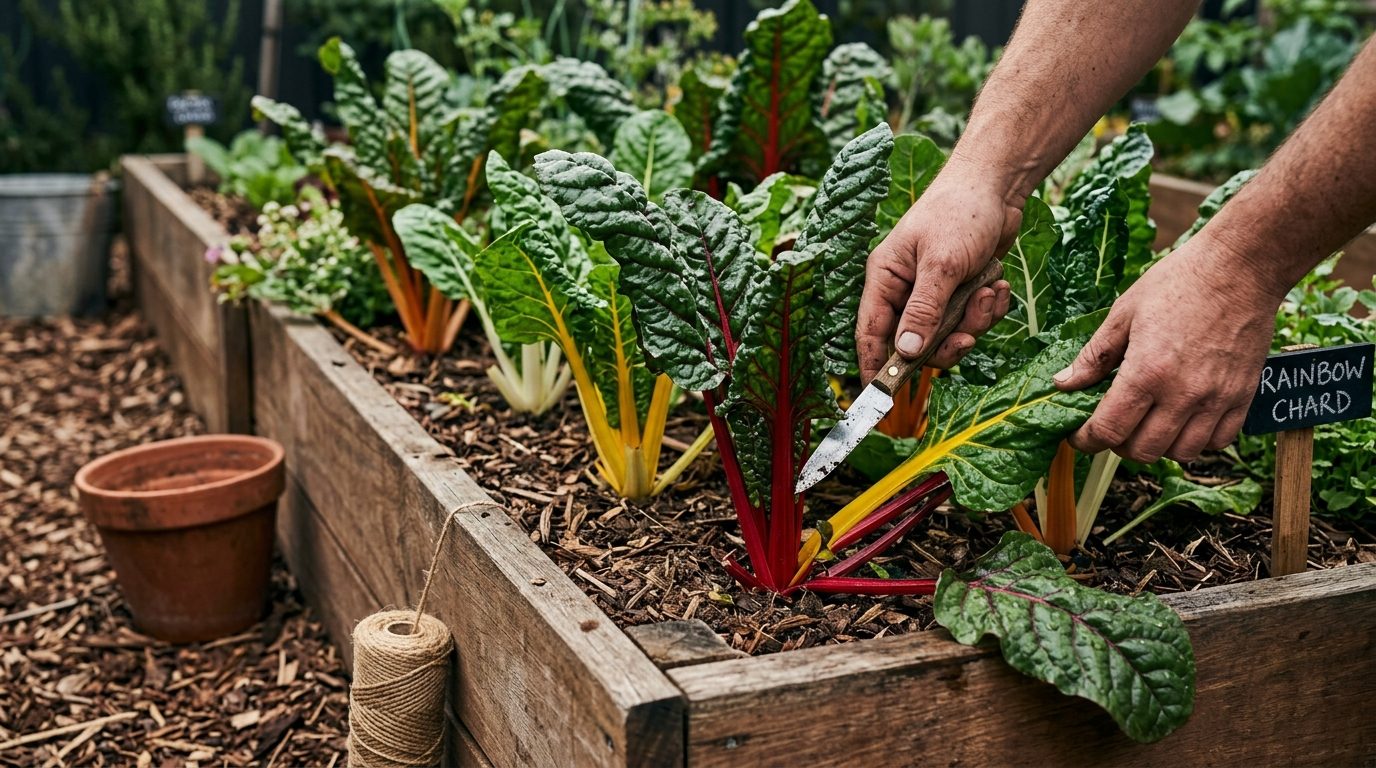
- Silverbeet (Beta vulgaris): the big, tough, generous one, with white, yellow, pink or red ribs. Rainbow chard is simply silverbeet sold by rib colour.
- Perpetual spinach, also called spinach beet or erbette: slimmer ribs and gentler leaves than silverbeet, but still a beet underneath.
- Heat-loving substitutes: kokihi and several climbers and groundcovers, described further down.
Side by side: spinach, silverbeet and perpetual spinach
| True spinach | Silverbeet | Perpetual spinach | |
|---|---|---|---|
| Species | Spinacia oleracea | Beta vulgaris | Beta vulgaris, leaf beet |
| Look | Small to medium leaves on thin stalks | Large leaves, wide glossy ribs in white or colours | Medium soft leaves, narrow pale ribs |
| Weather it likes | Cool days and cool nights | Copes with cold and with warmth | Mild to cool, more heat tolerant than spinach |
| Going to seed | Quickly, once days lengthen and temperatures climb | Slowly during its first year | Slowly, which is how it earned its name |
| Picking period | Weeks, then the plant is spent | Months of cut-and-come-again leaves | Months of cut-and-come-again leaves |
| First pick | Roughly 55 days from sowing | Roughly 60 days from sowing | Close to silverbeet |
| When to sow | Use the spinach table below | Use the silverbeet table below | Follow the silverbeet table |
| Frost | Hardy | Hardy | Hardy |
Days to harvest come from the plant data we use across the site. They are a rough guide, because a cold southern spring stretches them and a warm Northland autumn shortens them.
Sowing windows by region
Spinach
Cool soil is what spinach germination wants, so the windows below sit in the cooler seasons. Sow where the plants will stay, since transplanting sets them back, and put in a small row every few weeks to keep a steady supply.
| Region | Sowing months |
|---|---|
| Northland | Mar to Sep |
| Auckland | Mar to Sep |
| Waikato & Bay of Plenty | Mar to Sep |
| Central North Island | Mar to Sep |
| Wellington & Lower North Island | Mar to Sep |
| Nelson & Marlborough | Mar to Sep |
| Canterbury | Mar to Sep |
| Otago & Southland | Feb to Apr and Aug to Nov |
| Central Otago | Feb to Mar and Aug to Oct |
Silverbeet and perpetual spinach
Silverbeet gives you much more leeway. Most regions have two long windows, and perpetual spinach can go in during the same weeks.
| Region | Sowing months |
|---|---|
| Northland | Aug to Apr |
| Auckland | Aug to Apr |
| Waikato & Bay of Plenty | Aug to Apr |
| Central North Island | Aug to Apr |
| Wellington & Lower North Island | Aug to Apr |
| Nelson & Marlborough | Aug to Apr |
| Canterbury | Aug to Apr |
| Otago & Southland | Sep to Mar |
| Central Otago | Sep to Mar |
Full growing steps are in the spinach guide and the silverbeet guide, and the spinach and silverbeet plant profiles show dates for your own district.
Silverbeet varieties sold in New Zealand
Silverbeet seed is easy to get from any garden centre. The varieties below are those we found on the Kings Seeds and Egmont Seeds pages listed under sources.
| Variety | Seller description | Where we read it |
|---|---|---|
| Fordhook Giant (Egmont: Fordhook Dark Green) | Deep green, blistered (savoy) leaves on white ribs. A long-time favourite. | Kings Seeds, Egmont Seeds |
| Rainbow Lights | A mix of rib colours, favoured for looks as much as for cooking. | Kings Seeds |
| Organic Ruby Red | Red ribs, from the Kings organic range. | Kings Seeds |
| Organic Bright Yellow | Yellow ribs, from the Kings organic range. | Kings Seeds |
Yates NZ and Kiwiseeds also stock silverbeet. We did not open their product pages while writing this, so look at the current packets if you want a particular colour.
True spinach varieties sold in New Zealand
Match the variety to the season. Smooth thin-leaved types suit the coldest months, while bolt-resistant types are the safer pick when you are sowing late into spring or early autumn.
| Variety | Seller description | Where we read it |
|---|---|---|
| Organic Bloomsdale | A crinkled heirloom from the Kings organic range. | Kings Seeds |
| Organic Winter Giant | Big-leaved and organic, aimed at the cool end of the year. | Kings Seeds |
| Winter Upright F1, Summer Solstice F1, Santana F1 | Hybrids in the Kings range, the first two named for the season they suit. | Kings Seeds |
| Andromeda | Dutch hybrid with strong resistance to downy mildew, quick to mature, sown in spring, autumn or winter. The seed comes treated. | Egmont Seeds |
| Baby Lakeside F1 | Sold for baby leaves in pots, planters and on windowsills. | Egmont Seeds |
| Hybrid Number 7 seed tape | Semi-savoy spinach on tape, for spring and autumn sowing. | Egmont Seeds |
Egmont also lists Oriental Imperial Green, an Asian spinach it describes as fast, upright and resistant to both bolting and mildew.
Perpetual spinach and the other leaf beets
If you want the softer spinach texture but are tired of resowing every month, perpetual spinach is the plant for you. Kings Seeds lists Beet Perpetual Spinach and Organic Beet Erbette, which it describes as having thin ribs and pale green leaves. Egmont Seeds sells Spinach Perpetual, a dark green, fast growing type with good holding ability, also labelled Spinach Beet. Pick the outer leaves and the centre keeps pushing out new ones.
Sow it in the silverbeet weeks. As a beet it flowers in its second spring, and that is the moment to pull it out and start fresh.
Rainbow chard in the vegetable patch
Rainbow chard is silverbeet chosen for rib colour, and it behaves exactly like the white-ribbed kind in the ground and the pot. Ribs hold their colour when stir-fried briefly and lose it in a long simmer. Space plants 30 cm apart and sow in the silverbeet windows. A mixed packet always produces some stronger seedlings than others, so thin out the weaklings early.
Heat-loving plants that stand in for spinach
True spinach gives up once the weather warms, and that is when these take over. None is a relative of spinach.
- New Zealand spinach (kokihi): our own coastal native, which the plant data lists as New Zealand Spinach (Kokihi). It sprawls, has fleshy leaves and shrugs off heat, salt and thin soil. Cook it, because the raw leaves are strongly flavoured. Egmont Seeds describes the flavour as almost the opposite of the sweet perpetual spinach.
- Malabar spinach: a twining vine with thick mild leaves, best on a trellis in a warm sheltered spot.
- Brazilian spinach: a spreading perennial for the warmest districts.
- Kang kong (water spinach): quick, hollow-stemmed and fond of wet, warm conditions.
The vines and groundcovers do best in the upper North Island, so check the Auckland hub for timing. Further south, in Canterbury and Otago and Southland, silverbeet is the dependable green once spinach has finished.
Picking one
- A single sowing that feeds the household for most of the year: silverbeet or perpetual spinach.
- Tender baby leaves for the cooler months: true spinach, sown a little at a time.
- Colour among the vegetables: rainbow chard.
- A cooked green for midsummer: kokihi or one of the climbers above.
Kitchen note
All the beets and spinach contain oxalates, which leave a dry, squeaky feel on the teeth when you eat raw leaves in quantity. Cooking softens that. Silverbeet ribs need longer than the leaves, so strip them off and get them into the pan first.
Hardiness is seldom an issue here, since all three tolerate frost. Our frost dates page lists the risk for your area, and the guide on how long vegetables take to grow helps when you plan staggered sowings.
Questions
Is silverbeet just another name for spinach?
No, they are different species. Silverbeet is a beet grown for its leaves and spinach is Spinacia oleracea, although many New Zealand shops label silverbeet as spinach.
Are chard and silverbeet the same plant?
Yes. Chard is the overseas name and silverbeet is what we call it here. Rainbow lights and rainbow chard are silverbeet picked for coloured ribs.
What counts as English spinach?
It is the true spinach, with small tender leaves and thin stalks. It grows in cool weather and bolts when days warm and lengthen.
What is perpetual spinach?
A leaf beet with narrow ribs and soft leaves that you pick over many months. Seed companies also call it spinach beet or erbette.
Is kokihi a real spinach?
No. New Zealand spinach, or kokihi, is an unrelated native that tolerates heat. Cook the leaves, and see our kokihi guide for how to grow it.
Can silverbeet replace spinach in a recipe?
In cooked dishes, yes. The leaves are larger and tougher, so allow extra cooking time and treat the ribs separately.
Sources
Plant profile
The silverbeet profile has sowing times for your region, companion plants and common pests.