Leafroller caterpillars: identify, prevent, control
Updated October 2026
Active all year in mild districts, with several overlapping generations from spring to autumn and the most fruit damage from December to April, throughout New Zealand.
Leafroller is the name for the small caterpillars of several tortricid moths that roll and web leaves together and graze the skin of fruit. In New Zealand gardens the main ones are the light brown apple moth, which came from Australia, and the native brown-headed and green-headed leafrollers, with the black-lyre leafroller also common on kiwifruit. They rarely kill plants, but their feeding scars fruit, lets rots in and spoils the look of apples, pears, stone fruit, kiwifruit and avocados.
Epiphyas postvittana, Ctenopseustis and Planotortrix species
.jpg)
How to identify it
- The first sign is usually a few leaves or a shoot tip webbed together with fine silk, or a leaf stuck flat onto a fruit.
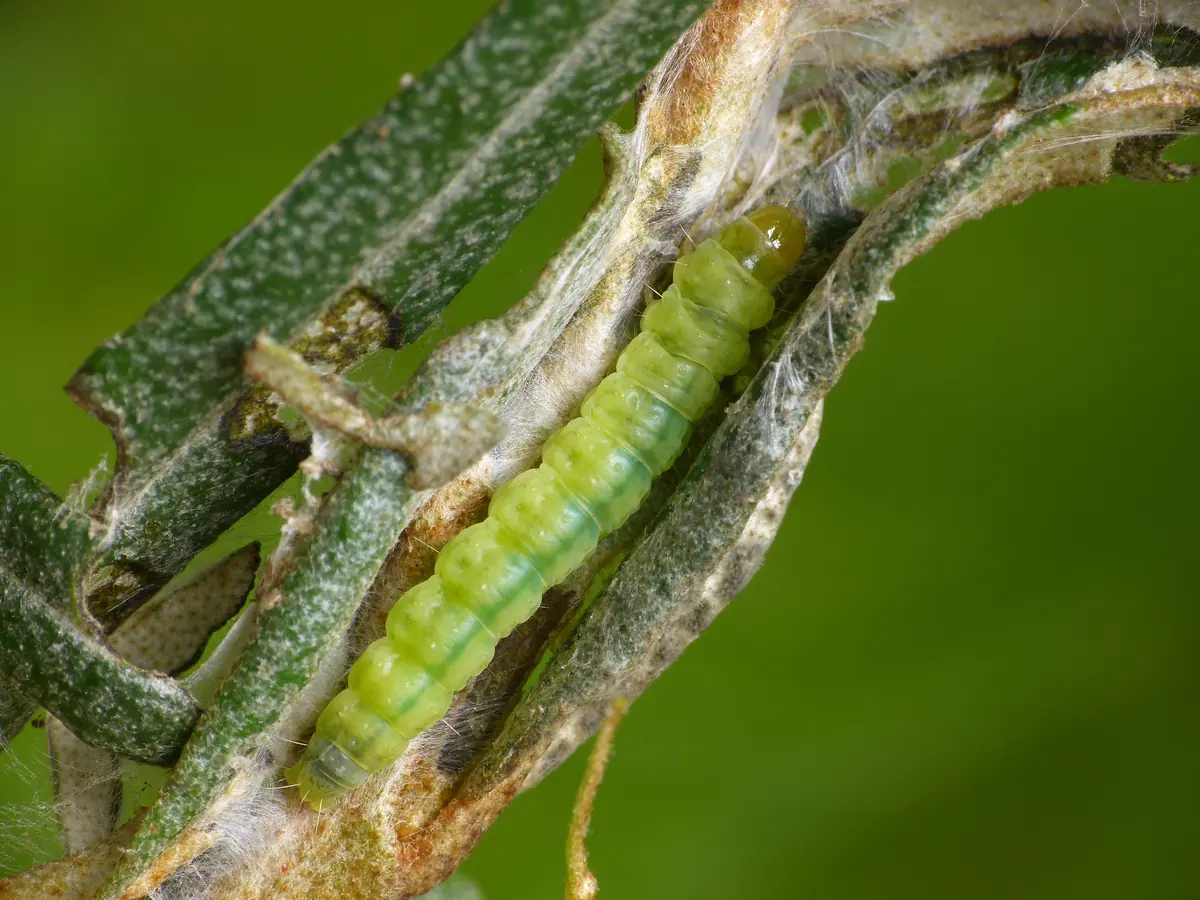
- Open the webbing and you will find a slender, pale to bright green caterpillar, from a few millimetres up to about 20 mm long.
- Leafroller caterpillars wriggle backwards very quickly when touched and often drop on a silk thread.
- Light brown apple moth caterpillars have a pale green to brown head, brown-headed leafrollers have a darker red-brown head, and green-headed leafrollers have a green head.
- On fruit, look for shallow, irregular grazed patches on the skin, often where a leaf or another fruit touches it, and sometimes small holes into the flesh.
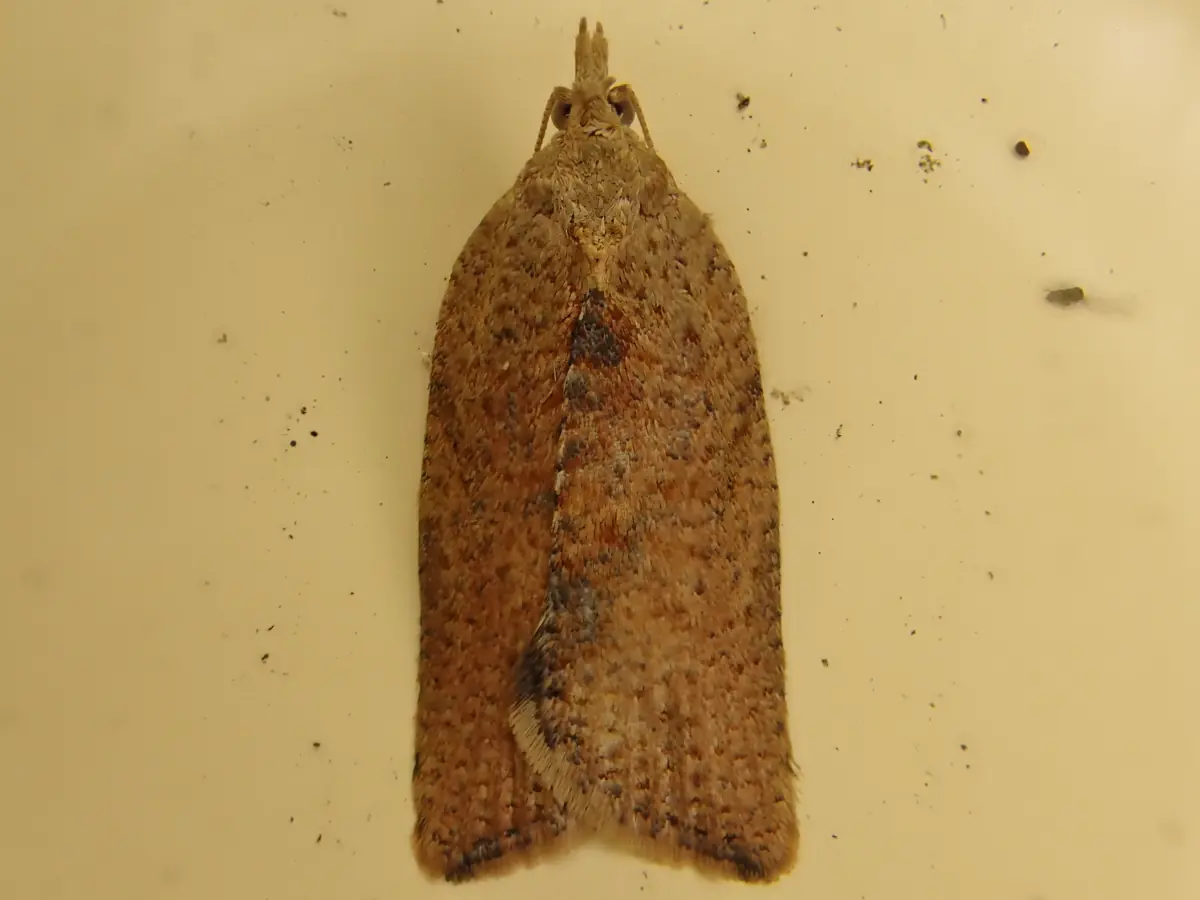
- The adult moths are small, bell-shaped and brown or fawn, about 10 to 15 mm long, and rest by day on leaves.
What it is often confused with
Codling moth
Codling moth caterpillars tunnel straight into the core of apples and pears and push out brown frass. Leafrollers mostly graze the skin and web leaves to the fruit.
Guava moth
Guava moth larvae bore deep into fruit such as feijoas, guavas and citrus in the north. Leafrollers feed on the surface and in webbed leaves rather than inside the fruit.
Pear and cherry slug
Pear slug larvae are black and slimy and lie exposed on top of the leaf. Leafrollers are green and hide inside rolled or webbed leaves.
When and where it is worst
Leafrollers occur throughout New Zealand on a very wide range of plants, including apple, pear, plum, apricot, kiwifruit, avocado, citrus, grapes, berries, vegetables, ornamentals and weeds such as broom and gorse. Light brown apple moth is the most common in most gardens, while the native brown-headed and green-headed leafrollers are also widespread, especially near native bush.
In warm districts such as Northland, Auckland and the Bay of Plenty, leafrollers can complete four or more overlapping generations a year, with moths flying from September to May. In cooler areas such as Otago and Southland there are fewer generations. Small caterpillars overwinter on host plants and weeds, then numbers build through spring, so damage to fruit is usually worst from December through to harvest.
Plants it attacks
These plants in our library list it as a problem to watch for.
How to prevent it
- Check shoot tips, leaf clusters and fruit every week or two from spring, especially where fruit touches leaves or other fruit.
- Thin fruit so that apples, pears and plums do not touch, removing the sheltered spots where caterpillars feed.
- Control broadleaf weeds, broom and gorse near fruit trees, as they host leafrollers over winter.
- Encourage parasitic wasps, lacewings, spiders and birds by growing flowering plants and avoiding broad-spectrum sprays.
- Use fine insect mesh or netting over small trees and vegetable crops where practical.
- Remove webbed shoots and fallen fruit, which can hide caterpillars and pupae.
Organic control, step by step
- Squash caterpillars inside webbed leaves by pinching the roll, or pick off and destroy the webbed tips.
- Spray Bacillus thuringiensis (Bt) when caterpillars are small and actively feeding, as it only affects caterpillars that eat sprayed leaves.
- Repeat Bt every 7 to 10 days while new caterpillars are appearing, and spray in the evening because sunlight breaks it down.
- Where you can buy a spinosad-based product registered for home use, it is a stronger organic option and also gives good control.
- Leave parasitised caterpillars, which look sluggish or have small cocoons beside them, so the wasps can build up in your garden.
Conventional control
- Spinetoram, a spinosad relative sold in New Zealand for home use, controls leafrollers on fruit trees and is applied from petal fall at the interval on the label.
- Bacillus thuringiensis is also registered for home use and is the first choice where you want to protect bees and natural enemies.
- Time sprays for when you see young caterpillars or fresh webbing, as large caterpillars hidden inside rolled leaves are harder to reach.
- Read the label before you buy or spray, check that the fruit or vegetable you are treating is listed, and keep to the withholding period before picking.
Frequently asked questions
What is light brown apple moth?
Light brown apple moth is a small brown moth from Australia that has been in New Zealand for over a century. It is the most common leafroller in home gardens and attacks hundreds of different plants, not just apples.
Are native leafrollers a problem too?
Yes. The native brown-headed and green-headed leafrollers moved onto orchard and garden plants and cause the same webbing and fruit scarring. They are controlled in the same way as light brown apple moth.
Why are my kiwifruit or avocados scarred on the skin?
Leafrollers often feed where a leaf touches the fruit or between touching fruit, leaving shallow grazed scars. The fruit is still fine to eat, though scars can let rots in.
Is Bt safe for bees and birds?
Bt only affects caterpillars that eat treated leaves, so it is very low risk to bees, birds, pets and people. Use it in the evening and repeat after rain.
Related problems
Sources: Yates NZ, Leafroller moths; USDA and partners, TortAI fact sheet: Ctenopseustis obliquana (brown-headed leafroller); New Zealand Avocado, Leafroller (industry pest resources). Identification and control follow these sources. Always read the product label before use.