Pear and cherry slug: identify, prevent, control
Updated October 2026
Two generations a year, with a small first wave in late spring and early summer and a much larger second wave from late January to April, and very common in Canterbury and Otago.
Pear slug, also called cherry slug, is the larva of a small black sawfly, not a true slug. The slimy larvae feed on the upper surface of leaves of pears, cherries, plums, quinces, apples and hawthorn, leaving them papery and brown. Heavy late-summer attacks can strip young trees, weaken them and reduce next year's crop.
Caliroa cerasi
How to identify it
- You usually notice brown, papery patches on the upper side of pear, cherry or plum leaves first, as if the green surface has been scraped off.
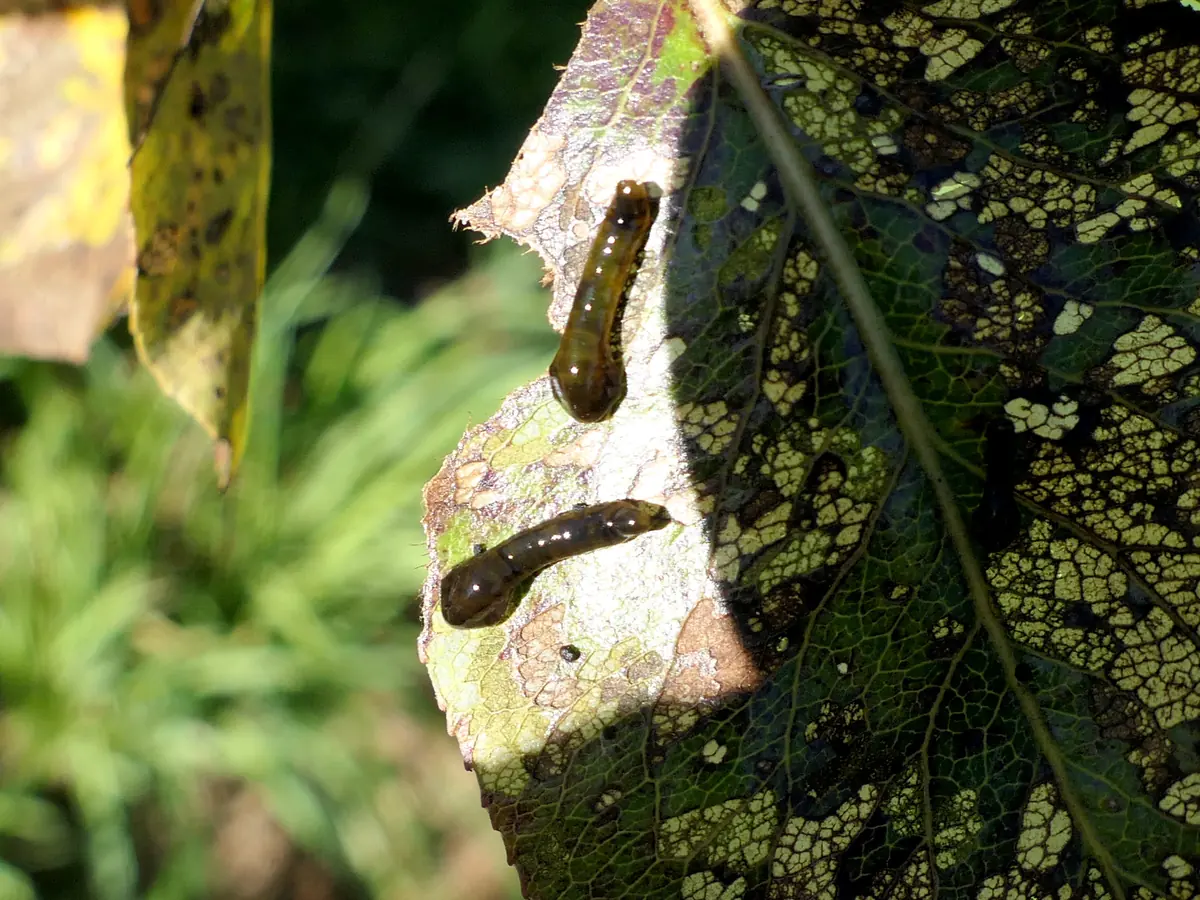
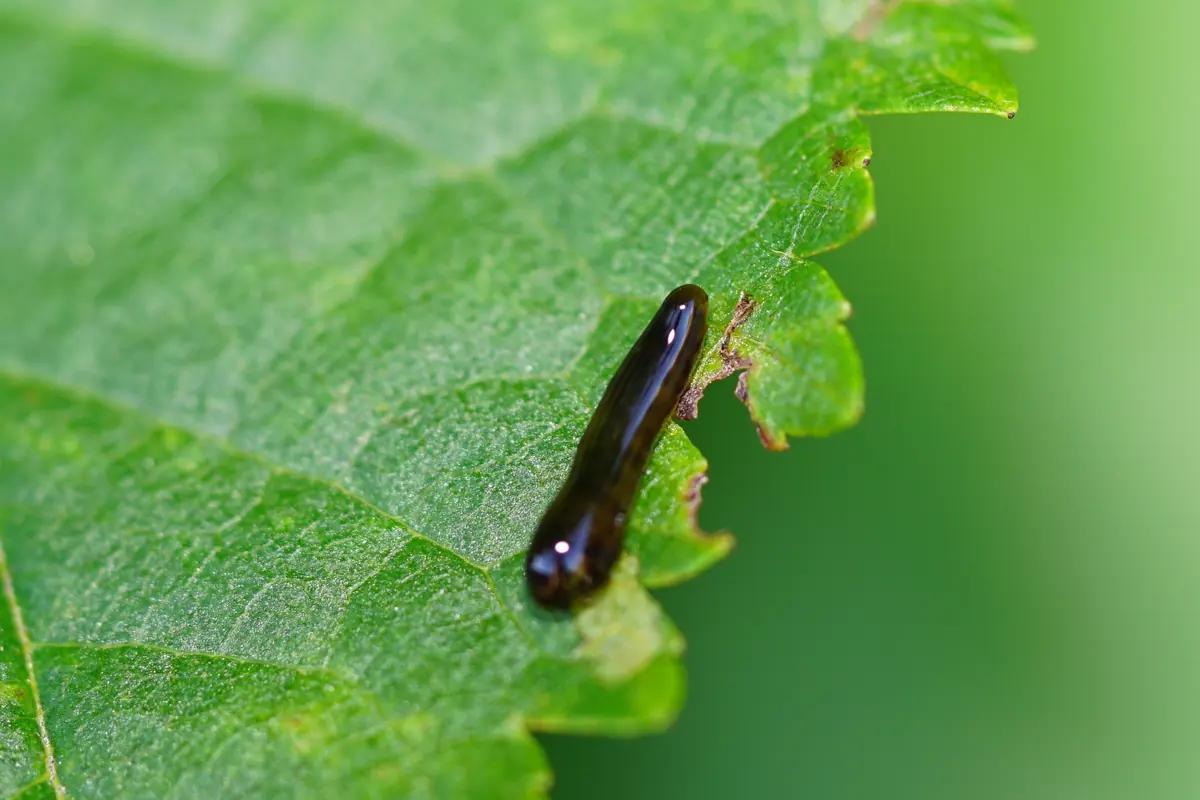
- Look closely and you will find small, glossy, olive-green to black larvae up to about 10 mm long, shaped like a tadpole or tiny slug, lying on top of the leaves.
- The larvae are covered in a dark slime that makes them look wet and shiny.
- Grazed leaves show see-through windows between the veins, and badly attacked trees look scorched and lacy from a distance.
- Just before they leave the tree, fully grown larvae shed the slime and turn pale yellow-orange, then drop to the soil to pupate.
- The adult is a small, shiny black sawfly about 5 mm long that is easy to overlook.
What it is often confused with
Garden slugs and snails
True slugs and snails chew holes right through leaves at night and leave silvery slime trails. Pear and cherry slugs stay on top of the leaf in daylight and only scrape off the upper surface.
Leafroller caterpillars
Leafrollers web leaves together and wriggle backwards when disturbed. Pear and cherry slugs never web leaves and sit exposed on the leaf surface.
When and where it is worst
Pear and cherry slug occurs throughout New Zealand and is a common pest of home pear and cherry trees, as well as plums, quinces, apples and hawthorn hedges. It is very often reported from Canterbury and Otago gardens, and trees near hawthorn hedges tend to be hit hard.
The insect overwinters as a pupa in the soil under the tree. Adults emerge in spring and lay eggs in the leaves, and the first larvae feed from about November to December. They pupate in the soil and a second, much larger generation appears from late January to April, causing most of the damage in late summer and early autumn.
Plants it attacks
These plants in our library list it as a problem to watch for.
How to prevent it
- Check the upper side of leaves on pears, cherries and plums every week or two from November, so you catch the first generation while numbers are small.
- Deal with the first generation in early summer, because it stops the much larger second generation in late summer.
- Lightly fork or hoe the soil under affected trees in winter and early spring to expose overwintering pupae to birds and weather.
- Encourage birds, hoverflies, lacewings, spiders and parasitic wasps by growing flowering plants nearby and avoiding broad-spectrum sprays.
- Keep young trees well watered in summer so they can cope with some leaf loss.
Organic control, step by step
- On small trees, wipe or squash the larvae, or hose them off with a strong jet of water, which they rarely survive.
- Dust the leaves lightly with fine dry wood ash or dry soil, which sticks to the slime and dries the larvae out, and repeat after rain.
- A spray of pyrethrum (pyrethrins) or insecticidal soap registered for fruit trees kills the larvae on contact.
- Spray in the evening and cover the upper sides of the leaves where the larvae sit, avoiding open flowers and times when bees are foraging.
- Repeat in late January if the second generation appears.
Conventional control
- Spinetoram (a spinosad relative) is sold in New Zealand for home use against pear and cherry slug.
- Tau-fluvalinate and pyrethrins are also registered for home use on fruit trees and work well on the exposed larvae.
- Treat as soon as you see the first larvae in early summer and again for the second generation in late summer if needed.
- Read the label before you buy or spray, check that pears, cherries or the fruit you are treating are listed, and keep to the withholding period before picking.
Frequently asked questions
Are pear and cherry slugs real slugs?
No. They are the larvae of a small sawfly, a relative of wasps and bees. The slime makes them look like tiny slugs, which is how they got the name.
Will pear slug kill my tree?
Rarely, but heavy damage on young trees two or three years in a row can weaken them badly and reduce fruiting. Controlling the first generation in early summer usually keeps damage light.
Is it too late to treat in autumn?
By April the larvae have usually dropped to the soil. Instead, fork the soil under the tree in winter and watch closely for the first larvae the next November.
Can I eat fruit from trees with pear slug?
Yes. The larvae feed only on leaves, so the fruit is not affected, although a stripped tree may produce smaller fruit.
Related problems
Sources: Yates NZ, Pear and cherry slug; Royal New Zealand Institute of Horticulture, Plant Doctor: Slugs on plum tree; Pacific Northwest Insect Management Handbook, Cherry slug (pear sawfly). Identification and control follow these sources. Always read the product label before use.