Fire blight: identify, prevent, control
Updated October 2026
Infects through flowers in warm, humid or showery weather during blossom (September to November), with shoot blight and cankers showing through spring and summer, worst in Hawke's Bay, Waikato, Auckland and other warm districts.
Fire blight is a bacterial disease of pears, apples, quinces, loquats and ornamental relatives such as hawthorn, cotoneaster and pyracantha. It has been in New Zealand since about 1919 and outbreaks occur throughout the country. Infected blossoms, shoots and fruit turn brown to black as if scorched by fire, and on susceptible pears and young trees it can spread down into the main limbs and kill the tree.
Erwinia amylovora
_of_pear.png)
How to identify it
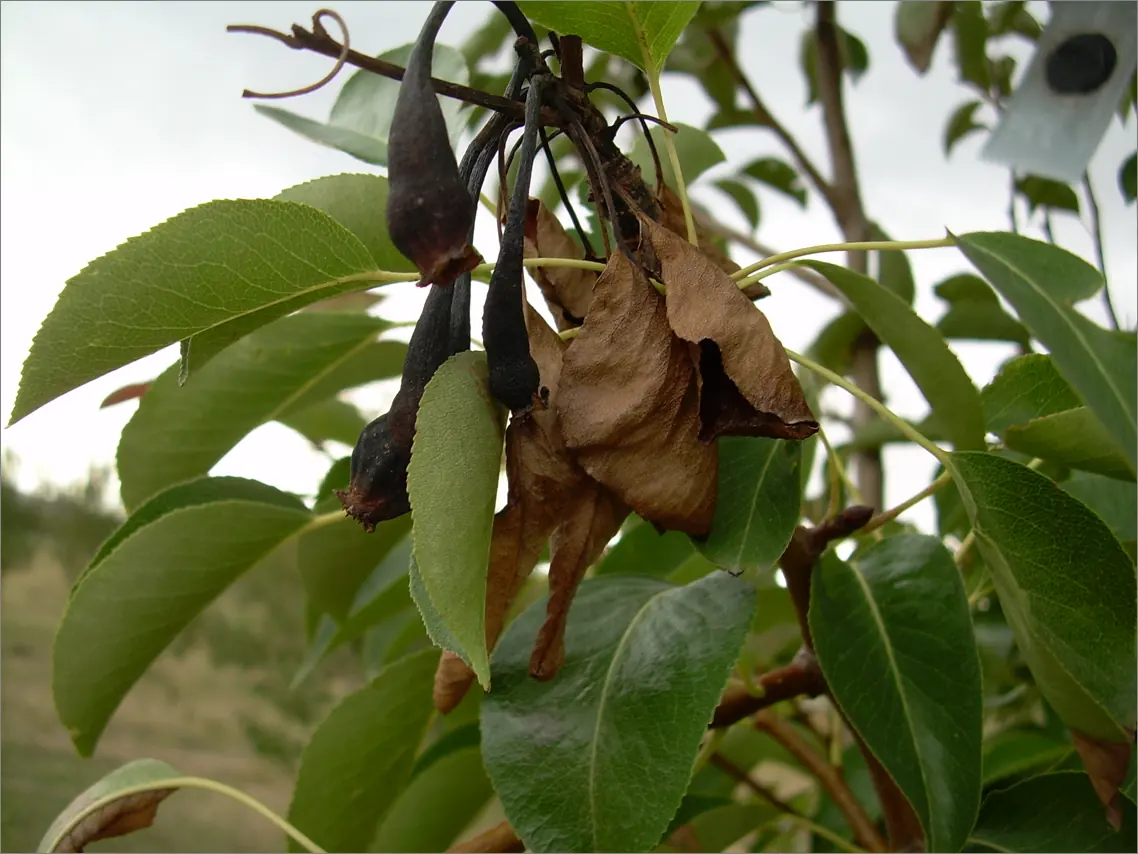
- In spring, blossom clusters look water-soaked, then wilt and turn brown to black, and they stay hanging on the spur.
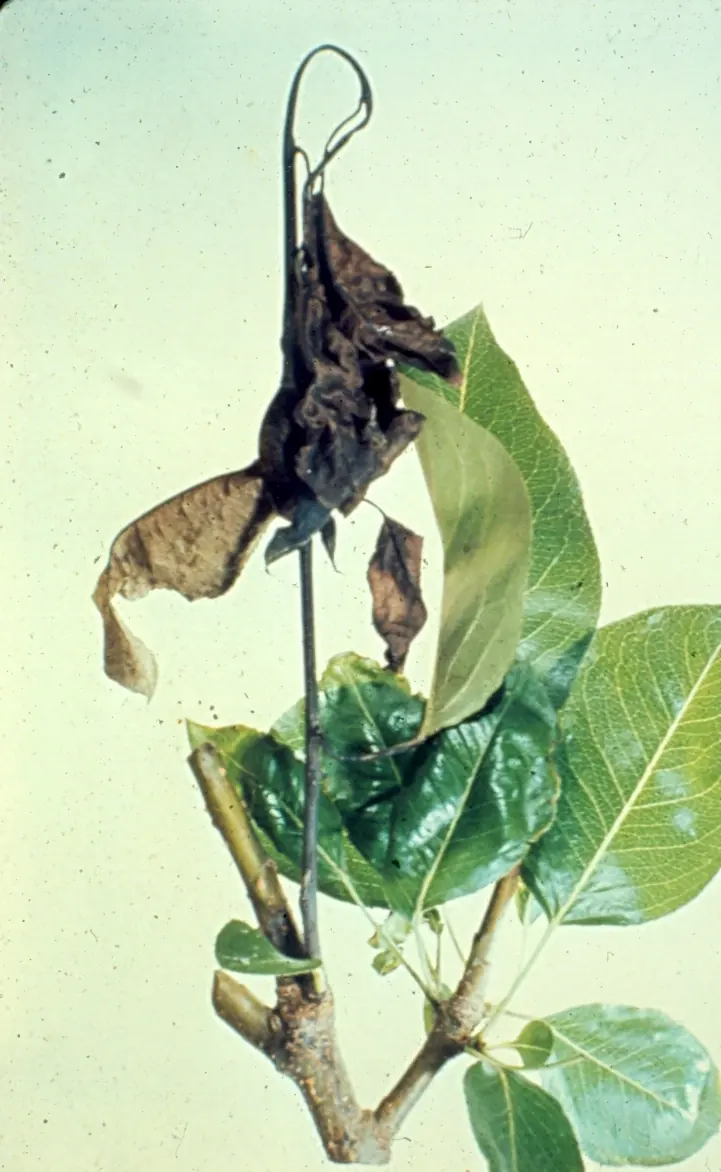
- Young shoots wilt from the tip and bend over into a characteristic shepherd's crook, with the leaves turning brown to black but not falling.
- Leaves on affected shoots blacken along the midrib and veins, and the whole shoot looks scorched.
- Small fruitlets shrivel, turn brown or black and hang on the tree as mummies.
- In warm, humid weather you may see sticky droplets of creamy or amber ooze on blossoms, shoots, fruit and bark.
- On branches and the trunk, slightly sunken, dark cankers form with a clear edge, and the inner bark under them is reddish brown and water-soaked.
_(12226126143).jpg)
What it is often confused with
Bacterial canker and blast
Blossom blast from Pseudomonas also browns pear blossoms in cold, wet springs, but it rarely moves down into shoots and makes no shepherd's crooks. Fire blight runs down the shoot and blackens the leaves along the veins.
Brown rot blossom blight
Brown rot browns stone fruit blossoms and covers them with buff spore tufts. Fire blight affects pome fruit such as apples, pears and quinces and shows ooze rather than spores.
Frost damage
Frost browns blossoms and young leaves all over the tree at once after a cold night, without shepherd's crooks or ooze. Fire blight appears in patches and keeps spreading in warm weather.
When and where it is worst
Fire blight occurs throughout New Zealand, with outbreaks most frequent and damaging in warm, humid districts such as Hawke's Bay, Gisborne, Waikato, Auckland and the Bay of Plenty, and in Nelson and Canterbury in warm springs. All pears are very susceptible, as are apple varieties such as Gala, Royal Gala, Pink Lady and Golden Delicious, and quince and loquat can be badly affected. Hawthorn hedges and old, unmanaged trees often carry the bacteria.
The bacteria survive winter at the edges of old cankers. In spring, ooze from cankers is spread by rain, wind and insects, especially bees, to open flowers. Warm, humid or showery days during blossom from September to November are the main infection periods, and late blossoms that open in summer are also at risk. Hail and storm damage in summer can set off fresh shoot infections.
Plants it affects
These plants in our library list it as a problem to watch for.
How to prevent it
- Inspect pears, apples, quinces and loquats every week during and after flowering so you can cut out infections early.
- Remove late, out-of-season blossoms in summer on susceptible pears, as they are easily infected.
- Avoid heavy nitrogen feeding and hard winter pruning that push out lots of soft, sappy shoots.
- Grow less susceptible apple varieties where you can, and remove neglected pear, quince or hawthorn plants nearby that keep blighting each year.
- Do not prune or handle infected trees in wet weather, when the ooze spreads easily on hands and tools.
- Clean tools with methylated spirits or a household disinfectant after every cut on an infected tree.
Organic control, step by step
- Cut out blighted shoots and spurs as soon as you see them, in dry weather, at least 20 to 30 cm below the visible edge of the damage, and go further back on pears.
- Dip or wipe secateurs and saws with disinfectant after every cut, so you do not spread the bacteria to healthy wood.
- In winter, cut out old cankers and dead branches well into healthy wood, then bag or burn the prunings.
- Spray copper at green tip to bud burst in spring to reduce bacteria on the bark, as copper is allowed in organic growing.
- Small, badly infected young trees and hedging plants are best dug out and burnt or put in the rubbish.
Conventional control
- Copper oxychloride or copper hydroxide at green tip to bud burst is the main home garden protection, as it reduces bacteria on bark and buds before flowering.
- Some copper labels allow light rates during flowering on apples and pears in high-risk weather, but copper at blossom can russet fruit, so follow the label exactly.
- The antibiotics used by commercial orchards are not available for home gardens, so hygiene and pruning are the main tools.
- Read the label before you buy or spray, check that apples, pears or the crop you are treating are listed, and keep to the withholding period before picking.
Frequently asked questions
Can fire blight kill a pear tree?
Yes. On pears and young apple trees the bacteria can spread from a blossom down into the main limbs and trunk within one season. Cutting out infections quickly and well below the damage gives the best chance of saving the tree.
Do I need to report fire blight in New Zealand?
No. Fire blight is established here, so a backyard case does not need reporting. Some regional councils, such as Hawke's Bay, have rules for unmanaged commercial pipfruit sites, so check with your council if you have neglected orchard trees.
How far below the damage should I cut?
Cut at least 20 to 30 cm below the visible edge of the blackened tissue on shoots, and up to 60 cm on large branches or very susceptible pears. Clean your tools after every cut.
Is fruit from a tree with fire blight safe to eat?
Yes. The bacteria do not affect people, and healthy fruit from the tree is fine. Throw away any blackened or shrivelled fruit.
Related problems
Sources: Hawke's Bay Regional Council Pest Hub, Fireblight; Kiwicare, Fire blight; EPPO Global Database, Erwinia amylovora distribution in New Zealand; Royal New Zealand Institute of Horticulture, Plant Doctor: Brown leaves on Pyracantha. Identification and control follow these sources. Always read the product label before use.