
Brown rot: identify, prevent, control
Updated October 2026
Starts on blossoms in wet spring weather (September to October) and does most damage to ripening fruit in warm, humid summers, especially in Auckland, Waikato and the Bay of Plenty.
Brown rot is the most damaging fungal disease of stone fruit in New Zealand, affecting peaches, nectarines, plums, apricots and cherries, and sometimes quince and almond. It blights blossoms and twigs in spring, then rots ripening fruit within a few days in humid weather. Rotten fruit dries into mummies that carry the fungus through winter, so one bad season tends to lead to another unless you clean up.
Monilinia fructicola
How to identify it
- In spring, some blossoms wilt, turn brown and stay stuck to the twig, often with a little gum oozing at the base.
- Twigs below blighted flowers can develop small sunken cankers that weep amber gum.
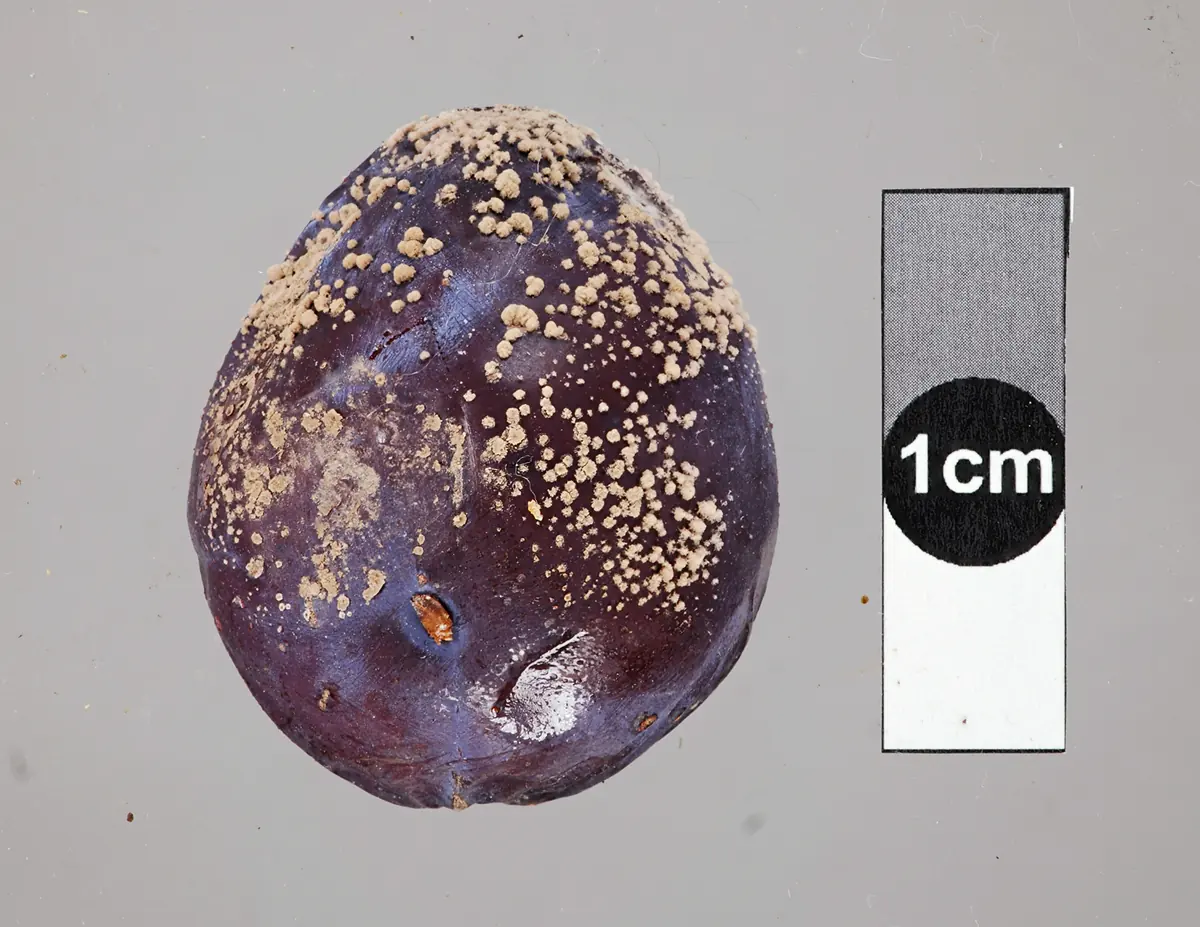
- On ripening fruit, a small round brown spot appears and spreads across the whole fruit in a day or two, while the flesh underneath stays fairly firm.
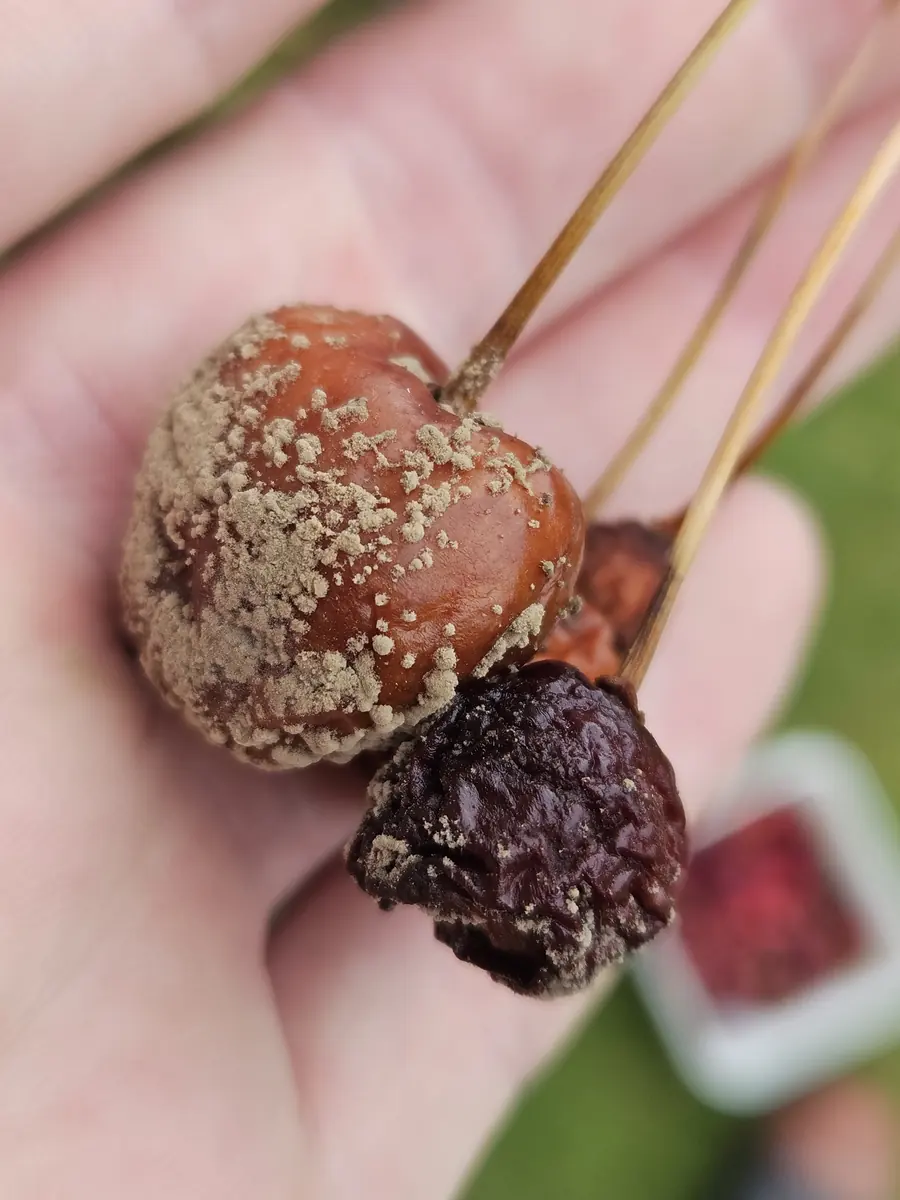
- Tufts of powdery grey to buff spores soon break through the skin, often in rough rings.
- Rotten fruit shrivels into hard, dark, wrinkled mummies that hang on the tree or lie on the ground over winter.
- Rot spreads quickly between touching fruit, so whole clusters of cherries or plums can go at once.
What it is often confused with
Botrytis (grey mould)
Botrytis makes a fluffy grey mould and is more common on soft, damaged fruit in cool weather. Brown rot has firmer brown flesh and tight buff to grey spore tufts, often in rings.
Bacterial canker
Bacterial canker also kills blossoms and causes gummy cankers in spring, but it does not rot the fruit or leave spore tufts. Brown rot shows furry spores on blighted flowers and fruit.
When and where it is worst
Brown rot occurs throughout New Zealand wherever stone fruit is grown, but it is worst in humid districts such as Auckland, Northland, Waikato and the Bay of Plenty, and in any garden after a wet spring and a muggy run-up to harvest. Hawke's Bay, Nelson, Marlborough, Canterbury and Central Otago have drier summers, yet rain at blossom or in the weeks before picking still brings it on.
The fungus survives winter in mummified fruit and twig cankers. In wet weather at flowering, usually September and October, spores infect the blossoms. Ripening fruit becomes more susceptible in the last few weeks before harvest, from December through to March depending on the crop and region, and insect damage, bird pecks, hail and splitting all give the fungus an easy way in.
Plants it affects
These plants in our library list it as a problem to watch for.
How to prevent it
- Pick off every mummified fruit from the tree and the ground in late autumn and winter, and bin or burn them rather than composting.
- Prune out blighted twigs and gummy cankers when you see them, cutting back into healthy wood in dry weather.
- Prune trees to an open vase shape so air moves through the canopy and fruit dries quickly after rain.
- Thin fruit so that peaches, nectarines and plums do not touch, which stops rot passing from fruit to fruit.
- Control birds, wasps and fruit-damaging insects, and net trees where possible, because wounded fruit rots first.
- Pick fruit as soon as it is ripe and remove any rotting fruit straight away during harvest.
Organic control, step by step
- Begin with hygiene in winter, removing all mummies and cankered twigs from the peach, plum and other stone fruit trees.
- Apply lime sulphur or a copper spray in winter while the tree is dormant to reduce the fungus on twigs, keeping lime sulphur to the dormant period only.
- Spray copper or a copper and sulphur product at bud swell and again at petal fall in wet springs, when blossoms are most at risk.
- From petal fall to harvest, a wettable sulphur or copper and sulphur product applied every 10 to 14 days gives some protection in humid seasons, but check the label because some apricot varieties are sensitive to sulphur.
- Thin and pick carefully, and remove any infected fruit every day or two during harvest.
Conventional control
- Copper oxychloride or copper hydroxide at bud swell and early flowering helps protect blossoms in wet springs.
- Wettable sulphur and copper and sulphur mixtures registered for home stone fruit can be used from petal fall towards harvest at the intervals on the label.
- Lime sulphur is for dormant trees in winter only, as it scorches leaves and young fruit.
- Read the label before you buy or spray, check that the stone fruit you are treating is listed, and keep to the withholding period before picking.
Frequently asked questions
Can I eat fruit from a tree with brown rot?
Yes, sound fruit from the same tree is fine to eat. Cut away or discard any fruit with brown patches, and use clean fruit quickly because infections can show up a day or two after picking.
Why do my cherries rot just before they are ripe?
Cherries become much more susceptible in the last few weeks before harvest, and rain splitting gives the fungus an easy way in. Thin crowded clusters, net against birds, and pick promptly after rain.
Should I leave mummified fruit on the tree?
No. Mummies are the main way brown rot survives winter in New Zealand gardens. Pick them all off and clear the ground below before spring.
Is brown rot the same as botrytis?
No. They are different fungi, though both rot fruit. Brown rot produces firm brown rot with buff or grey spore tufts, while botrytis forms a fluffy grey mould on soft fruit.
Related problems
Sources: Yates NZ, Brown rot (Monilinia fructicola); Kings Plant Barn, Brown rot; Kiwicare, Brown rot; EPPO Global Database, Monilinia fructicola datasheet. Identification and control follow these sources. Always read the product label before use.