Bacterial canker: identify, prevent, control
Updated October 2026
Infects through leaf scars and wounds in cool, wet autumn and winter weather, and shows up as dead buds, gum and wilting branches from late winter to early summer, especially on young cherry trees.
Bacterial canker, often called gummosis, is caused by strains of the bacterium Pseudomonas syringae and is one of the main reasons young cherry and apricot trees die back in New Zealand. The bacteria enter through leaf scars, pruning cuts and frost cracks, then kill bark and buds, so branches and sometimes whole young trees are lost. It also causes leaf spots and shot holes, and it is a different disease from Psa on kiwifruit.
Pseudomonas syringae pv. syringae and pv. morsprunorum

How to identify it
- In spring, some buds fail to open, or blossoms and new shoots wilt and die back from the tips, a stage often called blast.
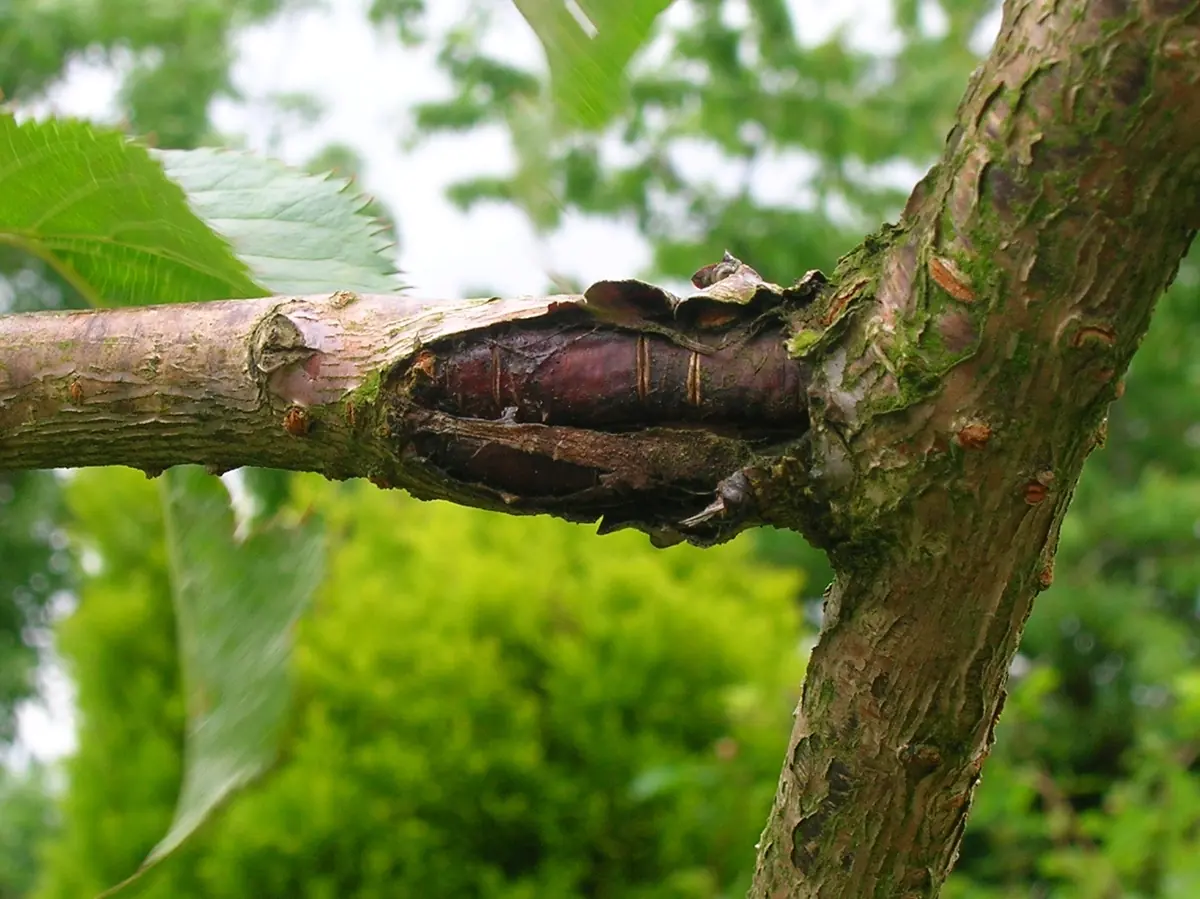
- Sunken, darker patches of bark appear on branches and the trunk, often around a bud, spur or pruning cut.
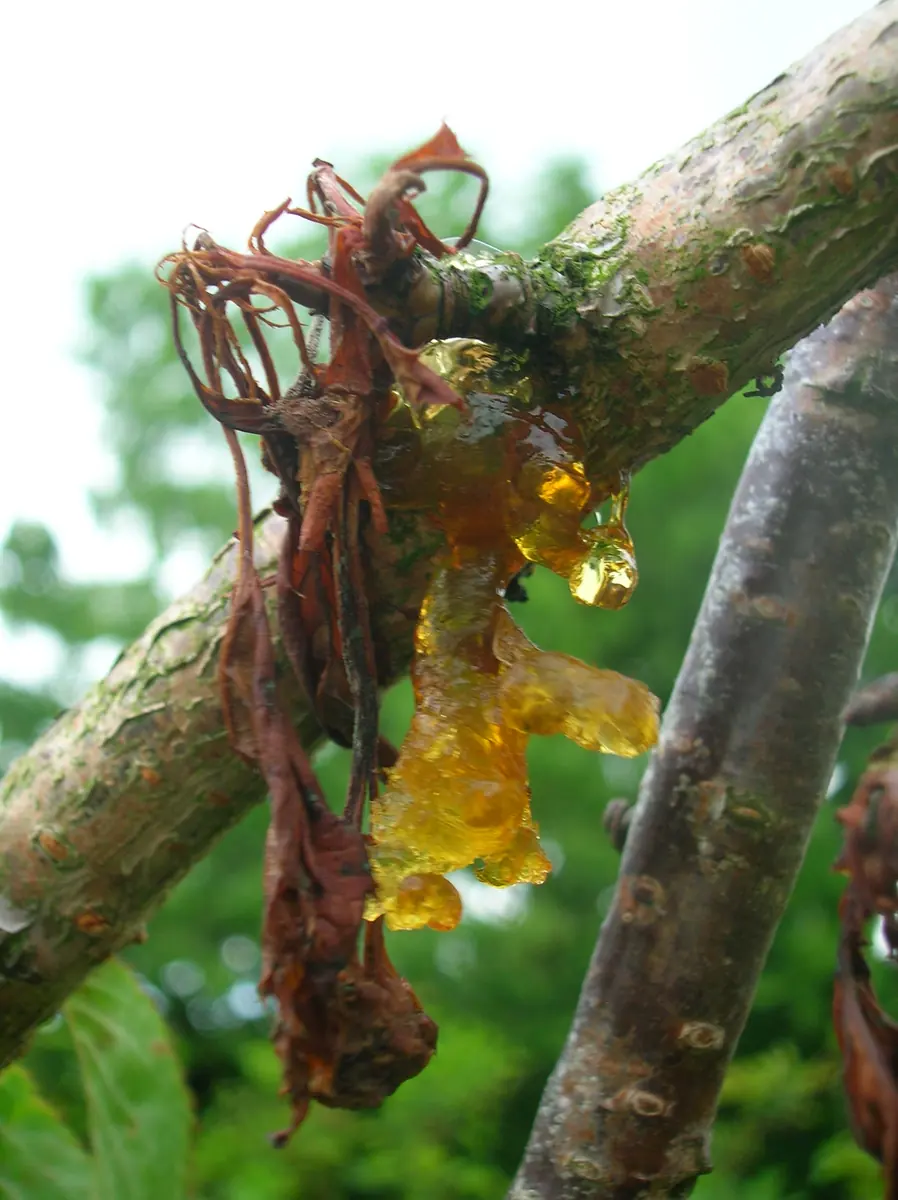
- Amber gum oozes from the edges of these cankers, and the bark underneath is brown and may smell sour when you scrape it.
- During late spring and summer, leaves above a canker wilt, turn brown and hang on the branch as the branch is girdled.
- Leaves can show small angular brown spots that drop out to leave shot holes, and young fruit may develop sunken black spots.
- On young trees a canker at the base or graft union can kill the whole tree within a season.

What it is often confused with
Silver leaf
Silver leaf gives leaves a dull silvery sheen and stains the wood purple-brown in the centre. Bacterial canker kills buds and bark in patches and oozes gum, with no silvering.
Shot hole
Fungal shot hole causes round leaf holes with a purple rim and spotted twigs and fruit, but not large gummy cankers. If you see girdled branches and gum as well as holes, think bacterial canker.
Psa (kiwifruit vine disease)
Psa is a related but separate bacterium that only attacks kiwifruit. Stone fruit bacterial canker does not spread to kiwifruit, and Psa does not infect cherries or plums.
When and where it is worst
Bacterial canker occurs throughout New Zealand. It is a serious problem in cherries, and New Zealand research has recorded losses of 20 to 50 percent of trees in some young cherry orchards, so home trees in Central Otago, Canterbury, Hawke's Bay and Marlborough are often affected. Apricots, plums, peaches and nectarines are also hit, especially in wet districts and on trees that are frost damaged or growing in poorly drained soil.
The bacteria live on the surface of leaves and buds and get in through leaf scars at leaf fall, pruning cuts and frost cracks during cool, wet weather in autumn and winter. Cankers then grow while the tree is dormant, and the damage becomes obvious from late winter to early summer as buds fail and branches wilt.
Plants it affects
These plants in our library list it as a problem to watch for.
How to prevent it
- Prune cherries, apricots and plums in dry weather in late summer or early autumn, after harvest and before leaf fall, so cuts heal while the tree is still growing.
- Never prune stone fruit in winter, when wounds stay open and wet for weeks.
- Clean secateurs and saws between trees, and between cuts on infected trees, with methylated spirits or a household disinfectant.
- Choose a sunny, well drained site with shelter from frost, as cold injury and wet feet make trees much more prone.
- Avoid heavy late-summer nitrogen feeding, which encourages soft growth late in the season.
- Plant certified, healthy nursery trees and keep grass and weeds away from the trunk to avoid bark damage.
Organic control, step by step
- Cut out cankered and dead branches in dry summer weather, at least 10 to 20 cm below the visible edge of the canker, and remove them from the garden.
- On the trunk, small cankers can be pared back to clean bark in summer and left to dry, cleaning tools after each cut.
- Apply a copper spray at the start of leaf fall in autumn and again when most leaves have dropped, to protect leaf scars.
- Spray copper again at bud swell in late winter in wet districts, but not after flowering, as copper can mark young leaves and fruit.
- Copper is allowed in organic growing in limited amounts, so use the lowest rate on the label.
Conventional control
- Copper hydroxide or copper oxychloride at early leaf fall and again at 50 to 90 percent leaf fall in autumn is the main home garden protection.
- A further copper spray at bud swell, before the flowers open, helps in wet springs.
- No spray will cure an established canker, so pruning out infected wood is still needed.
- Read the label before you buy or spray, check that the stone fruit you are treating is listed, and keep to the withholding period before picking.
Frequently asked questions
When should I prune my cherry tree to avoid bacterial canker?
Prune in dry weather in late summer or early autumn, straight after harvest. The tree is still growing then and seals its cuts quickly, while winter cuts stay open in the wet when the bacteria are most active.
Why is my cherry tree oozing gum?
Gum is a general wound response, but sunken dark bark with gum and dying buds or branches above it usually points to bacterial canker. Borer damage and mechanical injury can also cause gum, so look for holes or wounds as well.
Can a tree with bacterial canker be saved?
Mature trees often survive if you cut out the infected branches in summer and protect leaf scars with copper in autumn. A young tree with a canker that rings the trunk is unlikely to recover and is best replaced.
Is bacterial canker on cherries the same as Psa on kiwifruit?
No. Both are caused by Pseudomonas syringae, but Psa is a different pathovar that only infects kiwifruit. See our Psa page for kiwifruit.
Related problems
Sources: European Journal of Plant Pathology 2023, Review of Pseudomonas species causing bacterial canker of Prunus species with emphasis on sweet cherry in New Zealand; Colhoun, Butler and Marroni 2015, Pruning date affects bacterial canker of sweet cherry, New Zealand Plant Protection; Pacific Northwest Plant Disease Management Handbook, Apricot bacterial canker and blast. Identification and control follow these sources. Always read the product label before use.