Peach leaf curl: identify, prevent, control
Updated October 2026
Infects at bud swell and bud burst in cool, wet late winter and spring weather (August to October), and the curled leaves appear from September to November in every region.
Peach leaf curl, also called leaf curl or curly leaf, is a fungal disease of peaches and nectarines that also turns up on almonds. New leaves become thick, puckered and red as they open, then fall, and repeated attacks weaken the tree and reduce the crop. Once you see the curled leaves it is too late to spray for that season, so control depends on getting protective sprays on before the buds open.
Taphrina deformans
How to identify it
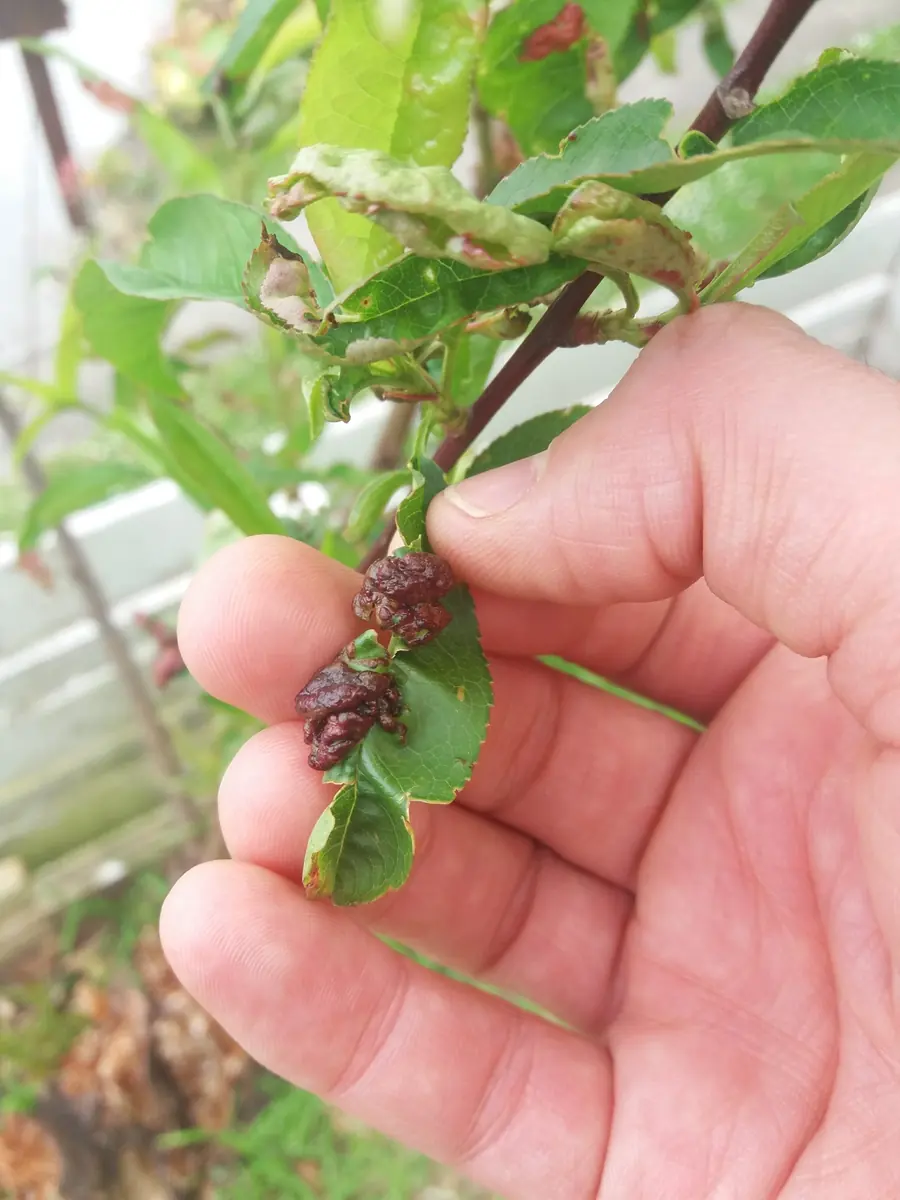
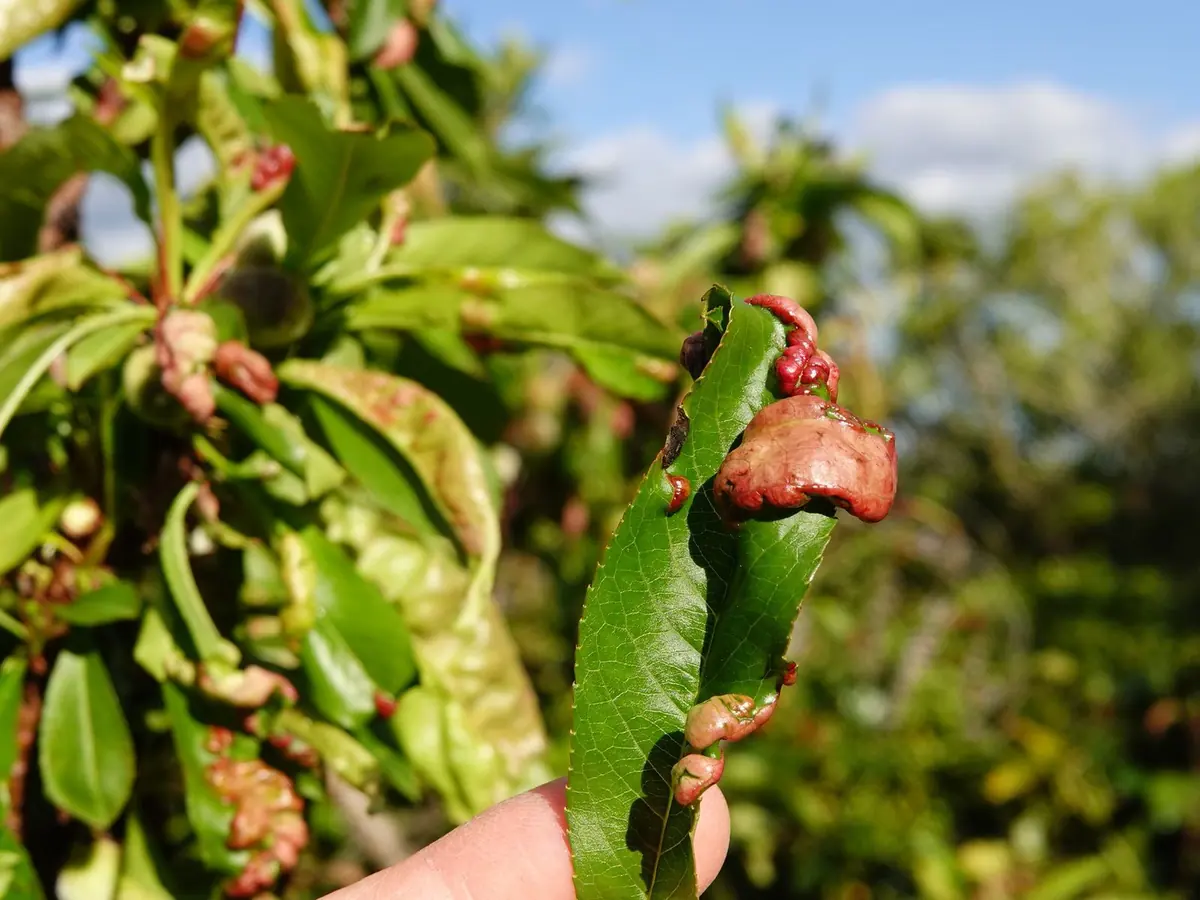
- As the first leaves unfold in spring, parts or all of a leaf thicken, pucker and curl, as if blistered.
- Affected leaves turn red, pink or purple, then pale yellow-green as they age.
- Later the blistered areas develop a whitish or greyish powdery bloom, which is the fungus producing spores.
- The curled leaves turn brown and drop in late spring, and the tree then pushes out a second flush of healthy leaves.
- Shoots can be stunted and swollen, and occasionally young fruit develops raised, reddish, wrinkled patches and drops.
- Symptoms are worst after a cool, wet spring and usually stop once the weather warms up in late spring.
What it is often confused with
Aphids
Aphids also curl peach leaves, but the curl is tight and rolled, the leaves are not thickened or red-blistered, and you will find the insects and sticky honeydew inside. Leaf curl leaves are swollen, rubbery and coloured with no insects.
Herbicide damage
Hormone weedkiller drift twists and narrows new leaves on many plants at once, without the red blistering. Leaf curl only affects peaches, nectarines and almonds and shows the thick, coloured puckering.
When and where it is worst
Leaf curl occurs throughout New Zealand wherever peaches and nectarines are grown, from Northland to Central Otago. It is most severe in districts with long, cool, wet springs such as Waikato, Wellington, Manawatu, the West Coast and Southland, and in any area after a cold, damp August and September.
The fungus survives on the bark and around the bud scales over winter. Rain washes spores into the buds as they swell and open, so infection happens from bud swell to bud burst, usually from late July in the north to September in the south. Long spells of cool, wet weather at that time give the worst outbreaks, while dry, mild springs give very little.
Plants it affects
These plants in our library list it as a problem to watch for.
How to prevent it
- Plan to spray every year before bud burst, because one bad spring is enough to defoliate an unprotected tree.
- Spray at leaf fall in autumn as well if leaf curl was bad the previous season.
- Grow peaches and nectarines in a sunny, sheltered spot where rain does not sit on the branches.
- A tree trained against a north-facing wall under eaves stays drier in spring and usually gets less leaf curl.
- Feed and water affected trees well in late spring and summer so they can replace lost leaves and set fruit buds for next year.
- Ask your local nursery about varieties with some tolerance to leaf curl when planting a new tree.
Organic control, step by step
- Spray copper at leaf fall in autumn on trees that had leaf curl last season, as copper is allowed in organic growing.
- In late winter, spray copper or lime sulphur when the buds start to swell and the bud scales loosen.
- Repeat the copper about a week later and before the buds open, covering every twig to the point of run-off.
- If you see curled leaves in spring, pick off and bin the worst of them, then feed and water the tree to help the next flush.
- Do not spray after the leaves are out, as it has no effect on leaves that are already infected and copper can damage young foliage.
Conventional control
- Copper oxychloride or copper hydroxide sprayed at bud swell and again about a week later, before the buds open, is the standard home garden treatment.
- Lime sulphur is an alternative at bud swell, but do not mix it with copper or oil and do not use it once green leaf tissue shows.
- In bad years add an autumn spray of copper at leaf fall to reduce the fungus on the bark through winter.
- Read the label before you buy or spray, check that peaches or nectarines are listed, and keep to the withholding period before picking.
Frequently asked questions
Can I spray peach leaf curl once I see it?
No spray will fix leaves that are already curled. Pick off the worst leaves, feed and water the tree, and mark your calendar to spray at bud swell next winter.
When exactly should I spray for leaf curl?
Spray when the buds start to swell and the bud scales loosen, then again about a week later, before they open. In most of the North Island that is late July to August, and in the South Island August to September.
Is fruit safe to eat from a tree with leaf curl?
Yes. Leaf curl only damages leaves, shoots and sometimes the skin of young fruit. The main effect is a smaller crop because the tree lost its first leaves.
Does leaf curl affect apricots and plums?
Peach leaf curl mainly affects peaches, nectarines and almonds. Apricots and plums can show other leaf distortions, such as aphid damage or plum pocket, which are different problems.
Related problems
Sources: Yates NZ, Peach leaf curl; Yates NZ garden calendar, Leaf curl prevention (August); Awapuni Nurseries, Leaf curl prevention is the best cure; UC IPM, Peach leaf curl on nectarine. Identification and control follow these sources. Always read the product label before use.