Shot hole: identify, prevent, control
Updated October 2026
Infects in wet weather in autumn and spring, with spots and holes showing on new leaves from September to December, especially in humid North Island districts and wet springs in the south.
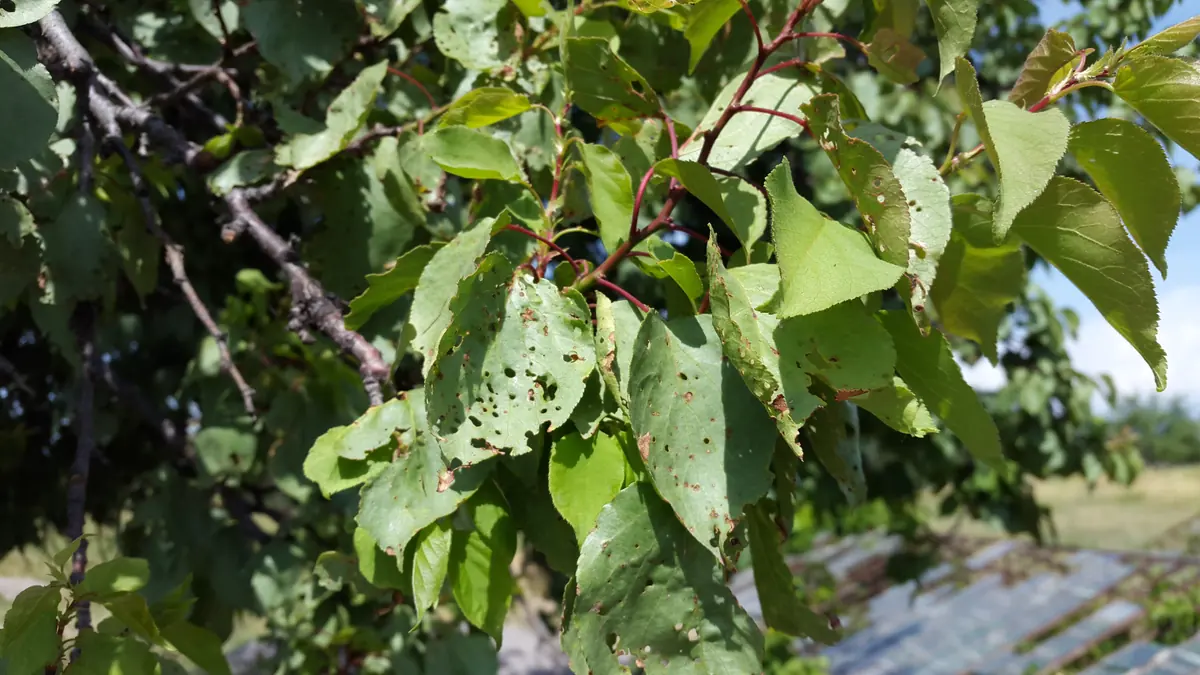
Shot hole, also known as coryneum blight, is a fungal disease of stone fruit that is most damaging on apricots and almonds in New Zealand gardens. Small purple-edged spots on leaves dry and fall out, leaving the leaves looking as if they were hit by shotgun pellets. The same fungus also kills buds, causes small twig cankers and leaves rough scabby spots on fruit.
Wilsonomyces carpophilus

How to identify it
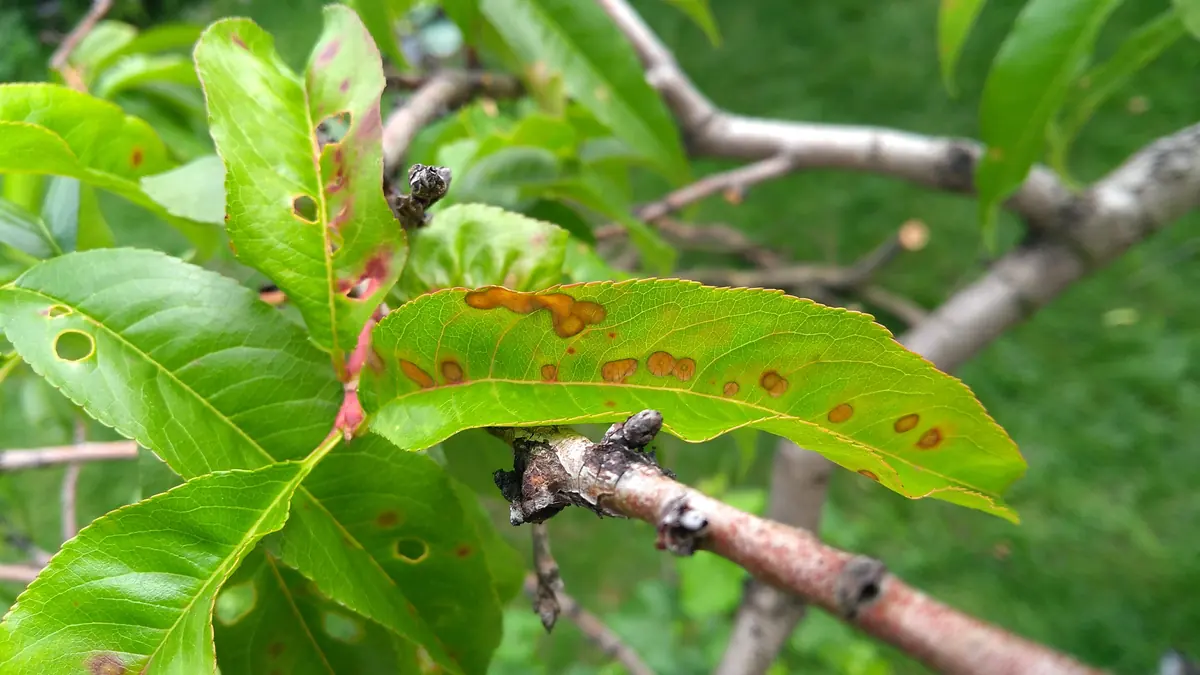
- In spring you first notice small, round, purple to reddish spots, about 2 to 5 mm across, on young leaves.
- The centre of each spot turns brown and dries out, then drops away to leave a clean round hole with a thin purple or brown rim.
- Badly affected leaves can look riddled with holes, turn yellow and drop early in spring or summer.
- Dormant buds may look dark, varnished and gummy and fail to open in spring, and small cankers with gum can form on twigs around them.
- On apricot fruit, small purple to red freckles develop and become rough, corky scabs, and some fruit may drop.
- Under a hand lens you may see tiny dark specks (spore masses) in the centre of the older spots.

What it is often confused with
Bacterial spot
Bacterial spot also leaves holes, but the spots are angular, water-soaked at first and follow the leaf veins, and leaves often yellow around them. Shot hole spots are round with a purple rim and no water-soaked stage.
Bacterial canker
Bacterial canker can cause similar leaf holes but also produces large sunken cankers with gum that girdle branches. Shot hole cankers stay small and are centred on buds.
Insect chewing
Caterpillar and beetle damage leaves ragged, irregular holes without a coloured rim. Shot hole holes are neat, round and edged in purple or brown.
When and where it is worst
Shot hole has been recorded in New Zealand for decades and is worst where springs are wet and humid, such as Auckland, Waikato, the Bay of Plenty and Wellington. In drier apricot districts such as Central Otago, Hawke's Bay and inland Canterbury, it usually only causes trouble after an unusually wet spring or autumn, or on trees under overhead sprinklers.
The fungus survives winter in infected buds and twig lesions. Spores need water to spread and infect, so most infection happens during prolonged rain in autumn, when buds are forming and leaves are falling, and again in spring from bud swell to a few weeks after petal fall (September to November). Symptoms on leaves and fruit appear in spring and early summer.
Plants it affects
These plants in our library list it as a problem to watch for.
How to prevent it
- Prune out dead buds, gummy twigs and small cankers in dry weather in late summer or early autumn, which also suits apricot trees because it reduces bacterial canker risk.
- Water at the base of the tree and avoid sprinklers that wet the canopy.
- Open up the centre of the tree so the foliage dries quickly after rain.
- Rake up and remove fallen leaves and fruit, and do not leave prunings lying under the tree.
- Keep trees growing steadily with mulch and even watering, as vigorous trees replace damaged leaves quickly.
Organic control, step by step
- Begin with hygiene, cutting out infected twigs and buds and removing fallen leaves and fruit.
- Spray copper in autumn at the start of leaf fall, when buds are forming and most at risk, as copper is allowed in organic growing.
- Spray copper again in late winter at bud swell, before the flowers open.
- In a very wet spring, a sulphur or copper and sulphur product registered for stone fruit can help protect new leaves after petal fall, but check the label because some apricot varieties are sensitive to sulphur.
- Accept a few holes on an otherwise healthy tree, as light shot hole rarely affects the crop much.
Conventional control
- Copper oxychloride or copper hydroxide applied at early leaf fall in autumn gives the most useful protection, because it covers buds before winter rain.
- A second copper spray at bud swell in late winter protects buds and blossoms as they open.
- Further copper after flowering can scorch young apricot leaves, so only spray in spring if the label allows it on stone fruit foliage.
- Read the label before you buy or spray, check that apricots or the stone fruit you are treating are listed, and keep to the withholding period before picking.
Frequently asked questions
What causes holes in my apricot leaves?
Small round holes with purple rims are usually shot hole fungus or bacterial spot. Ragged holes without a coloured edge are more likely insect damage. Check for spots that have not yet dropped out to confirm a disease.
When should I spray for shot hole?
The key spray is copper in autumn at the start of leaf fall, followed by another at bud swell in late winter. Spraying after you see the holes in spring does little, because those leaves were infected weeks earlier.
Can I eat apricots with shot hole spots?
Yes. The spots are only skin deep and the fruit is safe to eat. Peel or cut away rough patches if you are bottling or drying the fruit.
Does shot hole affect almonds too?
Yes. Almonds are a common host, along with peaches, nectarines, cherries and plums. The same autumn and late winter copper timing protects them all.
Related problems
Sources: UC IPM, Shot hole or coryneum blight; Kiwicare, Shot hole; GBIF, New Zealand occurrence records of Stigmina (Wilsonomyces) carpophila. Identification and control follow these sources. Always read the product label before use.