
Silver leaf: identify, prevent, control
Updated October 2026
Infects fresh wounds in cool, wet weather from autumn to spring, and the silvering shows on leaves from late spring into summer, in every region of New Zealand.
Silver leaf is a fungal disease of woody plants caused by Chondrostereum purpureum, and plums and cherries are among its most common victims in New Zealand gardens. The fungus gets in through pruning cuts and broken branches, rots the wood and releases a toxin that gives the leaves a dull, silvery or leaden sheen. Branches die back over one or more seasons, and a badly infected tree can be lost.
Chondrostereum purpureum
.jpg)
How to identify it
- The first sign is foliage on one branch, or the whole tree, taking on a dull silver, grey or leaden sheen that is most obvious when you compare it with healthy leaves.
- Silvered leaves often tear or split easily and may brown at the edges later in summer.
- Branches with silvered leaves die back over a season or two, often starting from an old pruning cut or broken limb.
- If you cut through an affected branch at least 25 mm thick, the wood shows a dark brown or purplish stain in the centre.
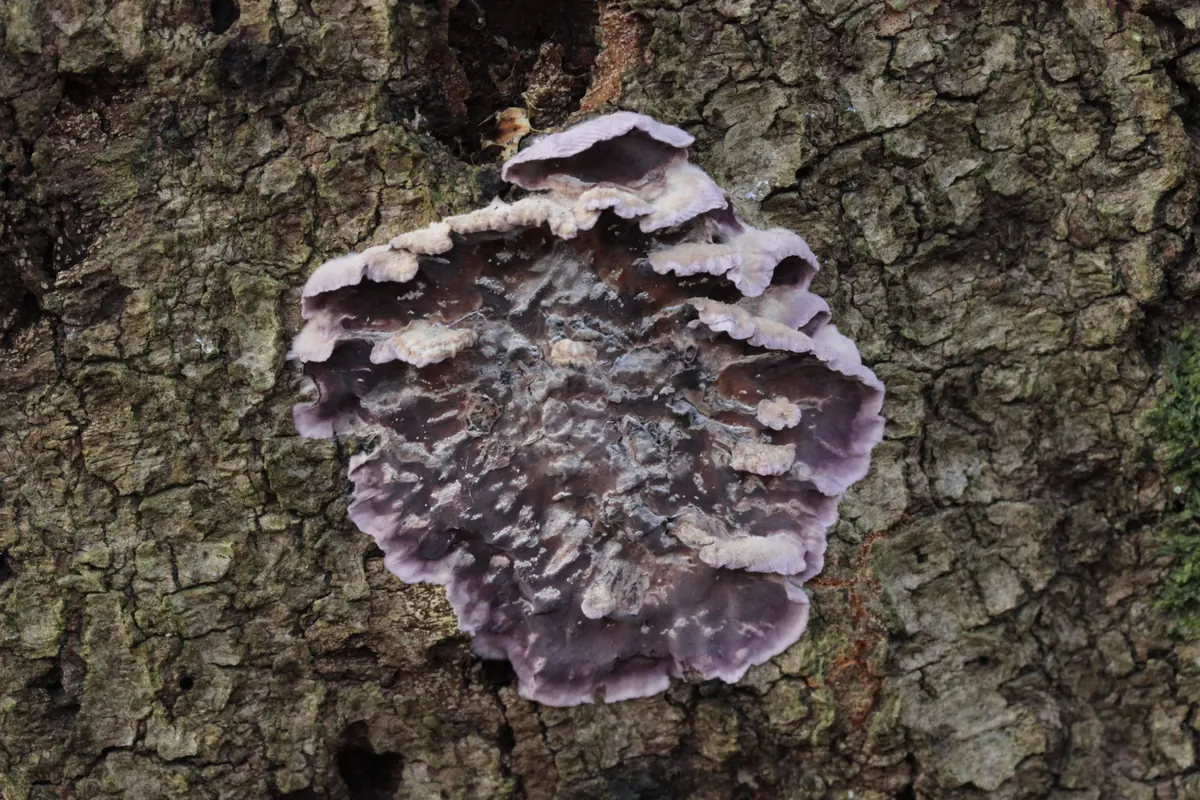
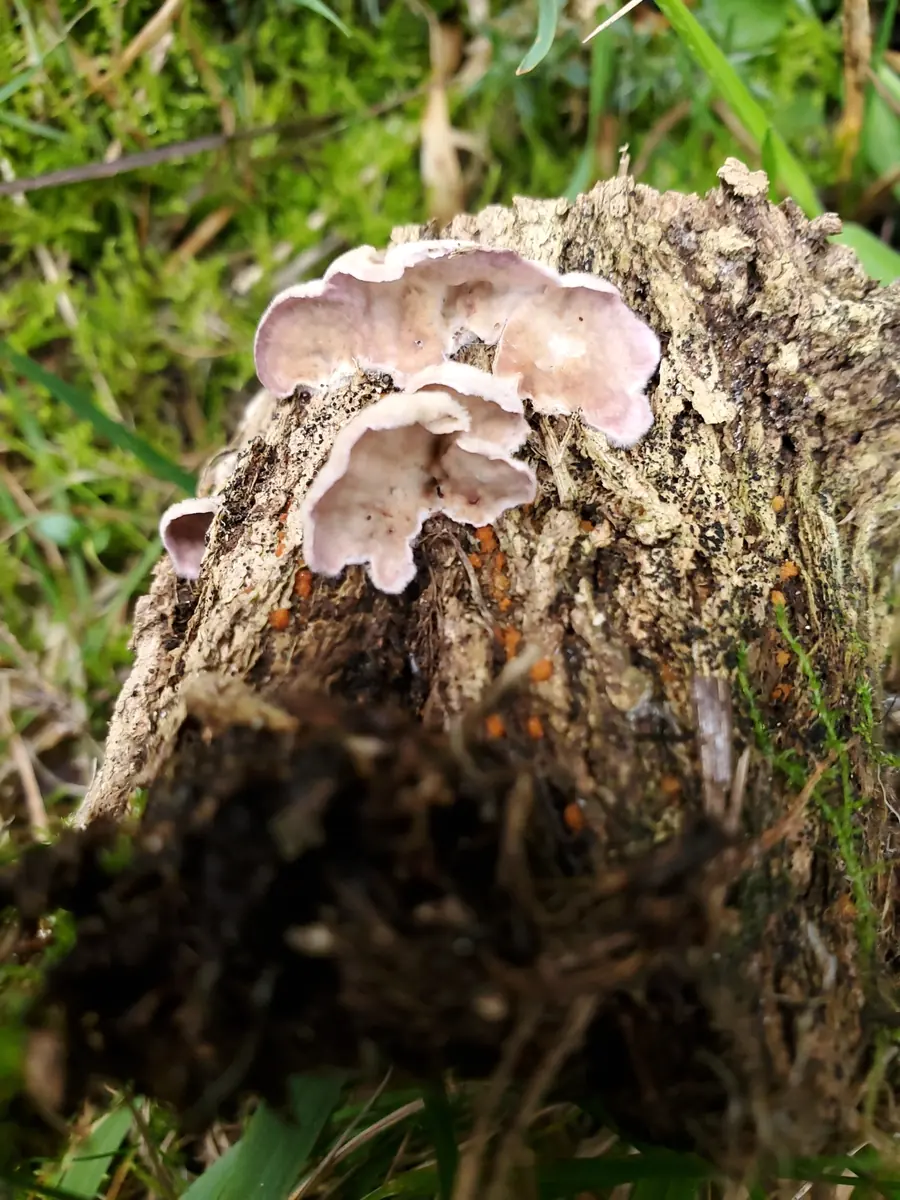
- In autumn and winter, thin, crusty fungal brackets appear on dead branches, purple to violet underneath and pale, hairy and wavy-edged on top.
- Silvering that appears on leaves without any staining in the wood is likely to be something else, such as mite damage or false silver leaf.
What it is often confused with
False silver leaf
Stress from drought, waterlogging or poor nutrition can give leaves a pale silvery cast across the whole tree, but the wood is not stained. True silver leaf shows a dark stain in the centre of affected branches.
Spider mite damage
Mites cause fine pale speckling and a dull, bronzed look, with fine webbing and tiny mites under the leaves. Silver leaf has no mites or webbing and comes with branch dieback.
Bacterial canker
Bacterial canker kills buds and branches with sunken, gummy cankers in spring. Silver leaf rarely produces much gum and shows silvered leaves first.
When and where it is worst
Silver leaf is found throughout New Zealand. It is a common problem on plum and cherry trees, and it also attacks apricots, peaches, nectarines, almonds, apples, pears, roses, poplars and willows, which act as sources of spores in shelterbelts and along rivers.
The fungus fruits on dead wood in wet weather and releases most of its spores in autumn, winter and early spring. Spores land on fresh pruning cuts, broken branches and storm damage, so winter pruning of stone fruit carries the highest risk. Leaf silvering usually appears from late spring through summer, often several months after the wound was made.
Plants it affects
These plants in our library list it as a problem to watch for.
How to prevent it
- Prune plums, cherries and other stone fruit in dry weather in summer, straight after harvest (usually December to March), when spores are scarce and wounds heal quickly.
- Avoid pruning stone fruit in winter, and avoid pruning on wet or humid days at any time of year.
- Seal large pruning cuts and torn branches straight away with a pruning sealant or wound paste.
- Clean secateurs and saws with methylated spirits or a household disinfectant between cuts and between trees.
- Remove and burn or bin dead branches, old stumps and prunings promptly, because the fungus fruits on dead wood.
- Support heavily laden branches so they do not split under a big crop or in wind.
Organic control, step by step
- Confirm the disease by cutting a branch and looking for the dark central stain before you take action.
- In dry summer weather, cut affected branches back to at least 15 cm below where the stain ends, cutting until the wood is clean, then seal the cut.
- Clean tools after every cut on an affected tree, and remove all infected wood from the garden.
- Trichoderma products, including dowels inserted into holes drilled in the trunk, were developed in New Zealand for silver leaf and are sold to home gardeners, and they work best on early infections.
- Feed and water the tree well through summer, as vigorous trees sometimes recover from mild infections on their own.
- Remove trees with silvering throughout the canopy and staining in the trunk, as they rarely recover and act as a source of spores.
Conventional control
- No chemical fungicide is registered for home garden use to cure silver leaf in New Zealand, so control relies on pruning timing, hygiene and wound protection.
- Wound sealants and pruning pastes give a physical barrier on fresh cuts, and some contain a fungicide, so use one labelled for fruit trees.
- Read the label before you buy or use any product, check that fruit trees are listed, and follow any directions on edible crops.
Frequently asked questions
Why should I prune my plum tree in summer and not winter?
Silver leaf spores are released mostly in cool, wet weather from autumn to spring. Pruning after harvest in dry summer weather means the cuts heal before many spores are about.
Is fruit from a tree with silver leaf safe to eat?
Yes. The fungus lives in the wood and does not affect the fruit, though crops on infected branches tend to be smaller.
Can a tree recover from silver leaf?
Trees with silvering on one or two branches often recover if those branches are cut back well into clean wood in summer. When the whole tree is silvered and the trunk is stained, it is best removed.
Will silver leaf spread to my other trees?
It can, through spores from fruiting brackets on dead wood landing on fresh wounds. Removing dead wood and sealing cuts on nearby trees reduces the risk.
Related problems
Sources: Yates NZ, Silver leaf; Kiwicare, Silver leaf; RHS, Silver leaf; Koanga Gardens, Tricho dowels. Identification and control follow these sources. Always read the product label before use.