
Verticillium wilt: identify, prevent, control
Updated October 2026
Shows from late spring through summer when warm days follow cool, moist soil, in gardens throughout New Zealand.
Verticillium wilt is caused by soil fungi that enter through the roots and block the water-carrying vessels inside stems. It has been in New Zealand for close to a century, with records on tomatoes, potatoes, strawberries, apricots and many other crops from Northland to Marlborough. There is no cure once a plant is infected, and the fungus can survive in soil for many years, so prevention and crop choice are your main tools.
Verticillium dahliae, Verticillium albo-atrum
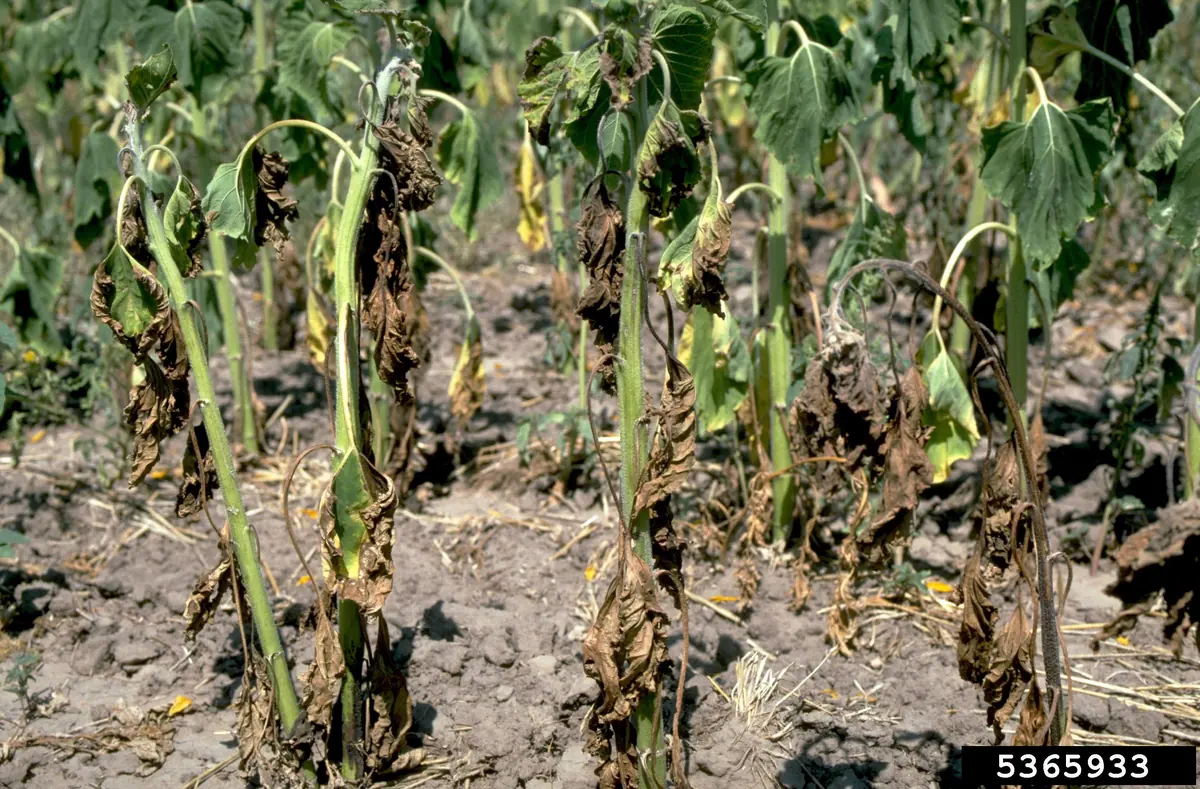

How to identify it
- The first sign is lower or older leaves yellowing between the veins, often on just one side of the plant or one side of a leaf.
- Affected leaves wilt on warm afternoons and recover overnight at first, then brown, dry out and hang on the stem.
- When you cut a stem near the base, you see brown or dark streaks in the ring of wood just under the bark.
- On olives, one branch or a few shoots suddenly wilt and die back in spring or summer, often with the dead leaves staying attached.
- On mint, the tips of shoots curl and yellow, leaves turn bronze and drop, and patches of the bed die out over a season or two.
- Plants are stunted and yield poorly, and eggplants and okra may collapse completely in midsummer.
What it is often confused with
Fusarium wilt
Fusarium wilt is favoured by hotter soil and often yellows a whole plant from the base up, while Verticillium is more common in cooler conditions and often affects one side. A laboratory test is the only certain way to tell them apart.
Crown rot
Crown rot makes the base of the plant soft and brown all through. With Verticillium wilt the crown stays firm and the discolouration is in streaks inside the stem.
Root rot
Plants with root rot have brown, decayed fine roots that pull away easily. Verticillium leaves the roots looking fairly normal from the outside.
When and where it is worst
Verticillium has been recorded in all of New Zealand's main fruit and vegetable growing areas, including Northland, Auckland, Waikato, the Bay of Plenty, Gisborne, Hawke's Bay, Taranaki, Wellington, Nelson, Marlborough and Mid Canterbury. It is most damaging where cool, moist spring soil is followed by warm summer days, because that is when the blocked vessels cannot keep up with water demand.
The fungus survives in soil for many years as tiny resting bodies and can be carried in on soil, compost made from infected plants, and infected cuttings or transplants. Potatoes, tomatoes, eggplant, strawberries and many weeds can all keep it going in a bed.
Plants it affects
These plants in our library list it as a problem to watch for.
How to prevent it
- Rotate crops so that eggplant, tomatoes, potatoes, capsicum, okra and strawberries are not grown in the same bed more often than once every four years.
- Buy healthy, certified plants and take mint cuttings only from vigorous, symptom-free patches.
- Choose tomato varieties marked with a V for Verticillium resistance where they are available.
- Keep weeds down, especially nightshades and thistles, which can carry the fungus between crops.
- Plant olives and other trees into ground that has not recently grown potatoes, tomatoes or strawberries.
- Avoid heavy doses of high-nitrogen fertiliser, which produce soft growth that suffers more from the disease.
Organic control, step by step
- Pull out and bin infected annual plants with as much root as possible, and do not compost them.
- Prune out wilted olive branches well below the brown streaking, clean your tools, and feed and water the tree evenly so it can grow away from the infection.
- Lift a diseased mint patch completely and start a new one in fresh soil or a pot, using cuttings from a clean source.
- Rest an infested bed with grass, sweetcorn, brassicas or other non-host crops for several years, which lowers the amount of fungus in the soil.
- In small beds, soil solarisation under clear plastic for six to eight weeks over midsummer can reduce the fungus in the top layer of soil.
Conventional control
- No fungicide registered for New Zealand home gardens cures or prevents Verticillium wilt, so control relies on the cultural steps on this page.
- Avoid buying soil fumigants, as they are restricted to professional use and are not suitable for home gardens.
- Always read the label of any product you use in the garden, check that your crop is listed, and keep to the withholding period.
Frequently asked questions
Can a plant recover from Verticillium wilt?
Annual vegetables such as eggplant and okra do not recover and are best removed. Olive trees sometimes recover if the infection is limited to a few branches and the tree is otherwise well grown, so prune and wait a season before deciding.
How long does Verticillium stay in the soil?
The resting bodies of the fungus can survive for many years, often quoted as five to ten or more. That is why a long rotation away from susceptible crops matters.
Which plants are resistant to Verticillium wilt?
Grasses, sweetcorn, brassicas, onions and most herbs other than mint are not usually affected. Some tomato varieties carry bred resistance and are labelled with a V.
Can I compost wilted plants?
No. A home compost heap rarely gets hot enough to kill the fungus, and you would spread it to every bed you mulch. Bin infected plants instead.
Related problems
Sources: Manaaki Whenua, Biota of New Zealand: Verticillium dahliae; New Zealand Plant Protection, Preliminary pathogenicity screening of Verticillium spp. on kiwifruit in New Zealand (Plant & Food Research); EPPO Global Database, Verticillium dahliae distribution: New Zealand. Identification and control follow these sources. Always read the product label before use.